 Signs & Large Format Print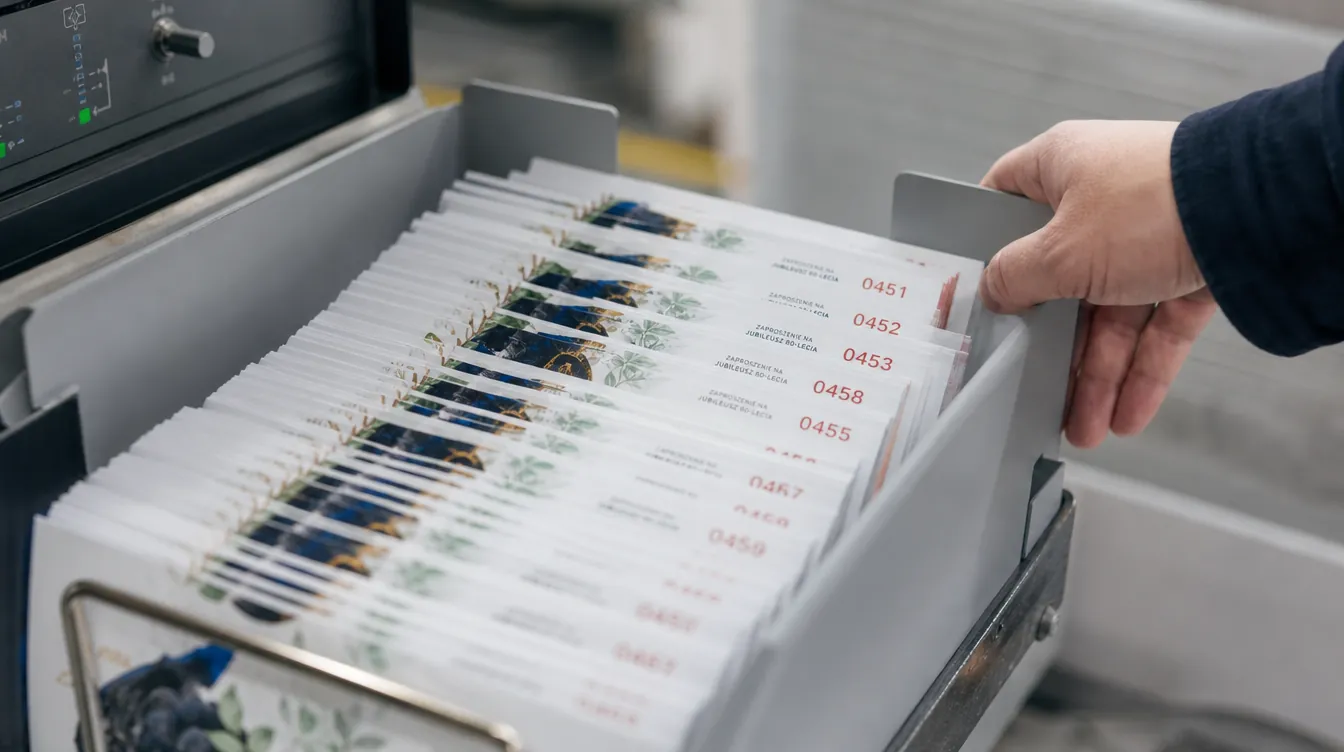
Measurement methods – an overview
| Method | How it works | Good for |
|---|---|---|
| Discount code or password | the customer gives the code at the till or in the online shop | flyers, posters, banners, leaflets |
| QR code with UTM parameters | the scan leads to a page, analytics show the source | flyers, posters, roller banners, A-boards, packaging |
| Dedicated page / short address | an address used only on that medium, e.g. company.com/banner | banners, billboards, vehicles |
| Dedicated phone number | a number used only in one campaign | billboards, vehicles, adverts |
| Numbered voucher | each voucher has a unique number, you collect the redeemed ones | vouchers, coupons, invitations |
| Asking at the till | staff ask and note the answer | any medium, especially a shop sign |
| Comparing periods | sales or calls before and after the campaign | shop sign, light box, window graphics |
| Google profile statistics | number of searches, direction requests, calls | premises signage, local outdoor |
Every method has gaps, so it is best to combine two: e.g. a discount code on the flyer and asking at the till. That way you also see the customers who saw the flyer but did not give the code.
A QR code that actually measures something
A QR code is cheap and convenient, but only if it is well prepared. This is how we do it, step by step:
- The code leads to a specific page. Not the home page, but a page with the offer from the flyer. A customer who scanned a code next to '−20% on an air-conditioning service' wants to see exactly that.
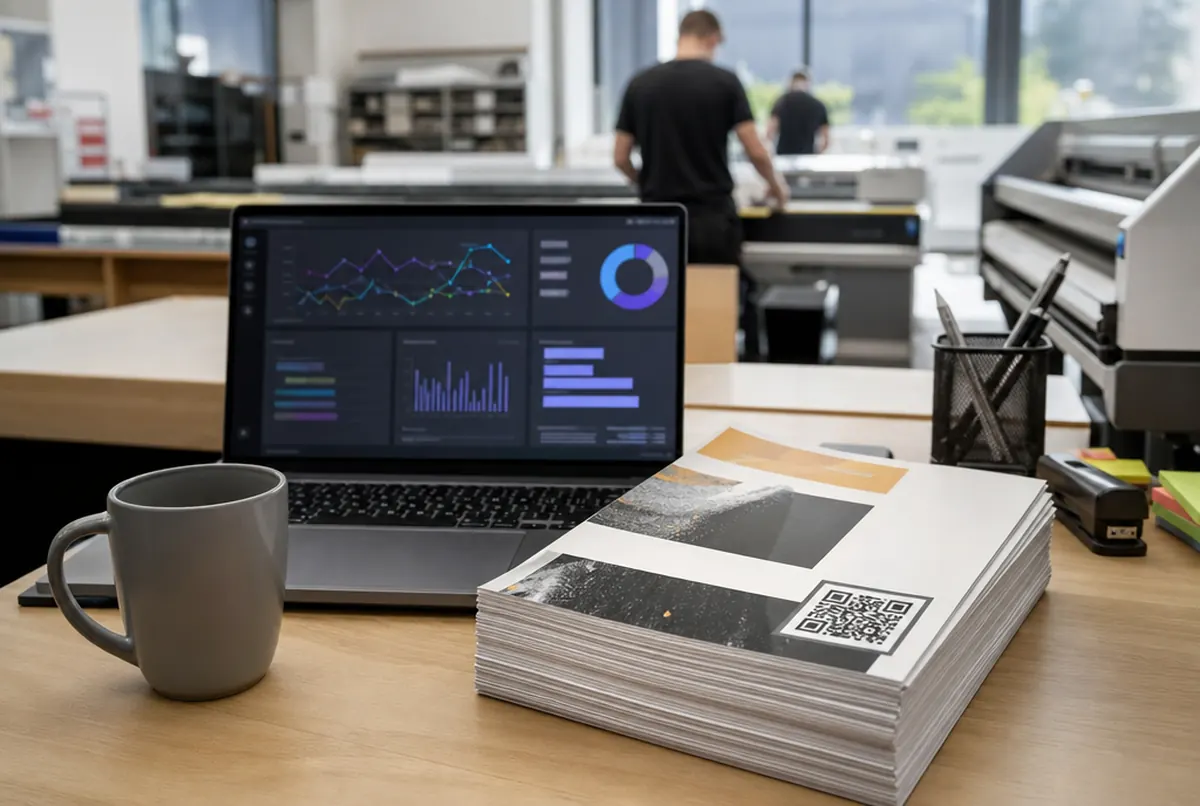
- The address is tagged with its source. UTM parameters are added to the link, e.g. utm_source=flyer&utm_campaign=spring. Your website analytics will then show how many visits came from the flyer and how many from the poster. Each medium should have its own code.
- A short address with a redirect is better. A long link with parameters produces a dense code that is harder to scan. A short address on your own domain that redirects onward gives a simpler code and lets you change the destination page without reprinting.
- The right size. As a rule of thumb, the side of the code should be about 1/10 of the distance from which it will be scanned. On a flyer held in the hand 2–3 cm is enough; on a poster seen from 2 m, approx. 20 cm.
- Contrast and a quiet zone. A dark code on a light background with clear space around it. A code in brand colours over a photo often will not scan.
- Test before printing. Check the code with several phones on a test print, not just on screen.
Where QR makes no sense: on a billboard beside a dual carriageway, or on a banner high up a building. There a short, memorable web address works better.
Discount codes and numbered vouchers
A discount code is the oldest and still the most reliable method: the customer brings the proof of where they came from. A few rules to make the data reliable:
- One code per medium or area. The flyer for estate A carries code SPRING-A, for estate B – SPRING-B. After a month you can see where distribution paid off.
- A code that is easy to say. The customer has to say it at the till or type it on a phone. No characters that are easily confused, like 0 and O.
- An expiry date. It prompts action and lets you close the measurement cleanly.
Even more precise are numbered vouchers – every flyer or voucher carries a unique number. Then you know not only how many vouchers came back, but also from which batch and which distribution point. We apply such codes by variable data printing – personalisation costs approx. €0.05 net per piece. A pad of classic perforated vouchers or tickets, 1000 pieces, costs approx. €75 net.
- 01Brief
Description, sizes, site photos and deadline — a few sentences are enough.
- 02Design and quote
Our designers prepare artwork or a visualisation and you get a price.
- 03Approval
You approve the design; for brand colours we provide a proof.
- 04Production
35+ machines in our own plant in Poland: 3.2 m UV print, CNC, laser, 3D, sewing.
- 05Installation or delivery
Own crews and vehicles across Europe, partner network, couriers worldwide.
How to measure a shop sign, a light box or a branded vehicle
Premises and vehicle signage works for years, and it is hard to attribute specific sales to it. That does not mean nothing can be checked.
Comparing periods. For a month, note the number of customers, calls or enquiries before the new sign is installed, and do the same for a month afterwards. It is not a laboratory measurement (season, weather and competition all play a part) but a big change will show.
Google Maps statistics. Your business profile shows how many people searched for your name, requested directions or called. A rise in name searches after installing a light box or wrapping your vans is a good sign that people are remembering you.
Asking at the till or on the phone. 'How did you hear about us?' – with the answers noted in a notebook or a simple spreadsheet. Answers like 'I drive past' or 'I saw your van' tell you a lot.
A dedicated number on the vehicles. If the fleet is large, a phone number used only on the vehicles shows how many calls come from the street.
A/B testing a flyer – simple and cheap
If you print flyers regularly, you can check which version works better. Digital printing lets you produce two versions in one run without much extra cost.
- Prepare two versions that differ in one thing – the headline, the offer or the photo. If you change everything at once, you will not learn what worked.
- Each version gets its own discount code or its own QR code.
- Distribute both in the same places at the same time, e.g. alternately.
- After 3–4 weeks, count how many codes came back from each version.
- The winning version goes into the next run, and in the next test you change another element.
Formats can be compared in the same way – e.g. an A6 flyer against a DL leaflet. Formats are covered in which flyer format to choose.