 Signs & Large Format Print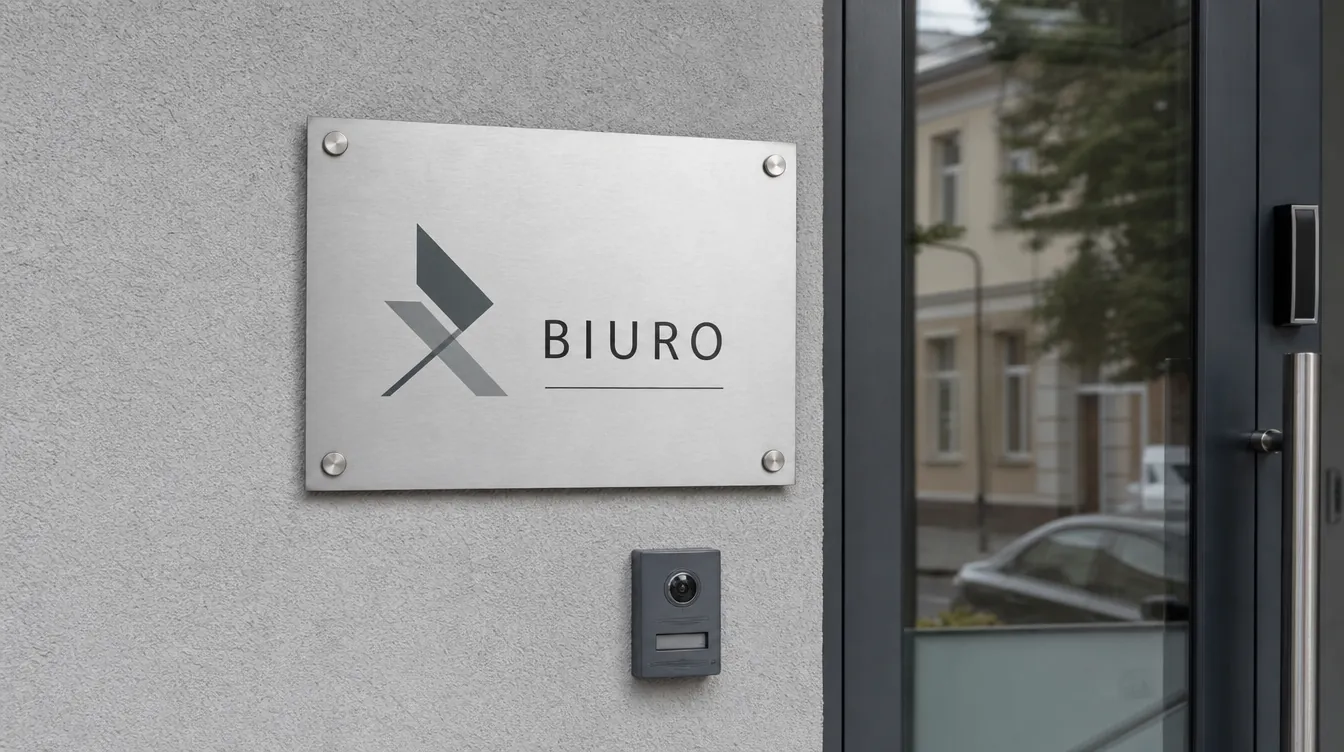
Comparison: print and online point by point
| Criterion | Print advertising | Online advertising |
|---|---|---|
| How you pay | usually once – a sign, light box or vinyl graphics work for years | usually per impression or click, for as long as the campaign runs |
| Reach | local: the street, the estate, the commuting route | from one district to a whole country |
| Choosing the audience | by location: who walks and drives past | by age, interests, location, behaviour |
| Measurability | has to be planned: codes, QR, asking at the till | data from ad platforms and analytics straight away |
| Speed of changes | a new run has to be printed | copy changed in minutes |
| Trust | physical presence – the business is 'really here' | depends on reviews, the website, consistency |
| Competition for attention | less on the street than on a phone | huge – the ad sits among hundreds of other posts |
| Lifespan | from weeks (a flyer) to over a decade (a sign) | ends when the campaign is switched off |
Looking at the table, it is easy to see that each channel covers the other's weaknesses. Print gives presence and durability; online gives precision and flexibility. The question is not 'which instead of which', but 'in what proportions'.
When print wins
In our experience, print and outdoor advertising is hard to replace in several situations:
- The customer has to find you. No ad on a phone replaces a legible sign over the entrance. Someone found you on the map, drove over, and now they are looking for the door.
- You operate in a limited area. A garage, a bakery, a hairdresser, a clinic. Most customers live or work within a few kilometres and pass the same places every day. A roadside banner or a branded van reaches them for a fraction of the cost of a campaign, and it keeps working for years.
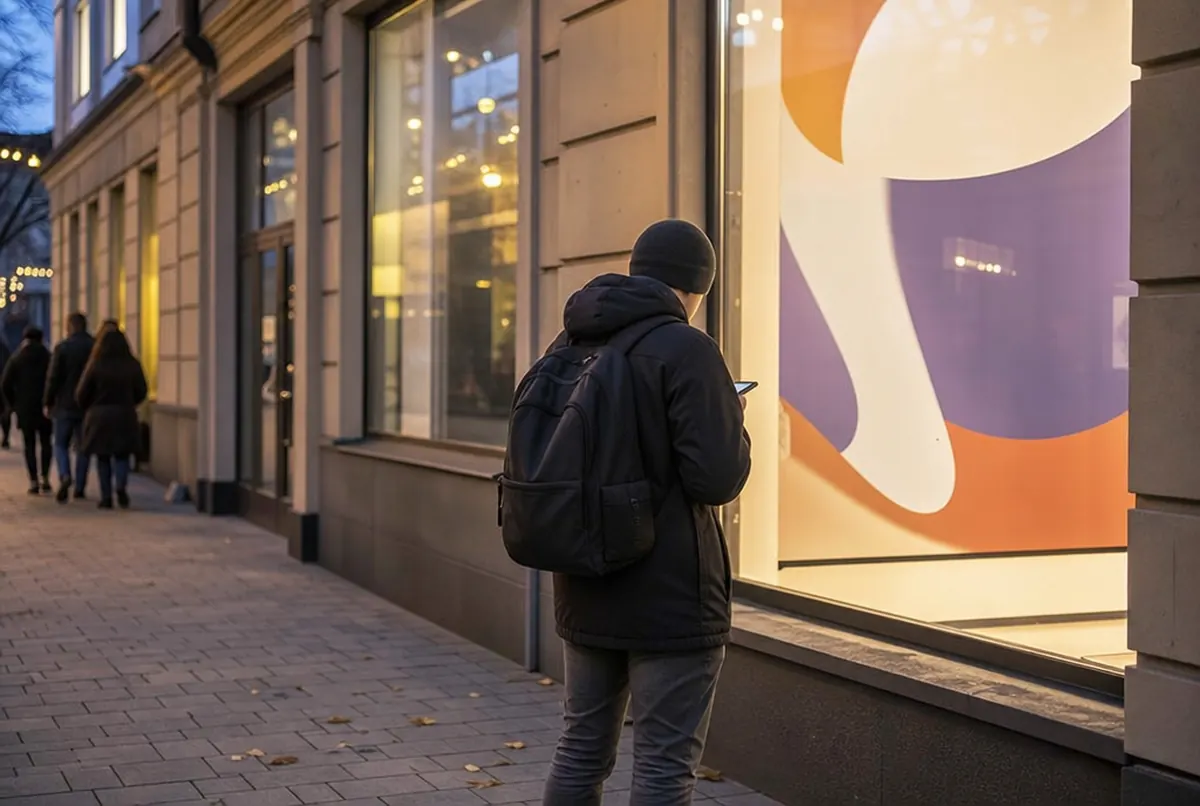
- The decision is made in the shop. POS materials at the shelf, a poster in the window, a wobbler at the product – at that moment the customer is looking at the goods, not their phone.
- You need something to hand over. A proposal at a client meeting, a menu, a price list, a product catalogue. A presentation folder stays on the desk; an email gets lost in the inbox.
- Your audience uses the internet less. Some older customers still prefer a flyer or a leaflet to an ad on social media.
When online wins
To be fair, there are situations where an online campaign will do more than print.
- You sell nationwide. An online shop with customers from one end of the country to the other cannot put up billboards everywhere. Here search and social media advertising is the core tool.
- The customer is actively searching. Someone types 'emergency plumber' or 'florist with delivery'. Whoever ranks high in search results and on the map gets the call.
- You want to test an offer quickly. In an online campaign you can see within days which message works better. That proven message is then worth carrying over to a banner or flyer.
- Your audience is very narrow. For example, owners of haulage firms in a region, or engaged couples within 50 km – reaching them with a flyer would be expensive and imprecise.
Search and social media campaigns are usually run by a marketing agency or the owner; the website they point to can be ordered through our sister service weblango.com.
- 01Brief
Description, sizes, site photos and deadline — a few sentences are enough.
- 02Design and quote
Our designers prepare artwork or a visualisation and you get a price.
- 03Approval
You approve the design; for brand colours we provide a proof.
- 04Production
35+ machines in our own plant in Poland: 3.2 m UV print, CNC, laser, 3D, sewing.
- 05Installation or delivery
Own crews and vehicles across Europe, partner network, couriers worldwide.
How to combine both channels in practice
The best results we see come from businesses that do not treat the channels separately. A few proven combinations:
- Shop sign + Google Maps profile. The same photos of the premises, the same name, the same hours. A customer who sees you on the street checks reviews on their phone, and vice versa.
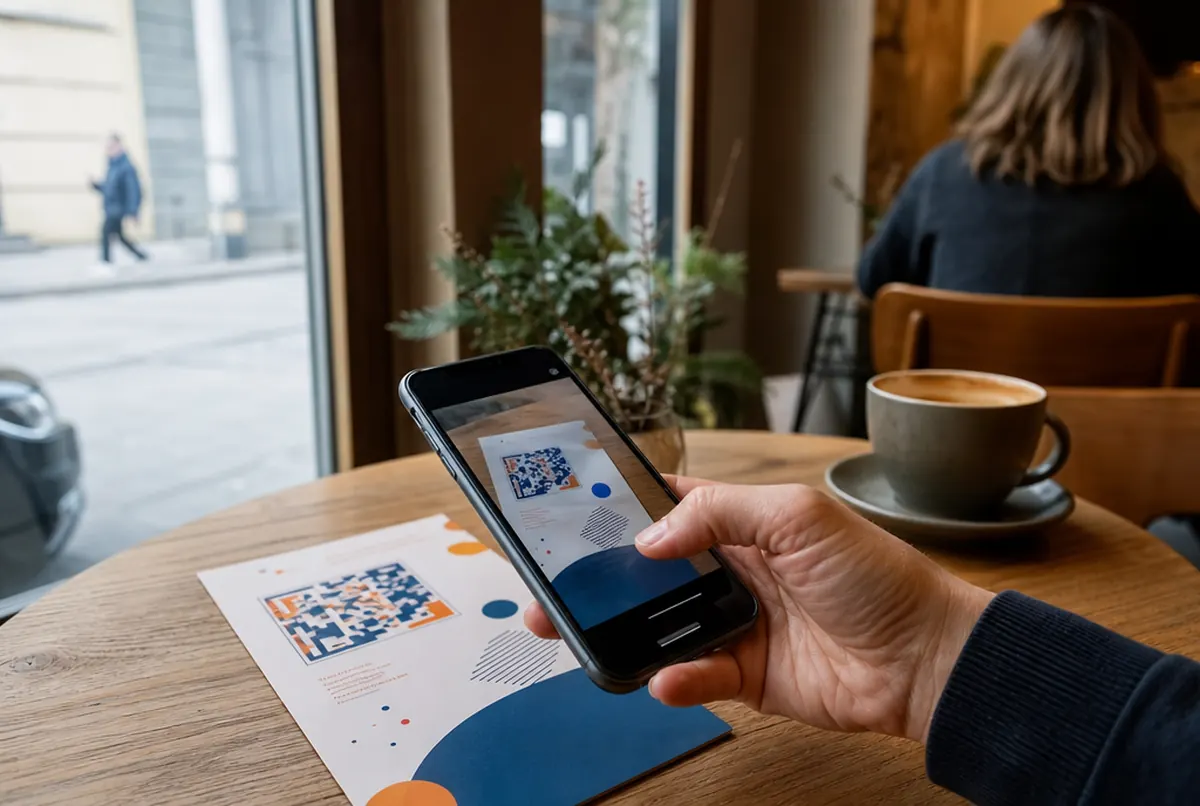
- A flyer or poster with a QR code. The code leads to a specific offer page, not the home page. Along the way you measure how many people scanned it. A step further are AR materials, where a phone pointed at a poster or packaging plays a video or animation.
- One visual, many media. The same motif on a roadside banner, in a post, in a social media ad and on a roller banner in the premises. The customer meets it several times in different places, and only then responds.
- Materials in the parcel. An online shop puts a flyer with a discount code for the next purchase in each shipment and seals the box with logo tape. Print works where online has already brought the customer.
- An event online and offline. A shop opening announced on social media, and on site feather flags, a roller banner and flyers with the opening offer; more in an opening campaign for new premises.
Myths we hear on both sides
'Nobody reads flyers.' They do, if the flyer is specific, well printed and reaches the right people. They do not read flyers with five paragraphs of text scattered across town without a plan.
'Print cannot be measured.' It can, but it has to be planned before printing: a dedicated discount code, a QR code tagged with its source, a separate phone number, or simply asking at the till. We describe this in measuring the effectiveness of offline advertising.
'Online is free.' A Google profile and your own posts – yes. But paid advertising costs money and only works while the campaign runs, and someone has to spend time on content and replies.
'Online is not for a local business.' Local businesses often gain the most from a well-run map profile and reviews, because local competitors are frequently weak at it.