 Signs & Large Format Print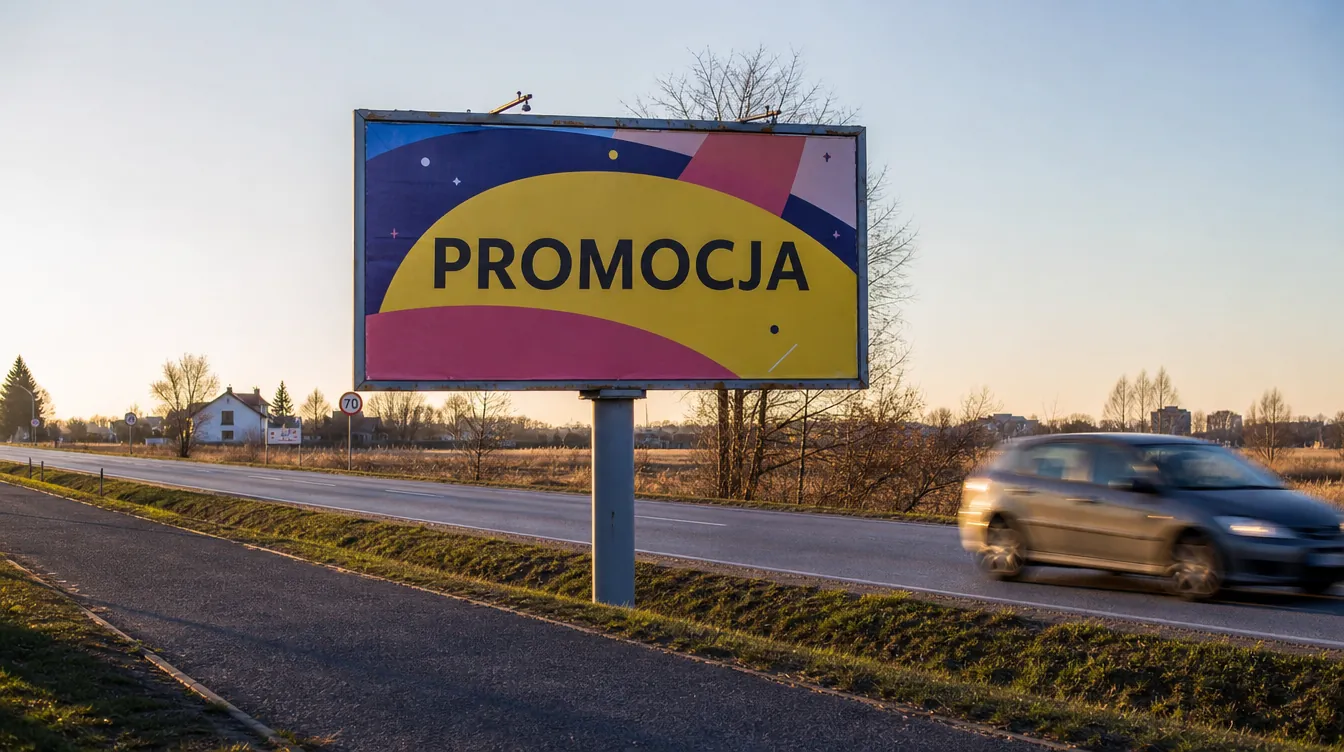
The forms of outdoor advertising
Outdoor is a broad term. In practice we split it into three groups, because each works slightly differently and is paid for differently.
Signage at your own premises – a shop sign, an illuminated light box, 3D letters, window graphics, a pylon by the car park, a directional sign at the entrance. You pay once and the display works for years. This is the foundation: if customers cannot find the door, the rest of your advertising loses its point.
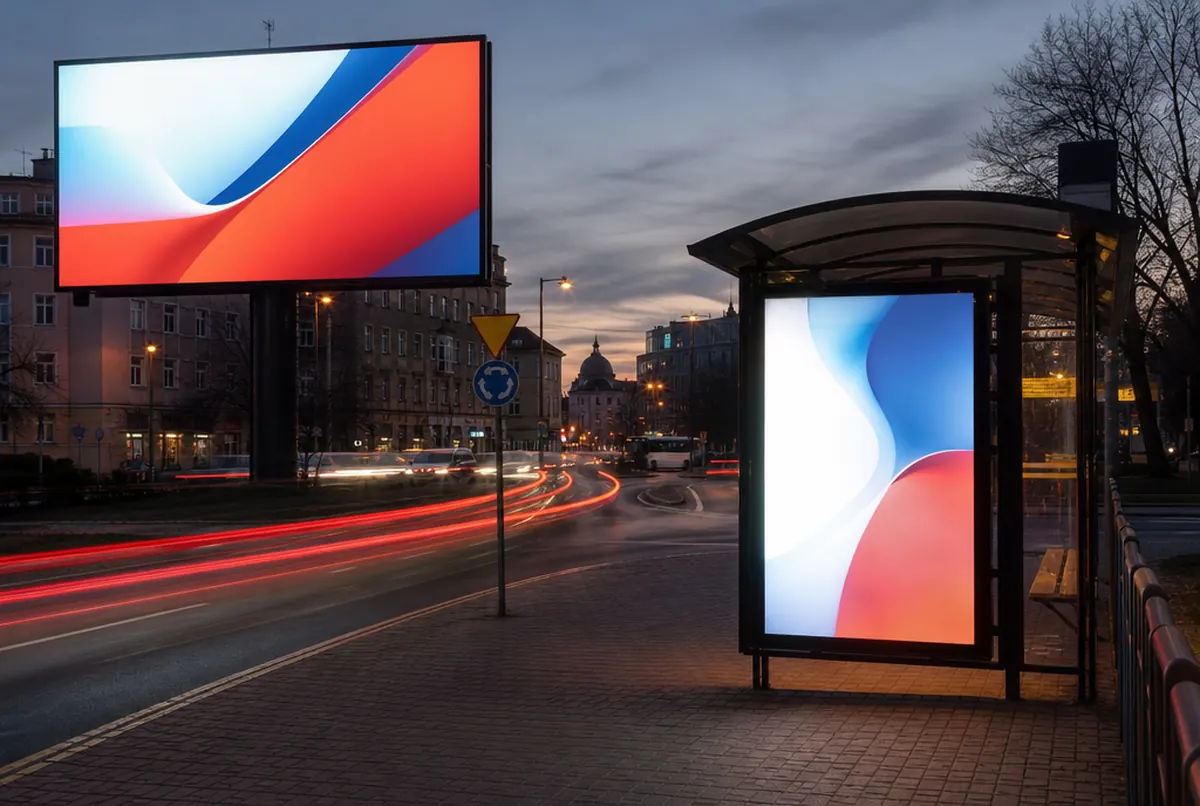
Campaign media – billboards, citylights, banners on fences and scaffolding, mesh on facades. You rent the site for a set period and print a poster or banner for it. Good for promotions, openings, seasonal offers, selling flats.
Mobile and event advertising – wrapped company vehicles, feather flags, gazebos, A-boards outside the premises. It travels or stands wherever you happen to be.
Then there are less obvious forms: curtain-side trailer graphics, banners on sports ground fences, construction site hoardings. Each of these is outdoor too.
What it costs – examples from our price list
| Medium | Example | Indicative price |
|---|---|---|
| Billboard poster | 120 g blueback paper, 504 × 238 cm (approx. 12 m² × €5) | approx. €60 |
| Fence banner | 510 g coated banner, 3 × 1 m (3 m² × €13) | approx. €39 |
| Facade mesh | 370 g mesh, 10 × 6 m (60 m² × €10) | approx. €600 |
| Shop sign | 3 mm dibond with UV print, 300 × 60 cm (1.8 m² × €55) | approx. €100 |
| Illuminated light box | single-sided LED, 300 × 60 cm (1.8 m² × €320) | from approx. €580 |
| Pylon | double-sided illuminated, 3 m high, excluding foundation | from approx. €2,070 |
| Feather flag | Winder Midi 70 × 340 cm with pole | from approx. €75 |
| Billboard structure | 6 × 3 m, galvanised steel, excluding ground works and installation | from approx. €1,730 |
Rates per m² fall with larger areas – coated banner costs approx. €13/m² at 1–4 m², but approx. €9/m² at 5–15 m². We set out the details in how much a banner costs. Billboard rental is agreed with the media owner; the price depends on the city, the street and the period. If you own a plot by a busy road, it can sometimes pay to put up your own structure there rather than paying for someone else's every month, but that is a long-term decision and the regulations need checking.
When outdoor works, and when it is money down the drain
From where we stand (we see what clients reorder a second and third time, and what they do not) outdoor works when three conditions are met.
- Its reach matches your customers. A billboard on the ring road for a furniture store people drive to from the whole district – yes. A billboard in another town for a hair salon – probably not.
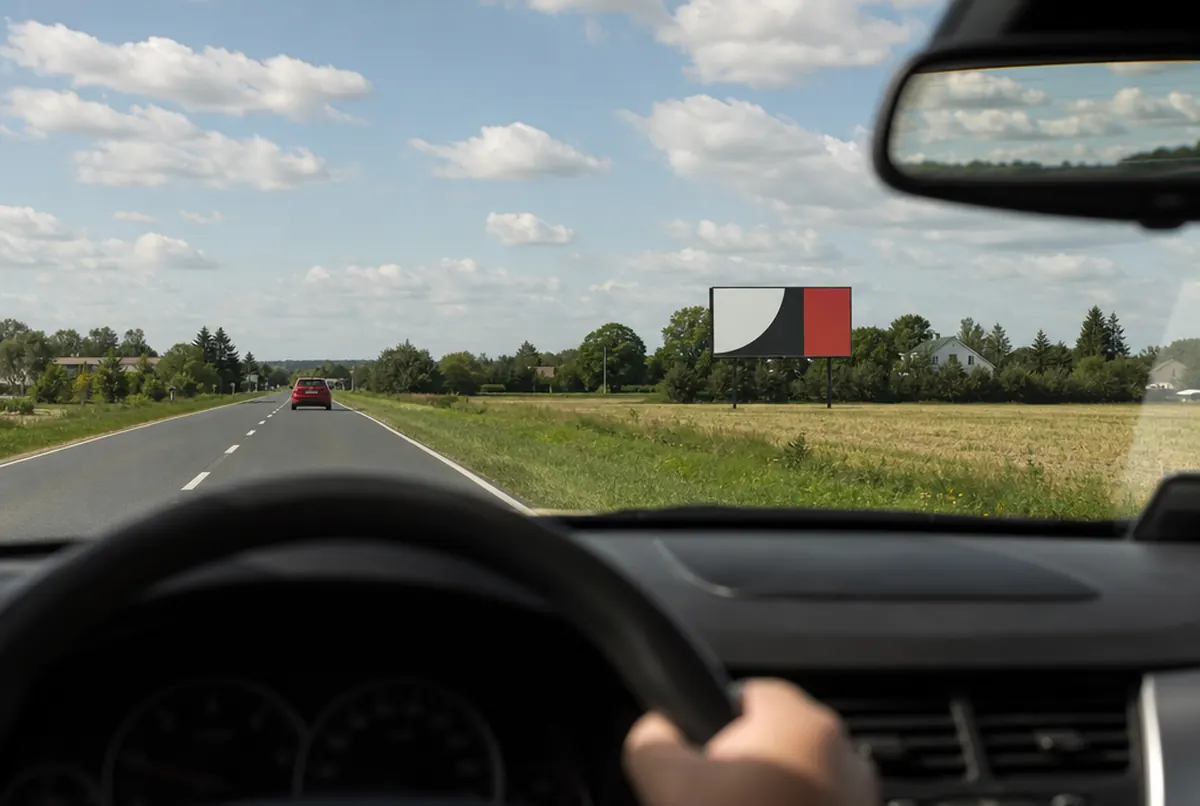
- The message is short. A driver has 2–3 seconds to read it. A name, one promise, one direction or one contact. We usually advise keeping it to a few words. Five lines of text and three phone numbers are the most common mistake we see in files.
- There is repetition. Outdoor works because someone passes the display every day for a month. A single week's exposure rarely changes anything.
We do not recommend outdoor as the only channel for companies that sell exclusively online to customers across the country. A digital campaign works better there; keep print for packaging and dispatch.
- 01Brief
Description, sizes, site photos and deadline — a few sentences are enough.
- 02Design and quote
Our designers prepare artwork or a visualisation and you get a price.
- 03Approval
You approve the design; for brand colours we provide a proof.
- 04Production
35+ machines in our own plant in Poland: 3.2 m UV print, CNC, laser, 3D, sewing.
- 05Installation or delivery
Own crews and vehicles across Europe, partner network, couriers worldwide.
Legibility at a distance – practical rules
Most outdoor advertising goes wrong not in printing but in design. A few rules we apply to every outdoor file:
- Match letter height to distance. As a rule of thumb, allow approx. 3 cm of letter height for every 10 m from which the text must be legible. A sign read from 30 m across the street needs letters approx. 9–10 cm tall, and preferably more.
- Contrast above all. Dark text on a light background or the other way round. Yellow on white, red on black or grey on a photo disappear from a dozen metres.
- A simple typeface. Decorative and thin fonts look good on screen; on a roadside banner they merge into a smudge.
- One large photo. A collage of six small photos reads as noise from a distance.
- A contact that can be remembered. A short web address or a memorable phone number. A QR code makes sense on displays where people stand (at a bus stop, by a pavement fence) not by a dual carriageway.
If you have no design, our studio will prepare one – a simple banner or sign design costs approx. €43 net, with two rounds of changes.
Permissions, regulations and the site
Before ordering anything for a facade, a roadside fence or your own structure, check three things. First: the consent of the owner of the building or fence, or of the building's owners. Second: the local planning rules – many towns specify which signs, what size and where they may be displayed. Third: alongside roads there are rules on distance from the carriageway and consent from the highway authority, and larger structures may need planning or building permission.
The details depend on the location, so we always refer you to the local authority and the highway authority – a general outline is in does a shop sign need permission. For buildings in conservation areas we help prepare the documentation for approval.
Outdoor together with other channels
Outdoor advertising rarely works on its own, and it does not have to. The best results we see come when several channels say the same thing: a fence banner announces the opening, the same artwork appears on a flyer and in a social media post, and on opening day feather flags in the same colours stand by the entrance. The customer meets the brand three or four times in different places, and only then comes in.
Online campaigns (search ads, social media ads) are usually run by a marketing agency or by the owner. We make sure the printed version is consistent with what is online. More on combining the two worlds in print advertising or online.