 Signs & Large Format Print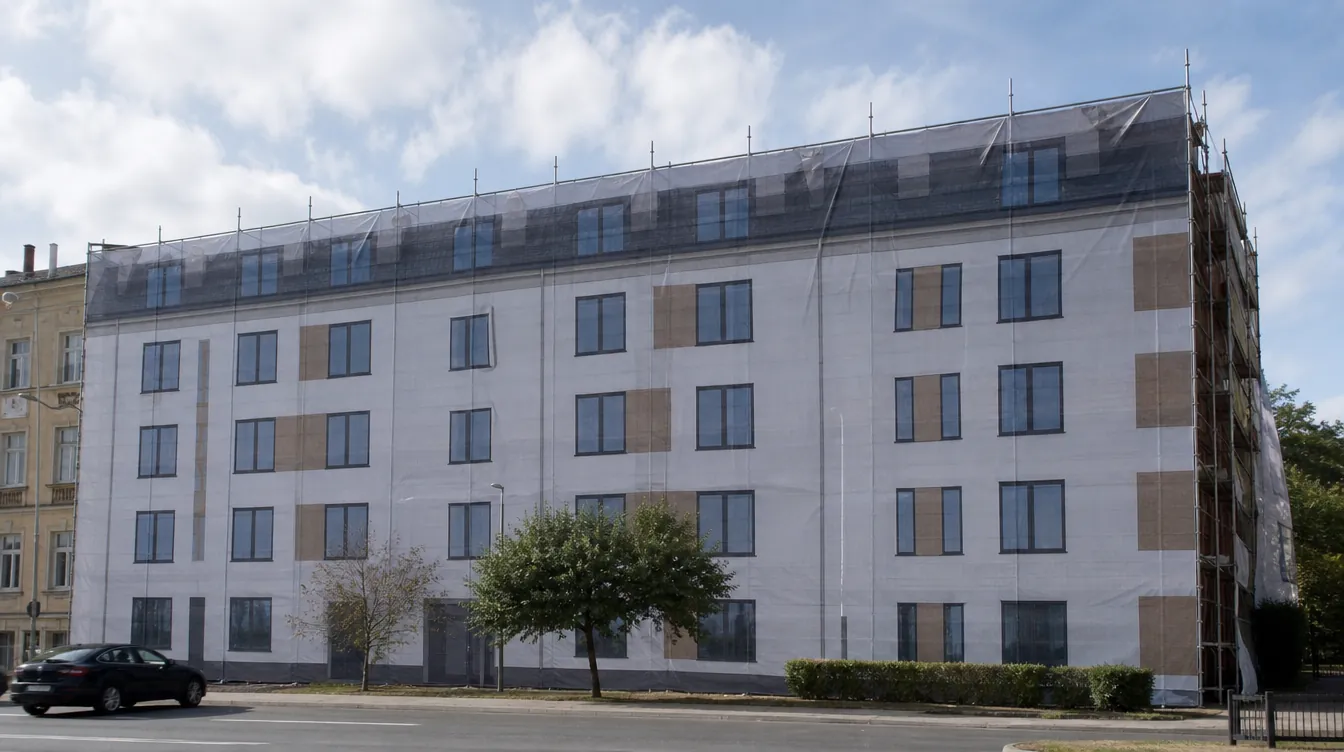
How mesh differs from a banner
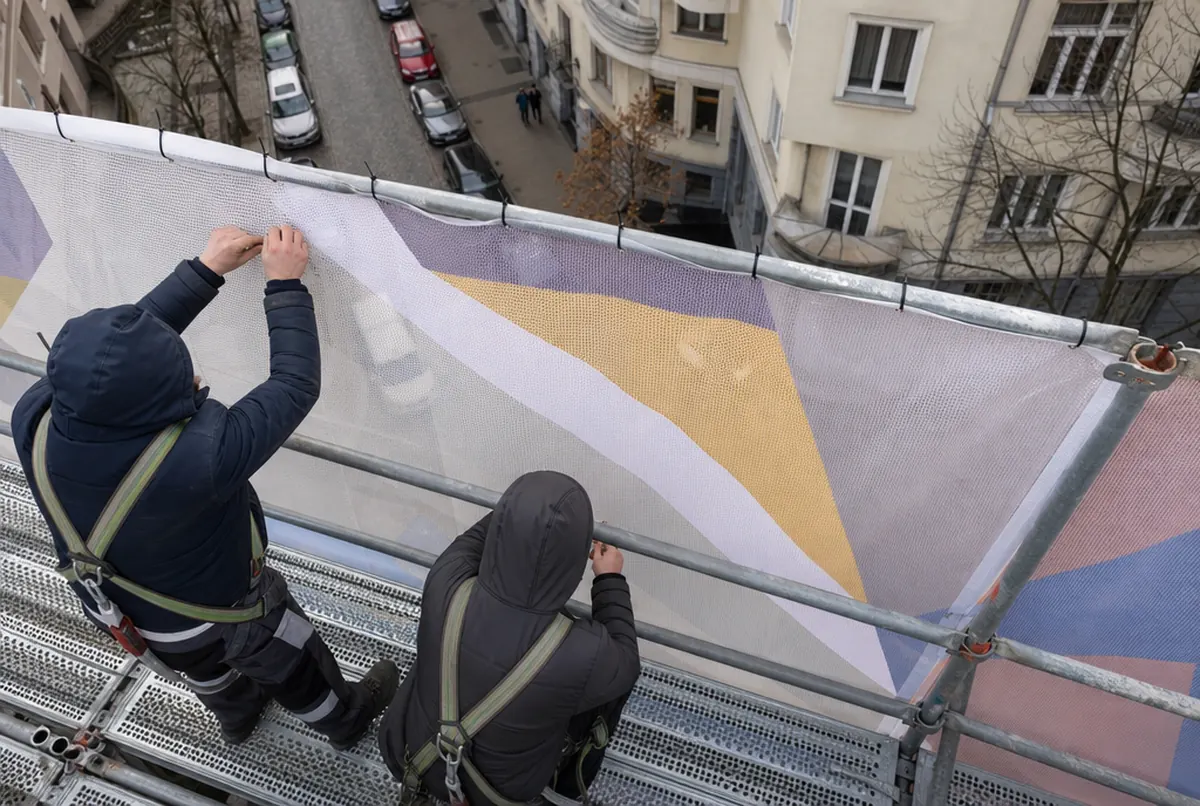
Both are PVC with UV print, and we print both in one piece up to 3.2 m wide. The difference is the structure. A banner is solid: a closed material like a tarpaulin. Mesh has dense perforation that lets air and light through.
This one feature changes everything else: behaviour in wind, the look up close, what can be seen from behind it and how it is fitted. So the choice is not a matter of taste but of where the material will hang.
Comparison: pros and cons
| Feature | Mesh | Solid banner (frontlit) |
|---|---|---|
| Wind load | About 40% lower (270 g mesh) | Full: acts like a sail |
| Colours and contrast | Slightly lighter, less saturated | Full, strong, clean solids |
| Up close | Perforation visible | Smooth surface |
| View from behind | You can see out through windows, light comes in | Blocks windows completely |
| Typical location | Scaffolding, facades, tall hoardings | Fences, ground-floor walls, warehouses, interiors |
| Net price per m² (approx.) | €7–13 (270 g), €10–17 (370 g) | €7–13 (coated 510 g) |
| Pole pockets | 370 g mesh: 12 cm pockets top/bottom included | Pocket approx. €2.35/lm, eyelets every 50 cm included |
When we choose mesh
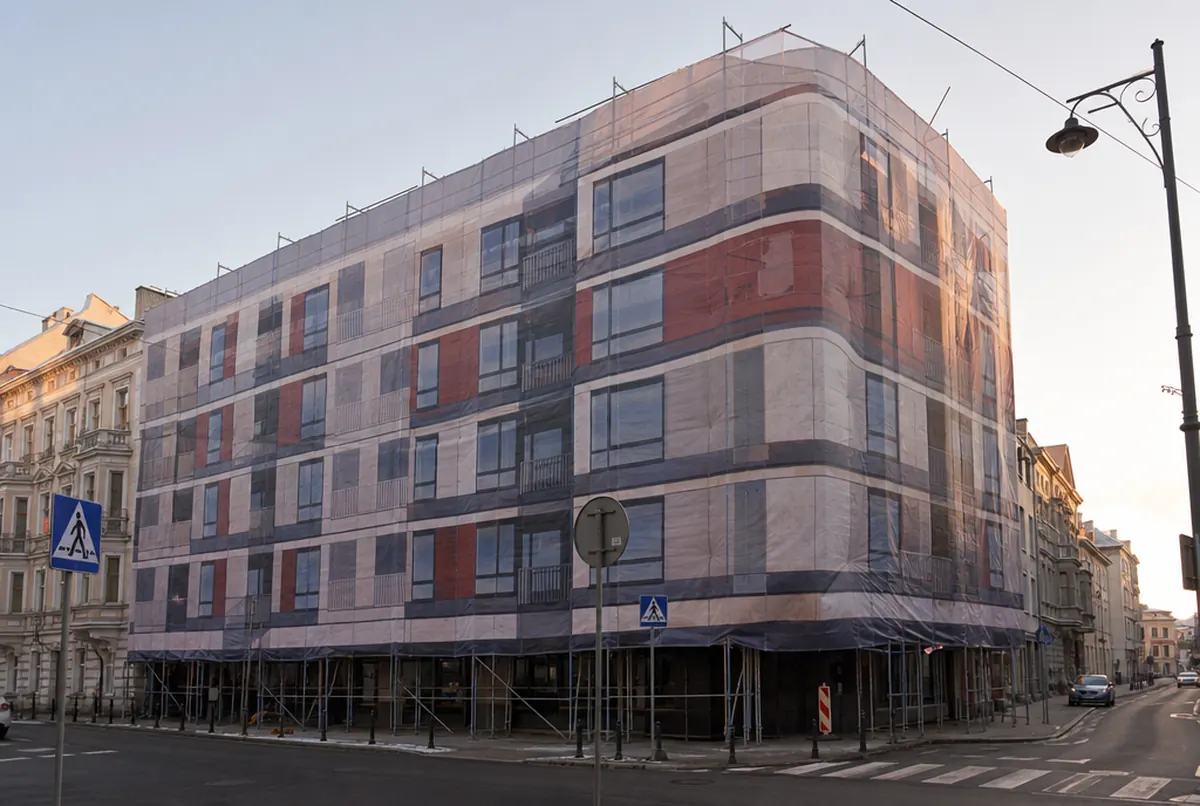
Scaffolding. Here mesh is effectively the standard. A large solid banner on scaffolding transfers a considerable wind load to the structure, and the scaffolding contractor is responsible for its stability. Before hanging anything large, agree it with the company that erected the scaffold: they will usually ask for mesh anyway.
Facades of occupied buildings. Renovation of a period building, a campaign on the side of a block of flats: residents still need daylight in their windows. Through mesh you can see out, while from the street the windows are practically invisible.
High and exposed spots. The higher up, the stronger the wind. A banner on the second floor or on a construction hoarding by open fields lasts noticeably longer as mesh.
We use 270 g mesh for smaller sizes and shorter campaigns, and reinforced 370 g mesh for large areas and longer displays. An overview of materials is on the facade mesh banners page.
When a standard banner is better
When the advert is viewed from a few metres away, the mesh perforation starts to get in the way. Small text loses sharpness and photos look as if seen through a net curtain. On a fence by the pavement, on a ground-floor shop wall, in a hall or on a stage, a standard banner simply looks better.
A banner also wins where there is something behind it you do not want to show: a building site, a warehouse, an unrendered wall. Mesh shows through slightly against the light. If the cover must be complete, we use a black-back banner or blockout.
And one last thing: the brand colour. If a brand has a very distinctive colour that must look exactly as in the brand guidelines, it is easier to achieve on a solid banner. We cover the differences between materials in more detail in which banner material to choose.
- 24 hexpress printing (UV inks need no drying)
- approx. 3 daysstandard lead time
- up to 14 dayslarge and custom projects with installation
Plus courier delivery. Tell us your date — we plan production around it.
Designing for mesh: what to remember
Artwork that looks good on a banner by the pavement can get lost on mesh hung three storeys up. A few rules we apply to facade designs:
- Few elements. Logo, a slogan of a few words, perhaps a phone number or web address. A passer-by gives it two or three seconds.
- Big letters. For mesh seen from 20–30 m, lettering should be at least several dozen centimetres high.
- Strong contrast. The perforation lightens the image, so light text on a light background stops being legible. Dark background with light text, or the other way round.
- Keep key elements away from seams and pockets. The welded seam between panels and the top pocket are places where we never put faces or phone numbers.
Resolution for such a format can be low; more on this in our guide to resolution for large format printing.
What facade mesh costs: an example
Take a scaffolded facade 12 m wide and 8 m high, i.e. 96 m². That is the 50–99 m² band.
- Reinforced 370 g mesh: 96 × approx. €10 = approx. €960 net. Top and bottom pockets included.
- 270 g mesh: 96 × approx. €7 = approx. €670 net.
- For comparison, 510 g coated banner: 96 × approx. €7 = approx. €670 net.
Then there are items that are easy to forget. We print in panels up to 3.2 m, so 8 m of height needs two joining seams of 12 m each: 24 lm × approx. €2.80 = approx. €67. For such a large area we recommend webbing around the edge (40 lm × approx. €3.05 = approx. €122), because it holds the shape and relieves the eyelets.
We install at height from a cherry picker up to 18 m (from approx. €230 net per day with operator) plus crew time; abroad we can also ship the mesh ready to hang for your scaffolding contractor. If the advert is to stay on the building permanently, check the local requirements first; see our guide to advertising on a building facade.