 Signs & Large Format Print
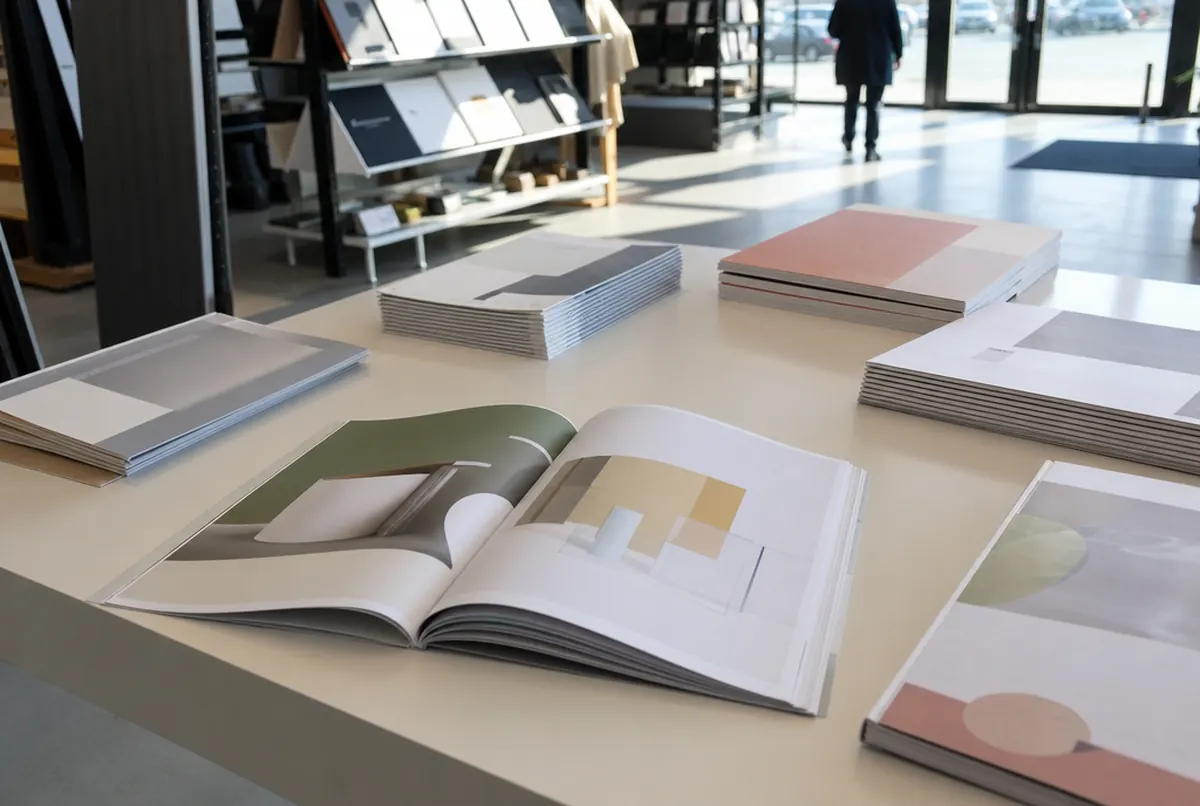
What a brochure costs: examples from our price list
| Product | Specification | Quantity | Price | Per copy |
|---|---|---|---|---|
| A4 stapled brochure | 16 pages, 4/4, matt coated 170 gsm | 100 | approx. €220 | approx. €2.20 |
| A4 stapled brochure | 16 pages, 4/4, matt coated 170 gsm | 500 | approx. €490 | approx. €1 |
| A5 stapled booklet | 16 pages, 4/4, matt coated 130 gsm | 500 | approx. €240 | approx. €0.50 |
| A4 stapled promotional leaflet | 8 pages, 4/4, coated 130 gsm | 1,000 | approx. €280 | approx. €0.28 |
There is a typical pattern here: for five times the quantity, the A4 brochure costs just over twice as much, and the price per copy falls by more than half. So before ordering 100 copies "as a trial", ask yourself whether you will hand out 300–500 within a year. Current options are on the brochures and booklets page.
Page count: why it must be divisible by 4
A stapled brochure is made of sheets folded in half and nested inside each other. Each sheet is 4 pages. So a brochure can have 8, 12, 16, 20 or 24 pages, but not 14 or 18. The cover is part of that count too, unless you order a cover on heavier stock, in which case it is counted separately (e.g. 16 pages of text + 4-page cover).
What if your content comes to 14 pages? We usually suggest one of three solutions:
- add 2 pages with something useful: an order form, a list of distributors, notes, a gallery of projects,
- cut the content to 12 pages: brochures almost always benefit,
- give the layout more breathing space and spread the products more loosely over 16 pages.
Blank pages at the end look like a mistake. It is better to plan them from the start.
When planning pages, it helps to start with a flat plan: cover, introduction, product groups in order, contact details on the last page. A simple table in a spreadsheet or on paper saves hours of shifting pages in the design and shows straight away whether it comes to 12, 16 or 20 pages.
Binding: stapled, perfect bound or hardback
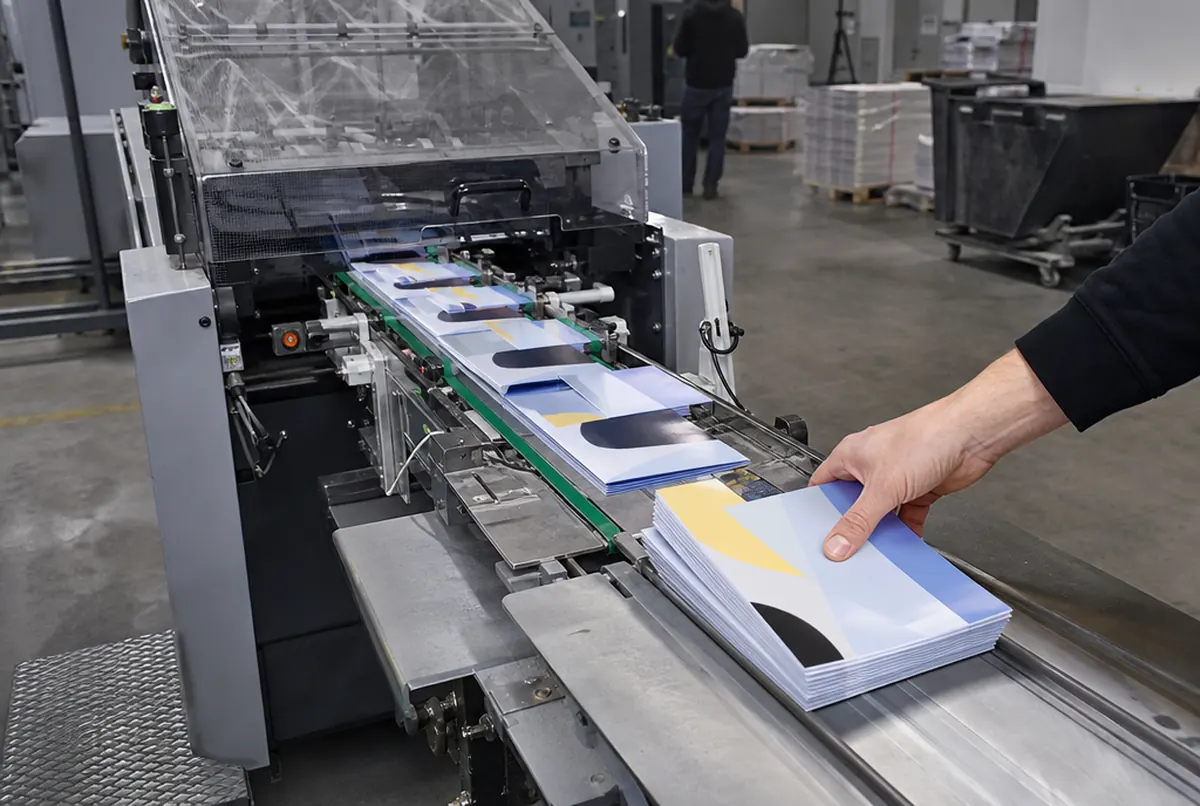
Saddle stitching (stapled): staples in the spine. Cheap and quick, and the brochure opens well and lies flat. It works up to about 48–64 pages, depending on paper weight. With more pages the spine bulges and the centre pages creep out noticeably.
Perfect binding: pages glued at the spine with a heavier card cover. It looks like a paperback, with a flat spine that can carry the title. We recommend it from about 48 pages up and for brochures meant to stand on a shelf. Bear in mind that a perfect-bound brochure does not open as freely as a stapled one, so a larger margin is left at the spine.
Hardback: for albums, anniversary books and prestige publications. That is more a book than a brochure. For example: an A5 hardback book, 164 pages, black-and-white text on 90 gsm uncoated paper, costs approx. €700 net for 100 copies with us; more on the book and publication printing page.
We quote perfect binding for brochures from a description, because the price depends heavily on the page count and paper.
Paper for the cover and text pages
The most common combination we suggest: text pages on 130–170 gsm matt coated paper, with the cover on the same stock (self-cover) or on heavier 250–350 gsm coated board with matt lamination.
- Matt coated 130 gsm: lighter and cheaper, good for higher page counts and brochures sent by post.
- Matt coated 170 gsm: stiffer; the brochure feels substantial in the hand. Our standard for A4 brochures up to 24 pages.
- 250–350 gsm cover with lamination: the brochure stays looking good for longer and does not crease when browsed or slipped into a folder.
Gloss coated paper makes product photos livelier, but in a brochure with a lot of text and prices it tires the eyes. If the brochure will be read at a desk, matt is more comfortable. On the cover, consider a finish: spot UV on the logo or a product photo makes an impression without a big cost.
- 24 hexpress printing (UV inks need no drying)
- approx. 3 daysstandard lead time
- up to 14 dayslarge and custom projects with installation
Plus courier delivery. Tell us your date — we plan production around it.
Checklist before ordering a brochure
- Format: A4, A5, square or other; check whether the brochure needs to fit an envelope or folder.
- Page count divisible by 4, self-cover or plus a separate cover.
- Binding: stapled up to about 48–64 pages, perfect bound above that.
- Paper for text and cover, plus any lamination or varnish.
- Quantity: count realistically how many you will hand out before prices and the offer change.
- PDF file with 3 mm bleed, in CMYK, text at least 8–10 mm from the edges and spine. The rules are in our guide to print bleed.
- Text and prices proofread by two different people.
- Deadline: a brochure usually takes a few working days, longer with perfect binding and finishes. If it is for a trade show, order with time to spare, also allowing for delivery.
Our studio in Wieluń can also design the brochure: from page layout to preparing product photos for print. Work on complex designs is charged at approx. €35 net per hour; details on the graphic design and artwork page.