 Signs & Large Format Print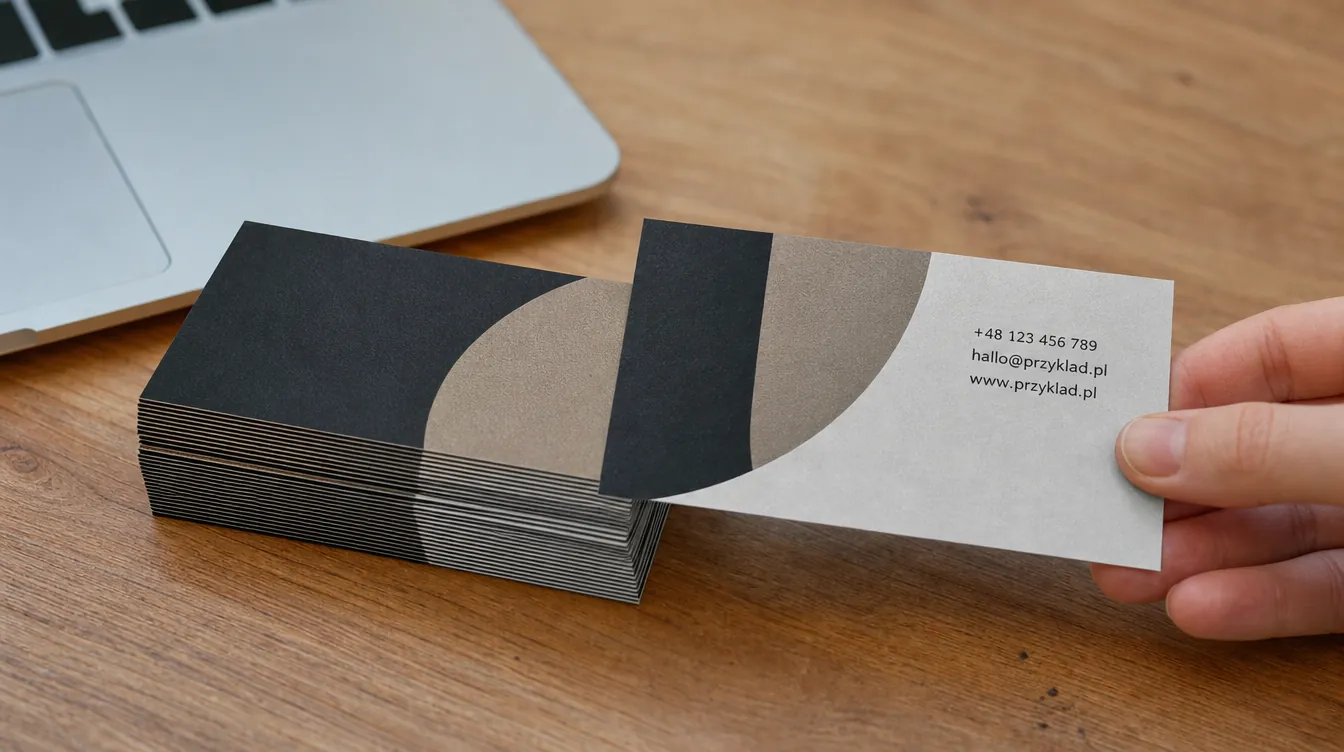
How the two technologies differ
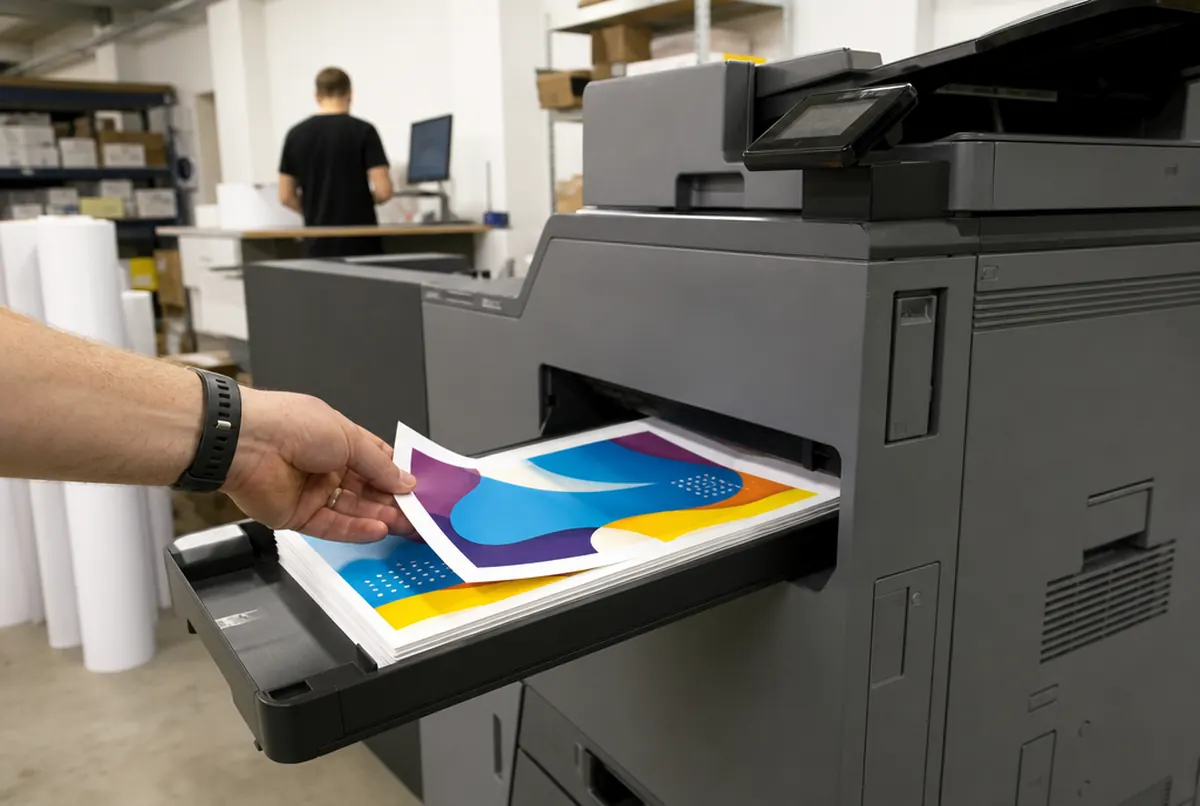
Digital printing works like a very fast printer: the file goes straight to the machine, which prints sheet after sheet. There are no printing plates and no lengthy make-ready. Every sheet can be different, so digital lets you personalise print (a name, a number, a code) at no extra set-up cost.
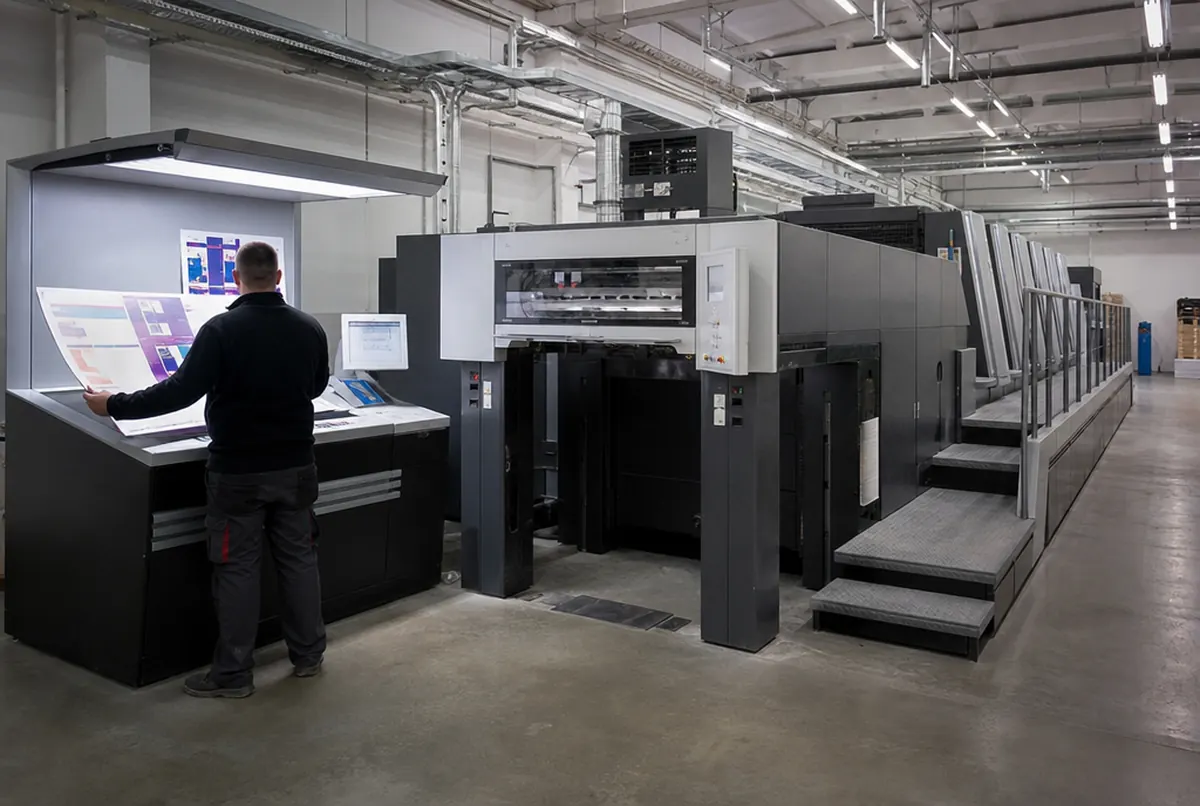
Offset printing needs plates made for each colour and the press set up before the first good sheet comes off. That costs money and takes time, but then the press runs very fast and each additional sheet is cheap. Offset also allows printing with Pantone inks, not just building colours from CMYK.
So in practice, "digital or offset" comes down to how many copies you need and how much time matters.
Comparison: pros and cons
| Criterion | Digital printing | Offset printing |
|---|---|---|
| Cost-effective quantity | from 1 copy to usually a few thousand | large runs, usually from several thousand up |
| Set-up cost | practically none | plates and make-ready for every job |
| Turnaround | often 1–3 working days, 24 h express | longer, depends on the queue and drying |
| Personalisation | yes, every copy can be different | no, all copies identical |
| Pantone colour | matched in CMYK, approximately | can print with Pantone ink |
| Small reprint | quick, with no start-up costs | uneconomic for small quantities |
| Unit price on large runs | falls more slowly | falls very sharply |
How the price falls with quantity: examples
Even in digital printing the unit price drops noticeably with quantity, because fixed costs (file check, cutting set-up, packing) are spread over more copies. A few examples from our price list:
- Business cards 90 × 50 mm, 4/4, matt coated 350 g: 500 for approx. €15 net (approx. €0.03 each), 1,000 for approx. €25 net (approx. €0.025 each).
- A2 poster, 4/0, coated 170 g: 10 for approx. €28 net (approx. €2.80 each), 100 for approx. €85 net (approx. €0.85 each).
- A4 stapled brochure, 16 pages, matt coated 170 g: 100 for approx. €220 net (approx. €2.20 each), 500 for approx. €490 net (just under €1 each).
- Double-sided A4 colour printing in short runs under 100 is approx. €0.20 net per page, and from 1,000 pages approx. €0.10 net per page.
That is a good argument against ordering batches that are too small "as a trial" if you already know the material will be used up within a few months.
When to choose digital printing
- Runs of up to a few thousand: business cards, flyers, folded leaflets, brochures, invitations, letterheads.
- Short deadlines: digital print does not need drying time like offset, so material can leave right after cutting. Our standard is about 3 working days, and 24-hour express is possible.
- Personalisation and numbering: ID badges, vouchers with unique codes, invitations with names, numbered tickets. Variable data starts from approx. €0.05 net per record. More on the personalised and numbered printing page.
- Several versions of one design: e.g. a flyer in five versions for five branches, 200 of each.
- Frequently changing content: price lists, seasonal offers, trade show material you update every quarter. Better to reprint 300 than throw away 3,000 outdated copies.
- 24 hexpress printing (UV inks need no drying)
- approx. 3 daysstandard lead time
- up to 14 dayslarge and custom projects with installation
Plus courier delivery. Tell us your date — we plan production around it.
What to watch when comparing quotes
Clients often send us two quotes and ask why the difference is so big. Usually the answer is in the details, not the technology.
- The same paper? 130 gsm and 170 gsm coated are different costs, and a quote sometimes just says "coated".
- Single- or double-sided? 4/0 and 4/4 are not the same, even if both quotes are for "A5 flyers".
- What is included? File check, cutting, creasing, folding, packing, delivery.
- Deadline. An offset quote with a two-week turnaround does not help when the trade show is in five days.
- Reprints. With offset a small reprint is expensive; with digital it is simple. If content changes often, what counts is the cost over the whole year, not one batch.
So compare the total cost of the quantity you need, by the date you need it, not just the unit price.
When offset has the edge, and what we do about it
Offset makes sense for large, repeat runs: tens of thousands of letterbox flyers, a retail chain's leaflet every two weeks, books in large runs, print with a Pantone colour that must be repeatable to the exact shade.
In Wieluń we print small format material digitally: it is our everyday work on business cards, flyers, brochures and letterheads. For very large runs we quote the job individually and tell you plainly whether digital is still cost-effective in that case. There is no point pushing a technology that will cost you more.
If you are not sure which way to go, send us the format, page count, paper, quantity and deadline. From that description we can quickly judge what pays off better. Tips on writing an enquiry that gets a quote straight away are in how to order signage and print.