 Signs & Large Format Print
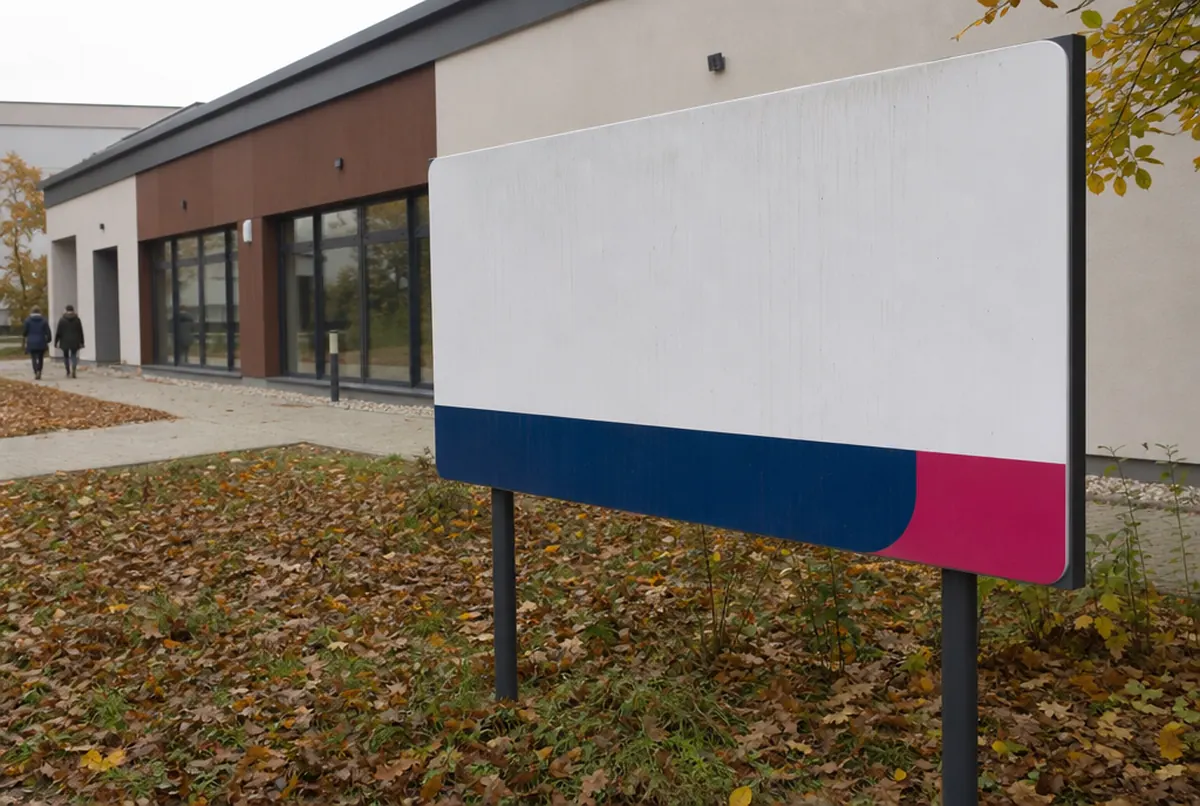
Timeline: from signing the agreement to the end of durability
| Project stage | What happens to the sign or poster | What to watch |
|---|---|---|
| Signing the agreement | order the sign or poster according to the programme template | do not wait for works to start: production and design approval take several days |
| Start of physical implementation / equipment installation | the sign stands in a visible place promptly after the start | take a dated photo for the file |
| Implementation | the sign stays up and legible | damage, fading, being hidden by scaffolding |
| Completion and final payment | the sign stays | moving it from the site to the building, if the template or agreement says so |
| Durability period | the sign remains visible | on-site inspections, replacing a damaged sign |
| After the durability period | the obligation lapses | take it down or leave it as a memento |
The durability period generally runs from the final payment to the beneficiary. The EU Common Provisions Regulation sets 5 years for investments in infrastructure or productive investments, and member states may reduce it to 3 years for SMEs. The exact date is written in your agreement, and that is what is binding, not the general rule.
Why the sign has to last several years
Add up implementation and durability, and it often comes to 6–8 years. That is a long time for something standing by a road, in the sun and within reach of passers-by. So choosing the material for an EU-funded project sign is not a question of looks but of peace of mind at inspection.
What works in our practice:
- 3 mm Dibond with UV print: rigid, does not absorb water or swell. Its outdoor life is measured in years, not seasons.
- Anti-graffiti laminate (approx. €10 net/m²): for signs in public places where someone may scrawl on them.
- A solid galvanised frame instead of wooden stakes, which rot at the base after two winters.
- Mounting at a height that is hard to reach from the ground: it limits damage.
Foam PVC, which works well in a lobby, can warp outdoors after the first summer. We compare them in Dibond or PVC outdoors.
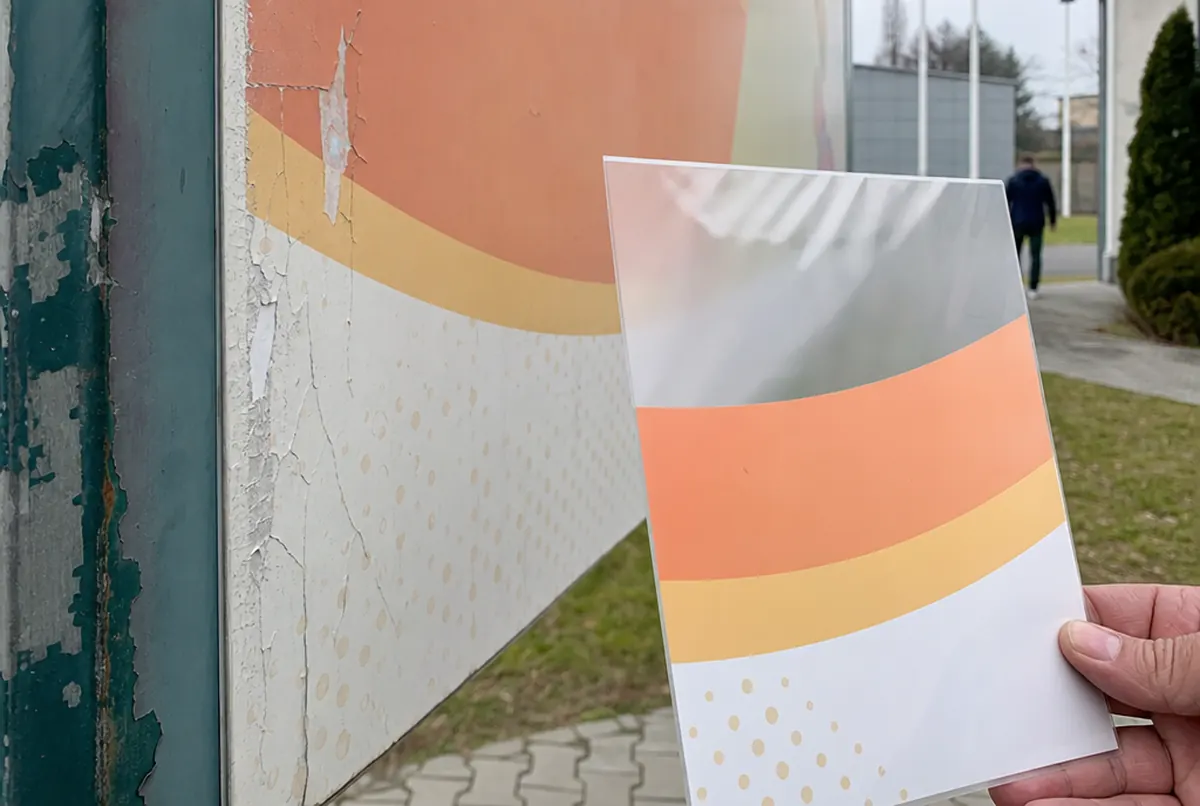
Sign damaged, faded or stolen: what to do
While the signage obligation applies, a damaged sign must be replaced. Programmes say so explicitly. In practice it goes like this:
- Photograph the damage and, if it is vandalism, report it: it will be useful for the file.
- Find the invoice or order: we keep job files, so reprinting an identical sign needs no new design or approval.
- Order just the panel if the frame is intact. A 240 × 120 cm Dibond panel is approx. €160 net (2.88 m² × approx. €55).
- Swap the panel on the same structure and take a new dated photo.
Also tell your project officer if the sign was missing for a longer time. Better to explain straight away than to justify yourself at an inspection.
What happens if there is no sign during the durability period
The Common Provisions Regulation provides that if a beneficiary does not meet its visibility obligations and does not put this right after being asked to, the authority may reduce the support by up to 3% of the EU funding. Usually you first receive a request to remedy the shortcoming, and only a failure to respond has financial consequences. How this works in your programme is described in the grant agreement and the beneficiary handbook; do not treat this guide as a legal interpretation.
On a project worth several million, even a fraction of that 3% costs many times more than a new sign. That is why we advise taking a look at the signage every year, e.g. during a building inspection.
A quick checklist for that review: is the sign straight and stable; is anything hiding it (shrubs, a new fence, cars parked right in front); have the logo colours faded so much that the EU flag has turned pale blue; are there any scrawls or stickers on the panel? Five minutes once a year is usually enough.
- 24 hexpress printing (UV inks need no drying)
- approx. 3 daysstandard lead time
- up to 14 dayslarge and custom projects with installation
Plus courier delivery. Tell us your date — we plan production around it.
After the durability period: take it down, leave it or replace it with a commemorative plaque
When the durability period ends, the obligation lapses. There are three options:
- Leave it: if the sign is in good condition and not in the way. Many municipalities do this, because it tells residents where the money came from.
- Take it down: for signs on frames that take up space. Removal of old signage with disposal is charged from approx. €16 net/m², plus crew time (approx. €42 net per hour) and travel.
- Replace it with a smaller commemorative plaque on the facade: Dibond, acrylic on stand-offs or engraved. We cover this in commemorative project plaques.
If another project has since been carried out in the building, the old sign may be confused with the new one. Then we tidy up the signage as a whole, as with signs for municipalities running many projects.