 Signs & Large Format Print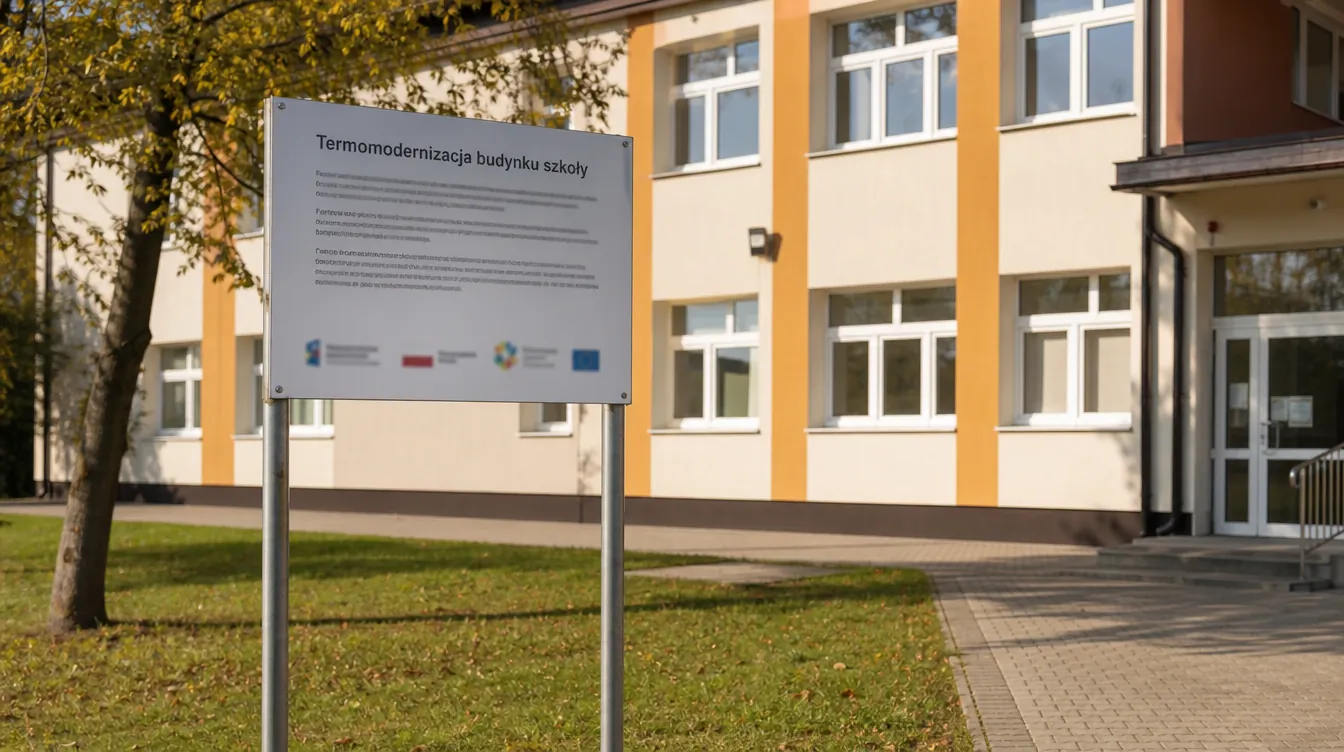
When an A3 poster instead of a plaque
In 2021–2027 the logic is simple: large projects with construction works or equipment purchases get a plaque or billboard; the rest get a poster. A poster is usually enough when:
- the project's total cost does not exceed the threshold for plaques (for the ERDF and Cohesion Fund it is €500,000; for some ESF+ projects a lower threshold applies);
- the project is "soft" (training, advice, services, research) and involves no investment where a plaque would make sense;
- the programme explicitly names the poster as the beneficiary's minimum obligation.
This is a general description; what exactly you must do is decided by your grant agreement and the programme handbook. If your project is close to the threshold, or combines training with an equipment purchase, ask your project officer. For larger projects, read our guide EU-funded project signs 2021–2027: sizes, elements, material.
What must be on the poster
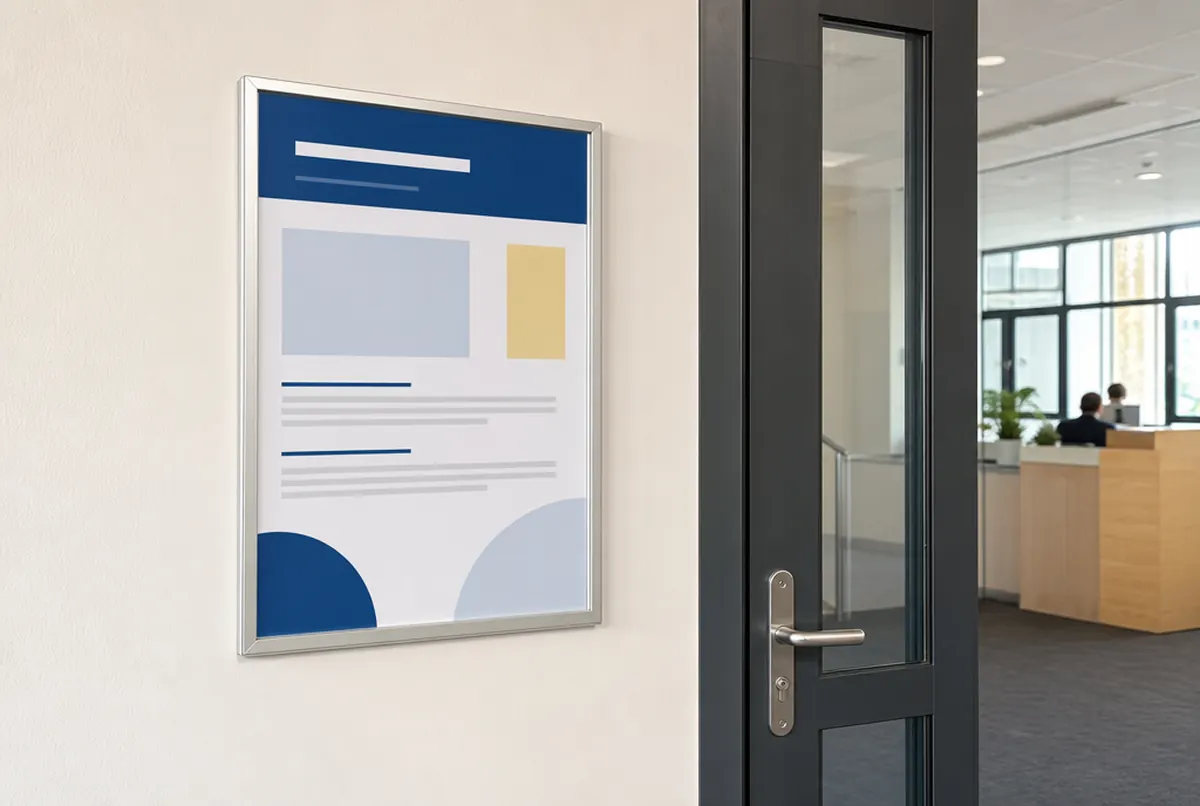
In practice a poster is a scaled-down plaque. Programmes provide ready templates, and you must work from them. Typically they include:
- the logo sequence: the EU emblem with the funding statement, plus the national and programme marks set by the template (in Poland, for example, the European Funds mark with the programme name, the national colours and, in regional programmes, the region's logo);
- the beneficiary's name;
- the project title;
- often the project's objective and the amount of EU funding;
- a web address, if the template requires one.
The minimum size is A3, but nothing stops you going bigger: in a wide lobby or on a fence, A2 or B1 simply reads better. When enlarging, scale all elements proportionally, without moving the logos.
Paper, PVC or Dibond: what to print the poster on
| Material | Where it works | Calculation for A3 | Notes |
|---|---|---|---|
| Satin poster paper 170 g | noticeboard, display case, indoors | 0.125 × approx. €11 = approx. €1.40 | the cheapest, but easily damaged |
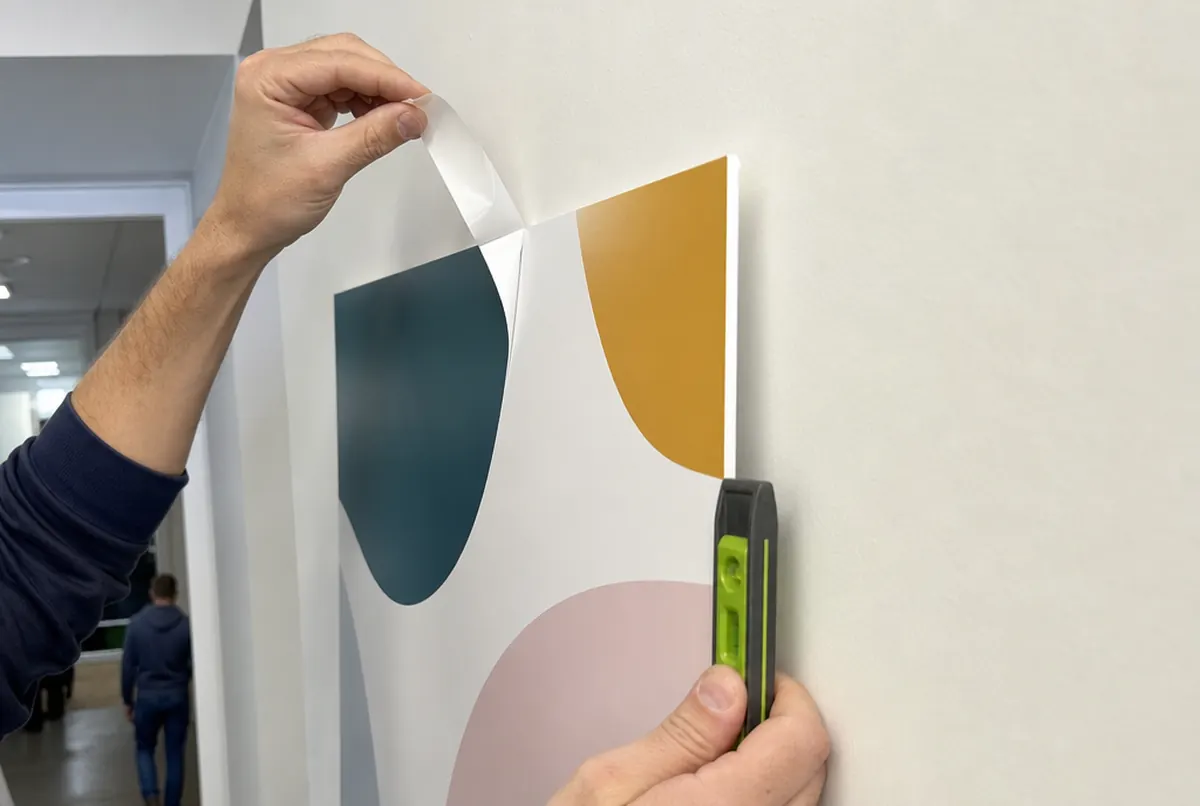
| Foam PVC 3 mm | indoors: lobby, corridor, meeting room | 0.125 × approx. €33 = approx. €4 | rigid, can be screwed or bonded |
| Dibond 3 mm | outdoors: entrance, fence | 0.125 × approx. €55 = approx. €7 | lasts the whole project period outside |
| Acrylic 3 mm on stand-offs | reception, prestige interiors | 0.125 × approx. €60 = approx. €8 | glass effect, stand-offs approx. €2.35 net each |
Our minimum order value is approx. €24 net, so a single A3 poster will not reach it on its own anyway. That is why we advise ordering several at once: one for each building where the project runs, and one spare. Example: 5 A3 posters on Dibond = 5 × 0.125 m² = 0.62 m² × approx. €55 = approx. €34 net. You keep an identical spare in case someone tears down the one at the entrance.
Where and when to hang the poster
The poster must be visible to people who use the project or pass the place where it is carried out. In practice that is most often:
- the building entrance or the project office door,
- the training room or the room where the purchased equipment stands,
- a fence or gate, when the project is carried out outdoors.
The deadline for putting it up is set by the agreement or programme handbook. You will see wording such as "promptly after the start of implementation" or "no later than one month after funding is granted". The poster stays up while the project runs, and a damaged one must be replaced. Do not leave it to the last week before an inspection: inspectors photograph the signage and compare it with the template.
Good practice: after hanging it, take a dated photo of the poster and add it to the project file. When you submit a payment claim, many authorities ask for exactly this kind of photographic evidence, and recreating it two years later can be difficult.
- 24 hexpress printing (UV inks need no drying)
- approx. 3 daysstandard lead time
- up to 14 dayslarge and custom projects with installation
Plus courier delivery. Tell us your date — we plan production around it.
An electronic display instead of a poster
The rules allow an equivalent electronic display instead of a poster. It sounds modern, but it only makes sense if you already have a screen (in a council, school or company lobby) and can guarantee that the project information will be permanently visible on it. A screen switched off at night, with content rotating every few minutes among other notices, is a topic for discussion with an inspector. A Dibond poster costing a few euros raises no such doubts. Our speciality is permanent media: we print them and install them.
The most common mistakes with EU posters
- A print from an office printer, slipped into a plastic sleeve and taped up. Faded and wavy after a month.
- An old template from the 2014–2020 period: different logos, different layout.
- Low-resolution logos, blurred at the edges.
- The poster in a place nobody sees it, e.g. in the project manager's closed office.
- No poster at a second location where the project is also carried out.
If you do not have a file, our graphic studio will prepare it according to the programme template. We ship finished posters by courier across the EU, and in Poland we can also install them.