 Signs & Large Format Print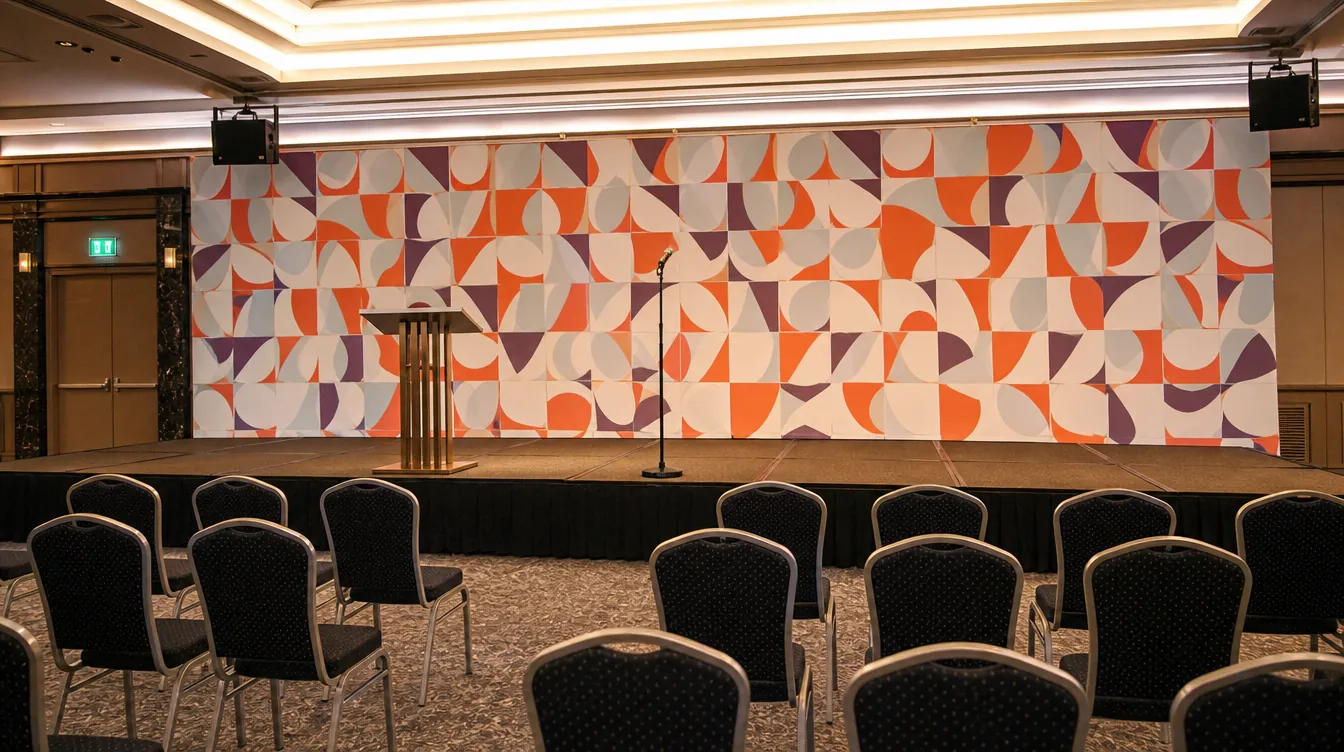
In short: how they differ in practice
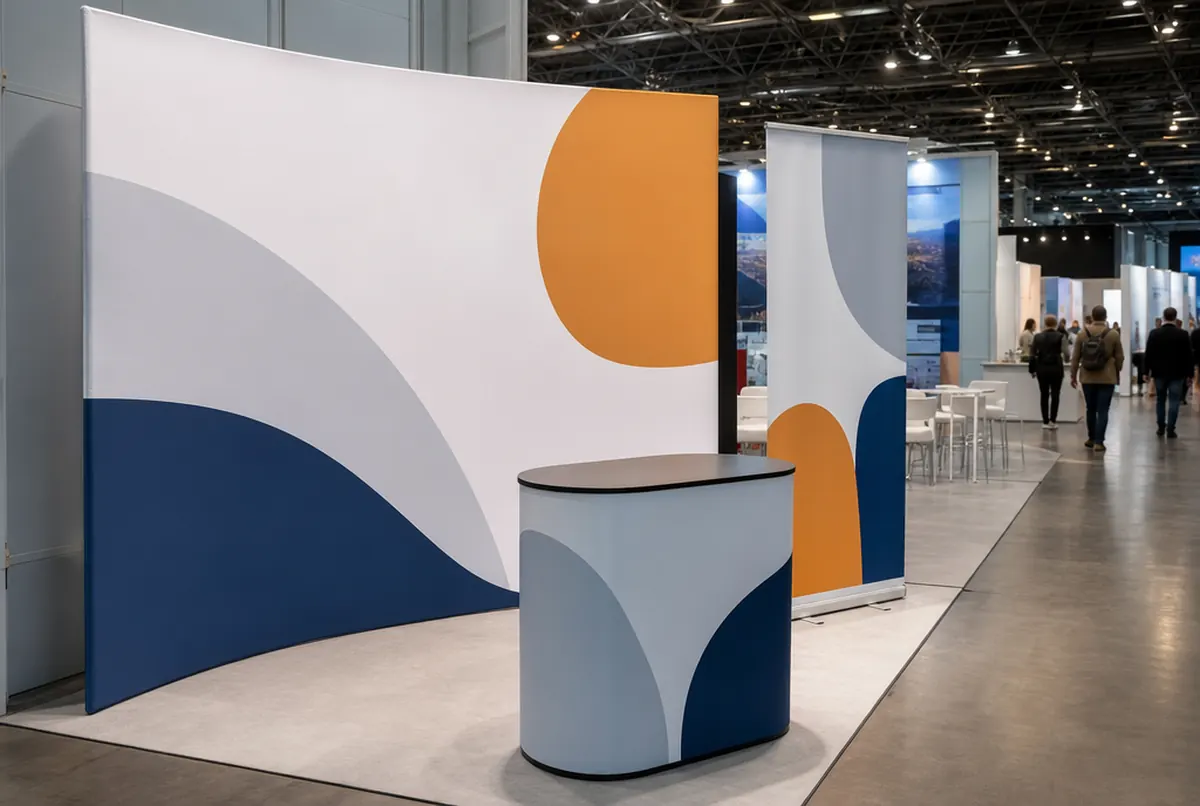
A roll-up is a single narrow poster: 85 or 100 cm wide, sometimes 120 or 150 cm. A fabric display wall is a folding frame onto which one large fabric graphic is fitted, most often 300 × 230 cm. The first is an information point; the second closes off the back of the stand and turns it into a coherent space.
At a trade show you see the difference straight away. Three roll-ups placed side by side always leave gaps, the poles show, and each one stands slightly differently. A wall is one surface: the logo can be large, a photo can run across the full width, and from the aisle the stand looks bigger and neater than it is.
Cost comparison
| Option | Backdrop width | From | New graphic |
|---|---|---|---|
| Standard roll-up 100 × 200 cm | 100 cm | approx. €65 | approx. €24 |
| Three 100 × 200 cm roll-ups side by side | approx. 300 cm with gaps | approx. €195 | approx. €72 |
| Straight banner wall 300 × 230 cm | 300 cm | approx. €240 | approx. €130 |
| Straight pop-up fabric wall 300 × 230 cm | 300 cm | approx. €400 | approx. €190 |
| Curved fabric wall 300 × 230 cm | 300 cm | approx. €440 | approx. €210 |
| Straight fabric wall 400 × 230 cm | 400 cm | approx. €500 | approx. €240 |
Looking only at the first purchase, three roll-ups cost about half as much as a fabric wall. The difference shrinks once you count how many events you will take it to and how you will look next to your neighbours. After a few shows, a wall costs well under a hundred euros per event and still looks like new: fabric does not crease permanently or scratch.
Fabric display wall: pros and cons
Pros:
- One continuous backdrop with no gaps: a big logo and a photo across the full width.
- Fabric does not reflect light. In photos and video there is no glare from spotlights, which is a common problem with PVC banner walls.
- The graphic does not crack when folded. It can be folded like a tablecloth and ironed if it creases.
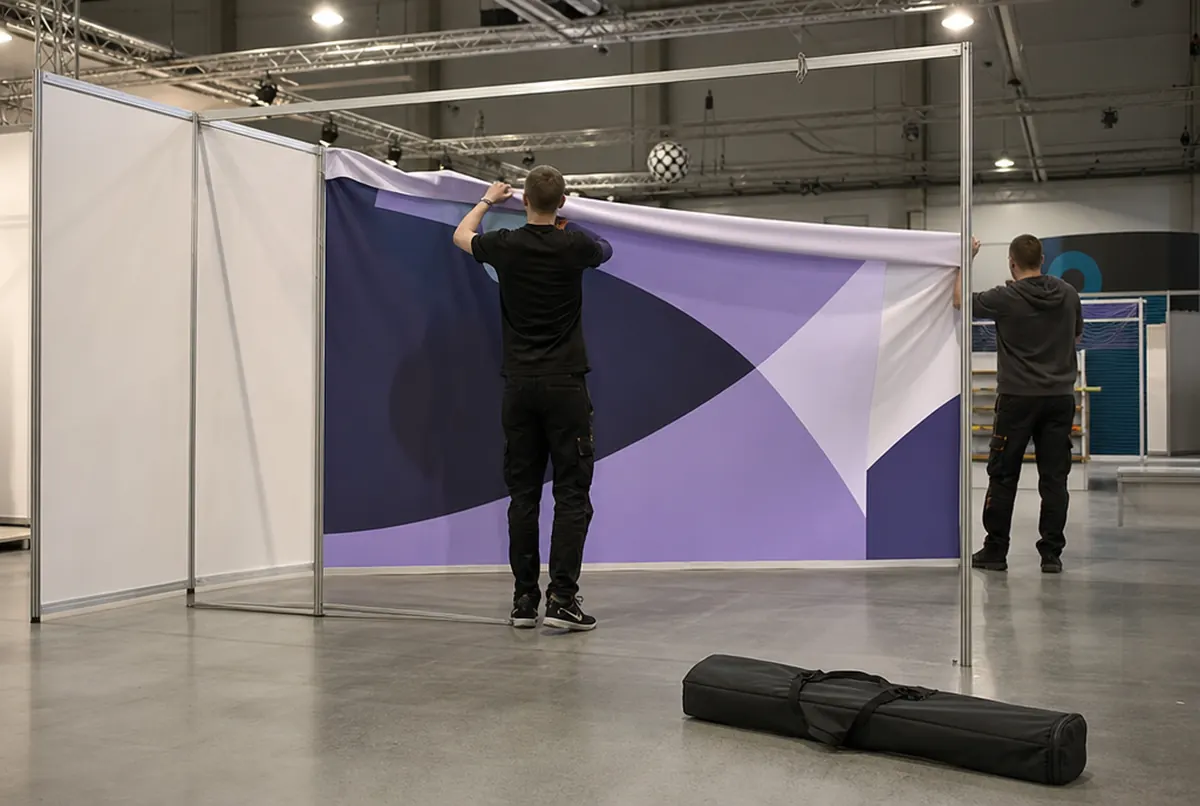
- Set-up takes a quarter of an hour or so, without tools.
Cons:
- Higher initial cost.
- A bigger, heavier bag than a roll-up: travelling alone by train, that can be a problem.
- You need about 3 m of width and some depth behind for the frame. It will not fit on a 2 × 2 m stand.
Roll-up: pros and cons
Pros:
- Low price, from approx. €55 net for a set.
- Fits in any car boot; one person carries it and sets it up in a minute.
- Flexible: one day by the reception, the next at the entrance to a hall, then in a shop.
Cons:
- A small surface: room for the logo, a slogan and a few points, nothing more.
- Roll-ups lined up in a row do not form one image.
- Cheaper cassettes start rolling the graphic unevenly after a few dozen uses.
More on choosing a specific model in which roll-up banner to choose.
- 24 hexpress printing (UV inks need no drying)
- approx. 3 daysstandard lead time
- up to 14 dayslarge and custom projects with installation
Plus courier delivery. Tell us your date — we plan production around it.
What we recommend in different situations
A few typical situations clients call us about, and what we usually advise:
- First trade show, small 2 × 2 m stand, budget around €350: two 100 × 200 cm roll-ups and a promotional counter or a logo tablecloth. A wall will not fit.
- 3 × 2 m or 3 × 3 m stand, several events a year: a 300 × 230 cm fabric wall as the backdrop plus one roll-up at the aisle edge. This is the most popular set.
- Conference, gala, interviews: a fabric wall or a press backdrop. Roll-ups behind a speaker look poor in photos.
- Sales rep on the road, presentations at clients: a premium roll-up with a changeable cassette. A wall would be overkill.
- Large stand, over 12 m²: here it is better to think in terms of SEG frame modules or a 400–590 cm wall than single displays.
If you are torn between a straight and a curved wall: the curved one has the same size, costs about €40 more and adds a little depth. On a corner stand or a tight shell scheme, the straight one sits better against the wall.
Banner wall: the in-between option
Between a roll-up and a fabric wall there is also the banner wall on a tube-and-connector frame. 240 × 230 cm costs from approx. €210 net, 300 × 230 cm from approx. €240 net. It gives one large surface, but the graphic is PVC, so it shines a little under spotlights and must be rolled, not folded.
It works well in conference rooms and as a photo backdrop. For trade shows, where the wall is put up and taken down several times a year, we rather recommend fabric: less hassle in transport and nicer to look at up close.