 Signs & Large Format Print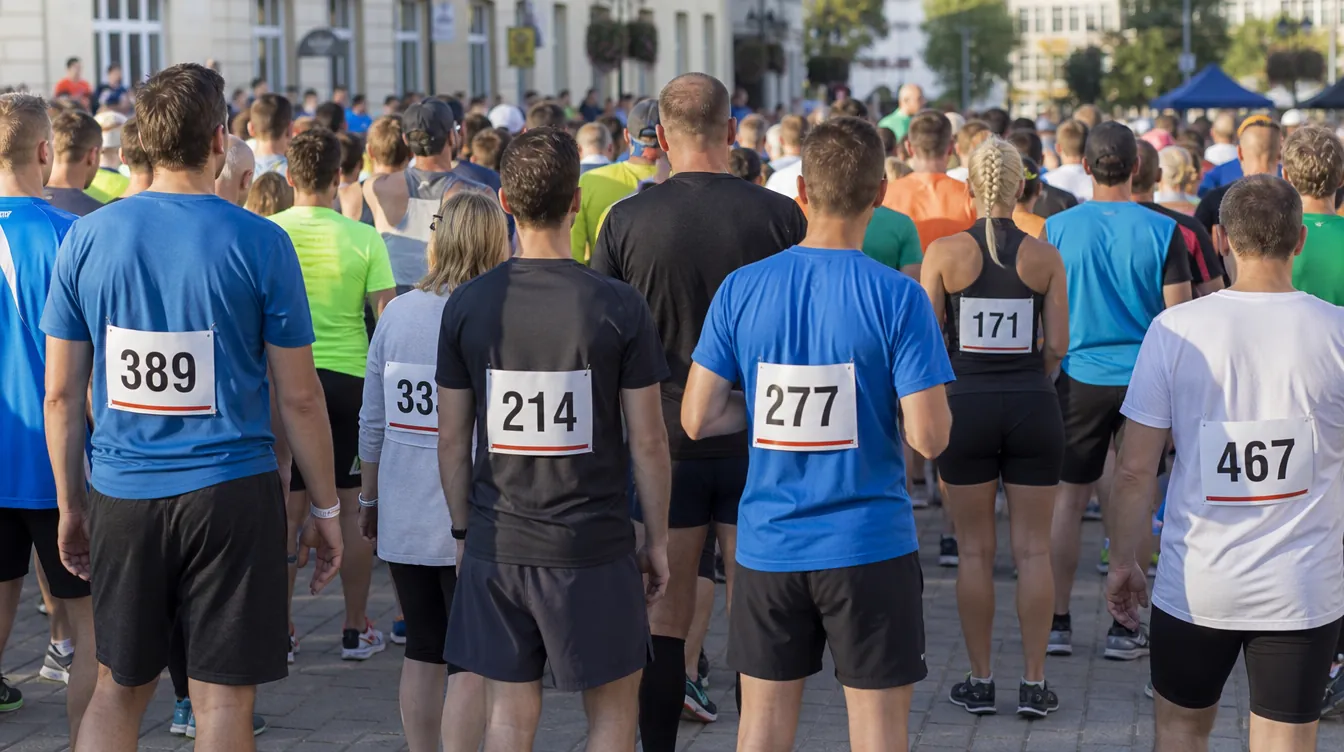
Paper or synthetic paper – what to make the bib from
Ordinary coated paper for race bibs is a saving that backfires at the first shower. The bib soaks up water, goes limp and tears at the pins, and the course photographer ends up with a smudged sheet instead of a number.
That is why our standard is synthetic paper – waterproof and tear-resistant. It survives sweat, rain and being pinned and unpinned several times, and still looks good after the race, which matters: plenty of runners keep their bibs as souvenirs.
Ordinary paper only makes sense for indoor events, short school races, or when the bib is single-use and nobody will see it in photos. At a few hundred pieces the price difference is small, so we rarely recommend it.
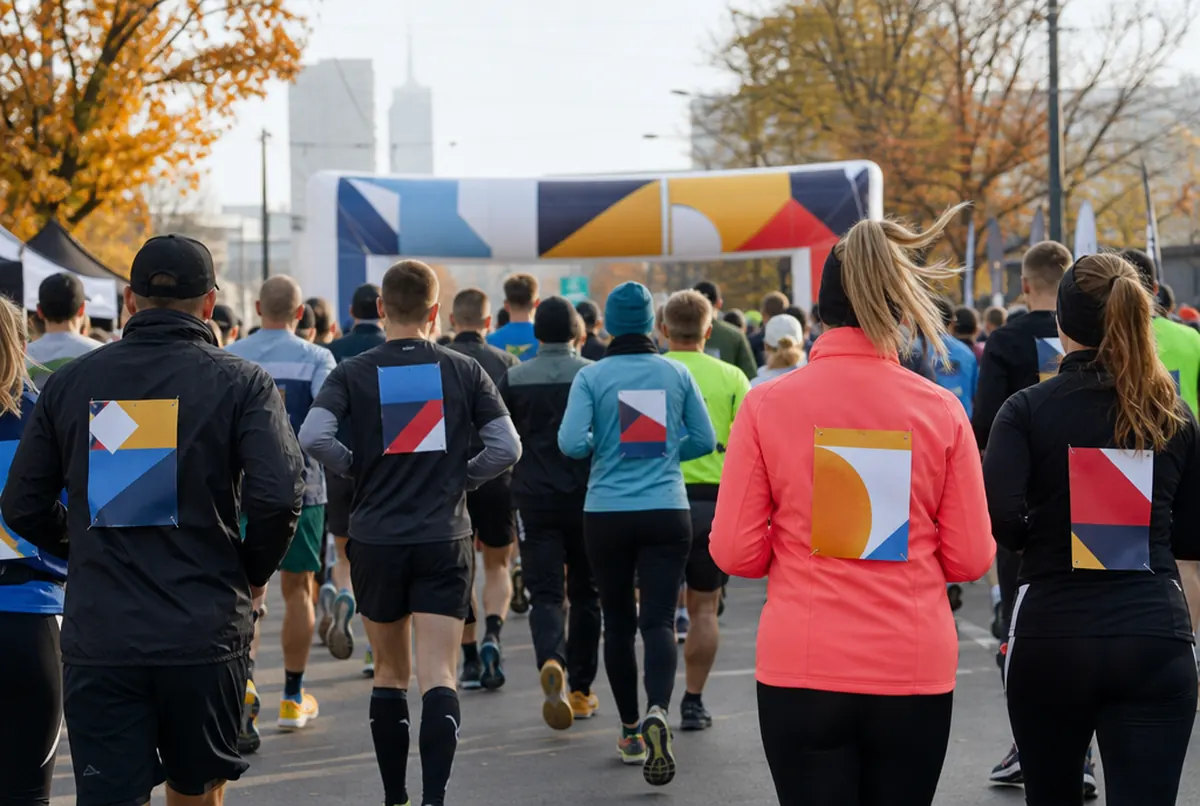
One more practical point: avoid bibs laminated with gloss film. They look nice in the hand, but in course photos they catch reflections and the numbers disappear. The matt surface of synthetic paper is safer in that respect. The same goes for the background – a white or light base with bold, dark numerals reads fastest, including in poor light at an autumn or winter finish.
What should be on a race bib
The standard format is A5 (148 × 210 mm) with four holes in the corners. Several things need to fit on that area while staying legible.
- The number – the largest element, with numerals at least half the height of the bib. The finish-line judge and a photographer a dozen metres away must be able to read it.
- Event name and logo – at the top, in a smaller typeface.
- Title sponsor's logo – usually a strip along the bottom. Sponsors like bibs because they appear in every course photo.
- Colour or distance marker – with several distances, a different colour strip (e.g. 5K green, 10K blue) makes life much easier for volunteers in the start area.
- Runner's first name – optional, but runners like it, and spectators along the course can then cheer them by name.
- Reverse – a field for emergency contact details (ICE) and possibly bag drop information.
If you use a timing company, ask them where and how the chip is attached (often stuck to the back of the bib). We will leave space for it in the design. We can design the bib from scratch in our own studio.
What race bibs cost
| Quantity | Price for the run | Price per bib |
|---|---|---|
| 100 pcs | approx. €80 | approx. €0.80 |
| 500 pcs | approx. €165 | approx. €0.33 |
| Over 500 pcs | quoted on request | falls further with quantity |
As you can see, at small races most of the cost is production set-up, not material. So with 100 runners we often suggest ordering, say, 150–200 bibs – a reserve for race-day entries costs little more and saves the day.
Sequential numbering is standard. First name and surname from the entry list are printed as variable data, charged per record (approx. €0.05 net). Design of a simple bib, if you do not have one, is approx. €43 net. You can also order bibs through our online shop printstrap.com, which also sells lanyards and wristbands for events.
Timeline: when to close the list and when to order
What causes the most stress with bibs is not the printing, it is the start list. Here is an order of work that works:
- 3–4 weeks before the race – settle the bib design, distance colours and sponsor logos. Approve the design.
- 7–10 days before – close named entries, or prepare two pools: named bibs for registered runners and blank-name bibs for late entries.
- Send the list as Excel or CSV – columns: number, first name, surname, distance. No merged cells, no notes like 'might come'.
- Proof – before printing we send a preview of several bibs from the list. Check accented characters and long surnames.
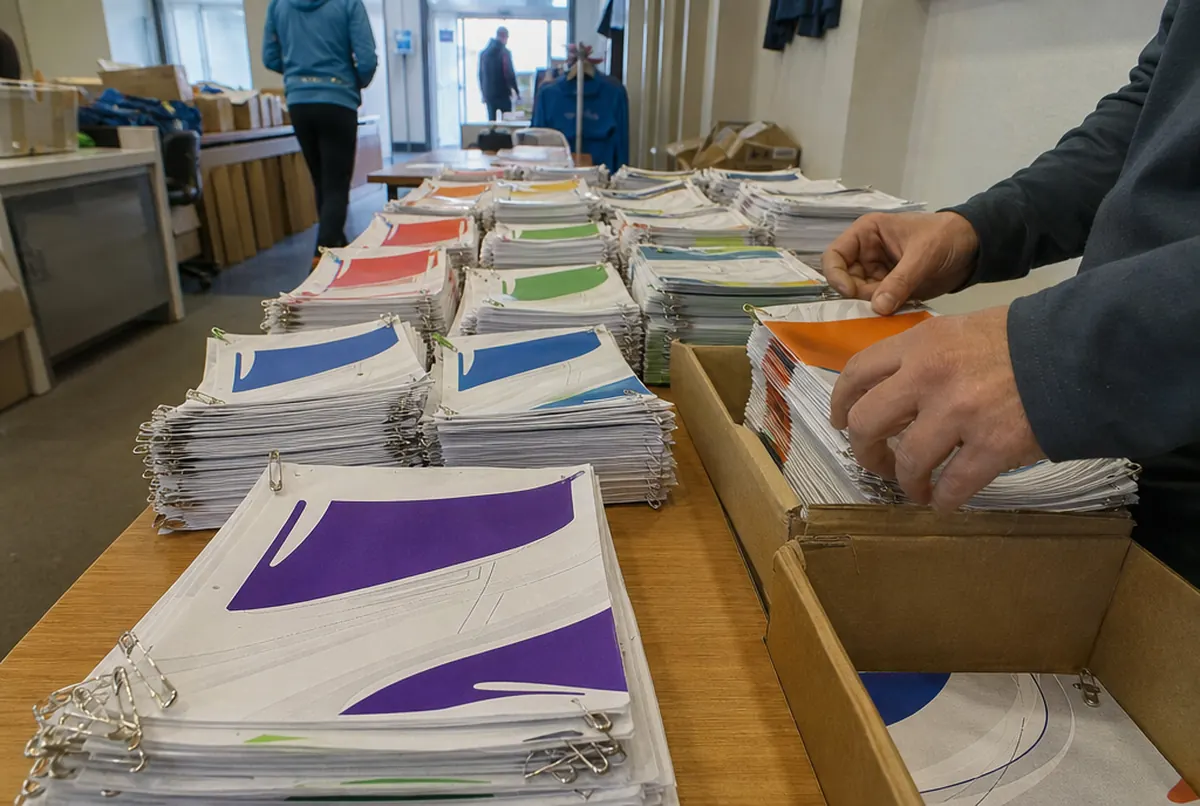
- Printing and sorting – bibs come back sorted by number or distance, ready to go into race packs.
Keep 5–10% of bibs in reserve without names. Someone always enters on the day or loses their bib at race HQ.
When time is short we do 24-hour express (40% surcharge on the print value, files by 12:00). As for race packs – we cover what to put in a race pack in a separate guide.
- 24 hexpress printing (UV inks need no drying)
- approx. 3 daysstandard lead time
- up to 14 dayslarge and custom projects with installation
Plus courier delivery. Tell us your date — we plan production around it.
Numbers for bikes, helmets and kit bags
Triathlon, cycling and obstacle races need extra markings: a number for the seat post or handlebars, helmet stickers, sometimes a number for the transition bag. We make these from self-adhesive vinyl or rigid board, depending on how they are fixed. We quote from a short description: how many competitors, what sizes and how they will be attached.
The rest of the event set-up (start arch, start/finish backdrop, course flags) is covered in our guide to outdoor event signage. Ready-made start and finish solutions are on the players' tunnels and start arches page.