 Signs & Large Format Print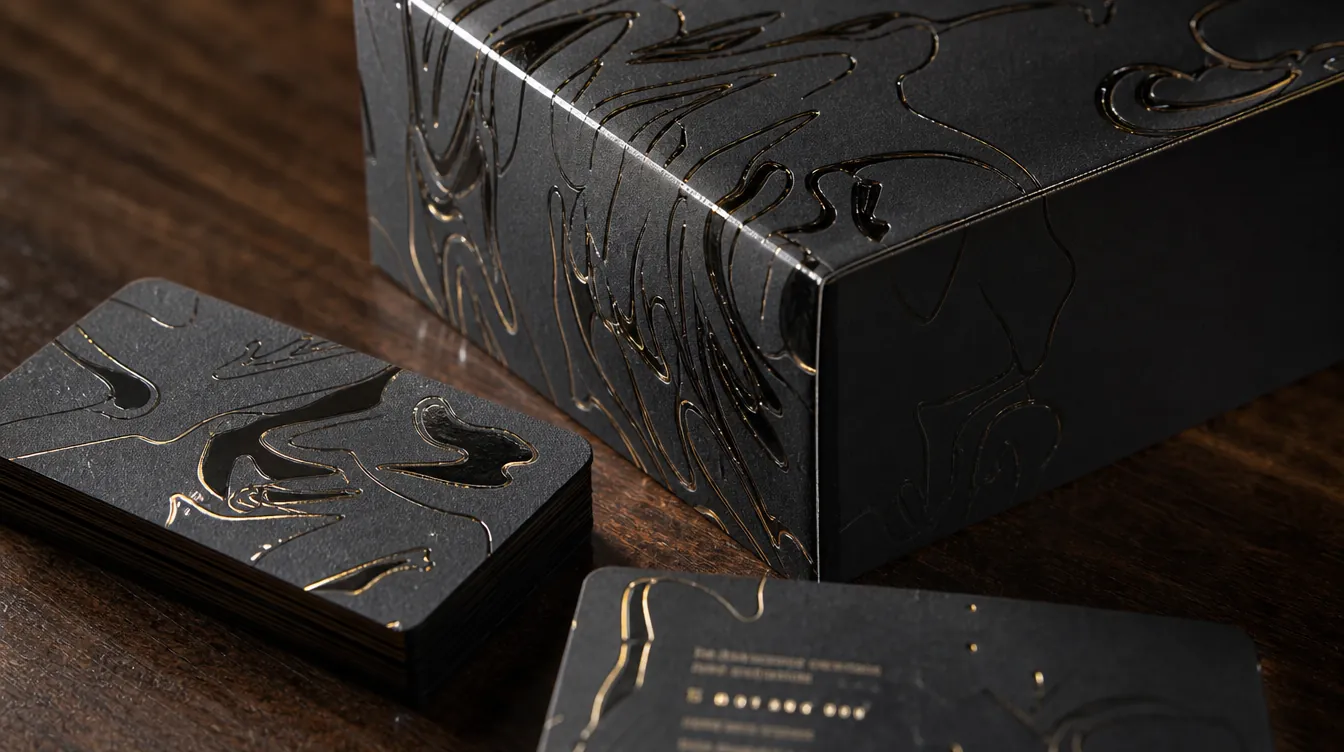
Why finish print at all
A finish has one of three aims, sometimes several at once:
- Protection. Lamination on a catalogue cover or folder stops the corners wearing, the ink cracking on the spine and fingerprints showing.
- Feel in the hand. A business card with soft-touch lamination feels velvety and 'weightier', even at the same paper weight.
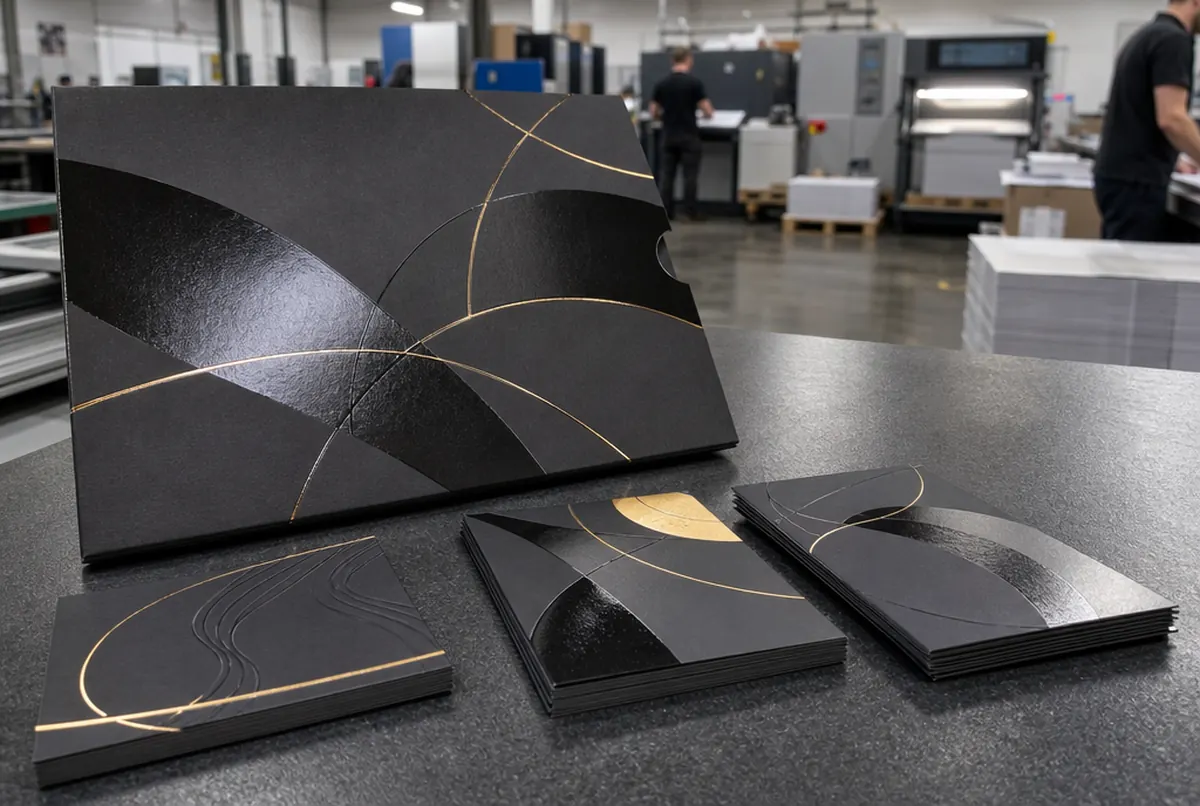
- Emphasis. A glossy logo on a matt background, raised lettering, a gold element – the eye and the finger go straight to it.
The items most often finished are business cards, presentation folders, catalogue covers, invitations, packaging and calendars. For mass-distribution flyers it usually does not pay – unit cost is what counts there.
Types of finish – a comparison
| Finish | Effect | How it is made | When to choose it |
|---|---|---|---|
| Matt lamination | matt, calm surface, protection | laminating the whole sheet with a thin film | folders, covers, business cards |
| Gloss lamination | vivid colours, shine | as above | covers with photos, packaging |
| Soft-touch lamination | velvety, soft feel | a film with a special texture | premium business cards and folders |
| Spot UV varnish | a glossy element on a matt background | varnish applied only in selected areas | logo, name, product photo |
| Raised 3D varnish | glossy and perceptible to the touch | a thick layer of varnish applied digitally | business cards, invitations, short runs |
| Embossing | raised or debossed relief, blind or with colour | a press with a die and counter-die | logos on folders, covers, packaging |
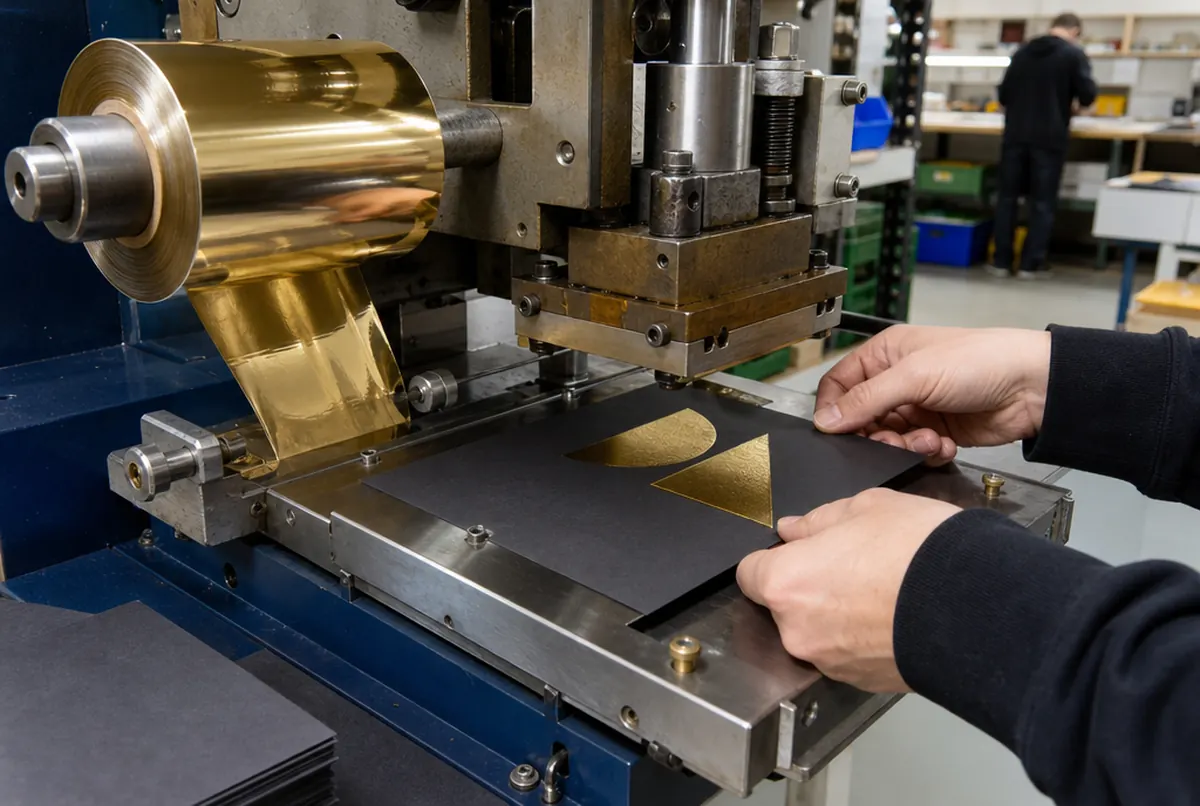
| Hot foil stamping | metallic shine (gold, silver, copper, colours) | foil transferred by a die under heat and pressure | invitations, certificates, packaging, calendars |
| Digital foiling | metallic shine without a die | foil bonded onto varnish or toner | short runs, personalisation |
Finishes can be combined: a classic set for a folder is matt lamination overall plus spot UV on the logo. On business cards soft-touch lamination is often paired with raised varnish or foiling.
Die or digital – what decides the price
This is the most important point when pricing finishes. There are two routes:
Methods with a die (embossing, classic hot foil stamping). First a metal die has to be made for the specific design. That is a fixed cost, independent of the run. On 100 business cards it is spread over few pieces and noticeably raises the unit price. On several thousand it almost disappears. The result, though, is the best: hot foil has a crisp image and deep shine, and embossing gives genuine relief in the paper.
Digital methods (raised varnish, digital foiling). They need no die – the design comes from the file. They pay off on short runs and for personalisation, e.g. each guest's name in gold on an invitation. The result is very good, although with digital foiling fine details can be slightly less crisp than with a die.
Roughly: up to a few hundred pieces digital methods usually win, above that the classic ones. The exact threshold depends on the size of the design and the number of foil colours, which is why we quote finishes individually. Give us the run, the format and mark on a preview what is to be finished; details on the finishes: 3D varnish, lamination and foiling page.
How to prepare a file with a finish
For the machine a finish is a separate 'ink', so it must be a separate layer in the file. Steps that save emails:
- Prepare a normal print file in CMYK, with bleed (the rules are in our guide print bleed).
- Draw the elements for varnish, foiling or embossing in a separate layer or a separate file, in the same position as the artwork.
- Use a spot colour named clearly, e.g. VARNISH or GOLD, at 100%. No halftones or tonal transitions.
- The elements must be vectors – text converted to outlines, the logo as a vector.
- Avoid very thin lines and small text in the finish. Lines that are too fine can fill in or fail to take the foil.
- Allow a few tenths of a millimetre of tolerance between foiling and print – registration is never perfect to a hair.
We check every such file before production; if anything needs correcting, our studio will do it. Logo only as a JPG? Read vector logo – why your printer asks for one.
Finishes in large format: laminates
In large format printing, the role of a finish is played mainly by laminate – a clear film applied over the print. UV print is durable in itself, so laminate is an option rather than an obligation. We use it when the print works in tough conditions or needs a particular look:
- matt or gloss monomeric laminate – approx. €5 net/m², for heavy abrasion,
- polymeric laminate – approx. €8 net/m², vehicles and exposure over 5 years,
- anti-graffiti laminate – approx. €10 net/m², bus shelters, public spaces,
- R10 anti-slip laminate – approx. €10 net/m², floor graphics,
- textured laminate (canvas, sand) – approx. €10 net/m², wallpaper murals and decorations.
Example: a 3 × 2.6 m wallpaper mural with 'canvas' textured laminate is 7.8 m² × approx. €10, i.e. approx. €75 net for the laminate, added to the price of the wallpaper itself.