 Signs & Large Format Print
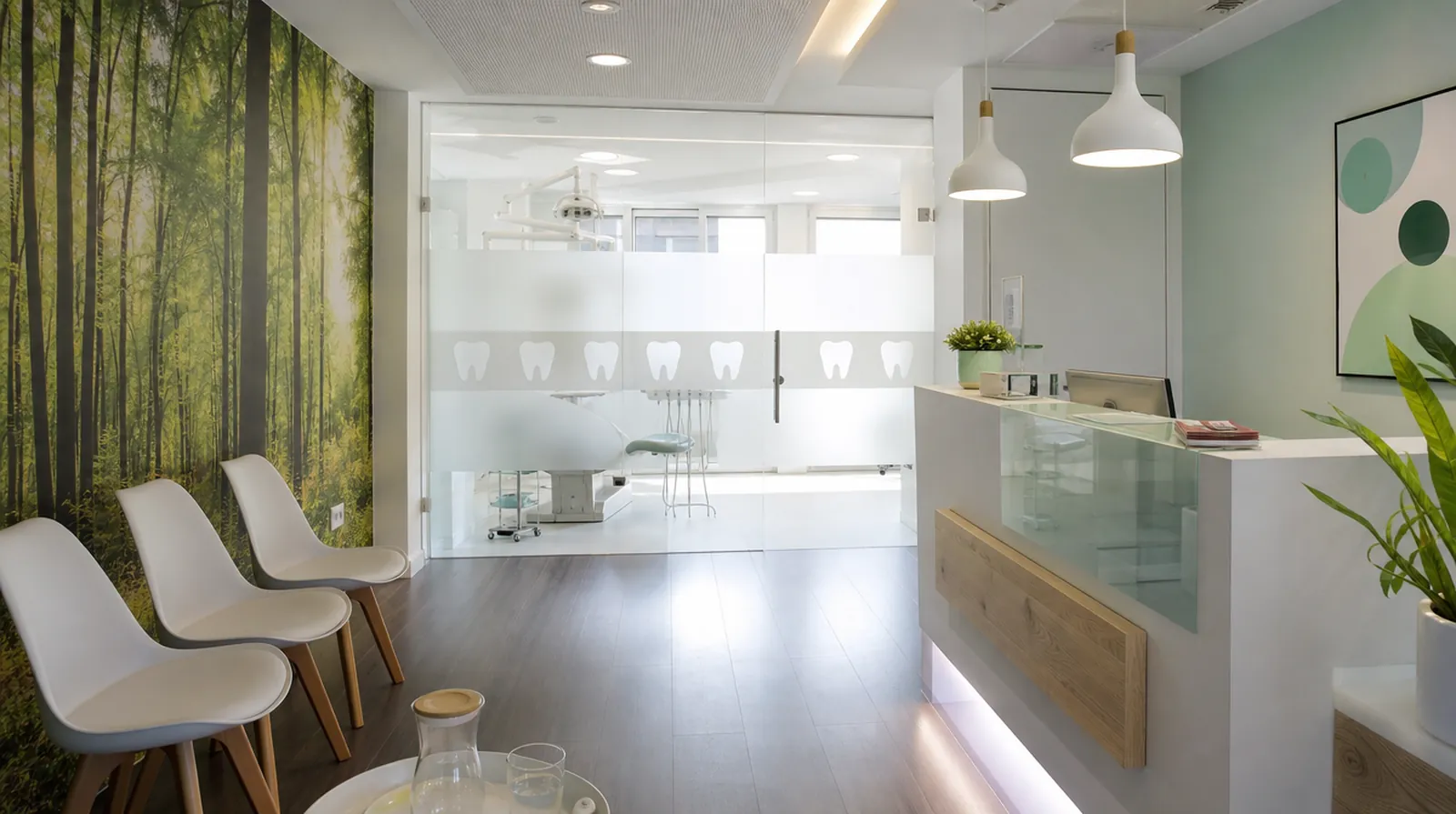 Illustrative visualisation
A dental practice has a different advertising problem from a shop. In many countries, Poland included, healthcare regulations and professional ethics restrict advertising: a practice may state who it is, what treatments it provides, where and when it's open, but without praising itself, promising results or using slogans like 'the cheapest implants in town'. So at a dentist's, most of the work is done by signage. It should be clear from the street that there's a practice here, how to get in and when it's open.
The second thing is the interior. Patients are often anxious, sit in the waiting room for a quarter of an hour and look at the walls. A calm wall mural, matt film on the glass, clear signs and a good leaflet make a better impression than the most expensive fascia. It's worth checking the wording of information materials with your professional regulator or a lawyer – we make sure it's readable, durable and well made.
1. Facade and entrance
Outside, two or three things are enough, as long as they're done properly. A sign by the door with the name and hours, and if the practice is upstairs or in a courtyard – a light box or directional sign visible from the pavement. In period buildings and multi-occupancy blocks, first ask the managing agent and the local authority about the rules for signage on the building; more in our [guide to sign permissions](/poradnik/czy-szyld-wymaga-pozwolenia).
- Dibond sign by the door→Practice name, scope (e.g. general dentistry, prosthodontics, orthodontics), phone. Dibond with UV print doesn't warp in summer and lasts for years.
- Light box on the facade→In winter patients arrive after dark from 4 pm. LED lighting uses little electricity, and the name can be read from across the street.
- Directional sign at the gate→When the entrance is from a courtyard or the practice shares a building with other businesses. A simple arrow and name save reception 'where are you?' calls.
- Opening hours on the door→Cut vinyl lettering or print on clear film. If the hours change, we replace just the sticker without touching the sign.
2. Glazing and privacy
Ground-floor practices have large windows, which can be a problem: the chair and patient are visible from the street. We solve it with frosted film or a band of film at eye level. Light gets in and the patient has peace.
- Frosted film on surgery windows→A sandblasted glass effect; a logo or clear stripes can be cut into it. Most often we cover a band from about 90 to 180 cm high.
- Street-facing waiting room window graphics→Name, treatments offered and phone – information, not promotion. For long exposure to sun we use polymeric film.
3. Reception and waiting room
This is where patients spend most time before their appointment. One strong element on the wall (a logo or a mural) works better than several posters stuck up with tape.
- Dimensional logo behind reception→Acrylic or dibond letters on stand-offs, from approx. €16 net per character. The cheapest way to make reception look finished.
- Waiting room wall mural→A calm motif: forest, water, a light abstract. Non-woven wallpaper is B-s1,d0 rated and odour-free after hanging, so we can put it up even in a working practice.
- Printed acoustic panels→They dampen sounds from the surgery and conversations at reception, and double as pictures on the wall. Especially effective in small waiting rooms.
- Leaflet holder for the counter or wall→Acrylic for treatment information leaflets. Print no longer lies scattered on the counter.
4. Interior signage
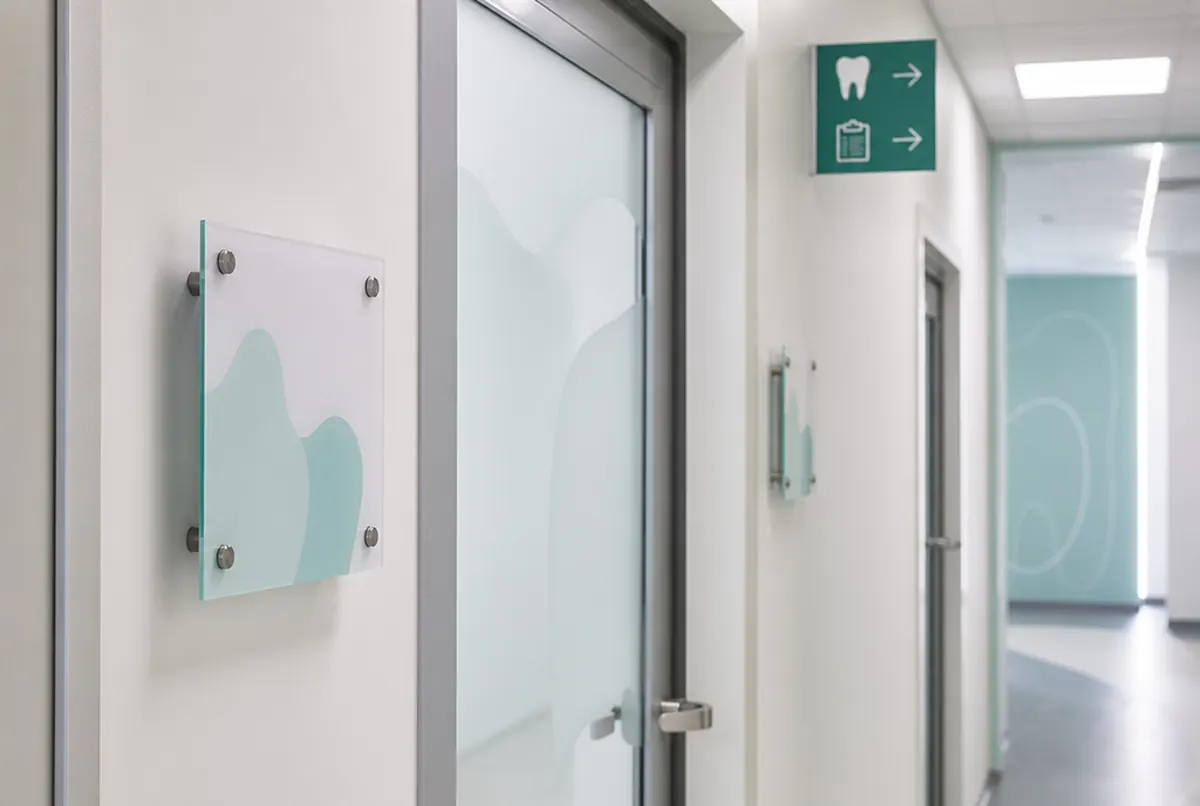
In a dental clinic with several surgeries patients get lost more easily than you'd think, especially older ones. Surgery numbers and directions to X-ray and the toilets are hung at one height and in one style.
- Surgery door signs→Clear printed acrylic on stand-offs. The dentist's name goes on a changeable strip, because rotas change more often than signs.
- Directional signs to X-ray and reception→Arrows on PVC or dibond. If signs will be wiped often with alcohol-based cleaners, we add laminate.
5. Print for patients
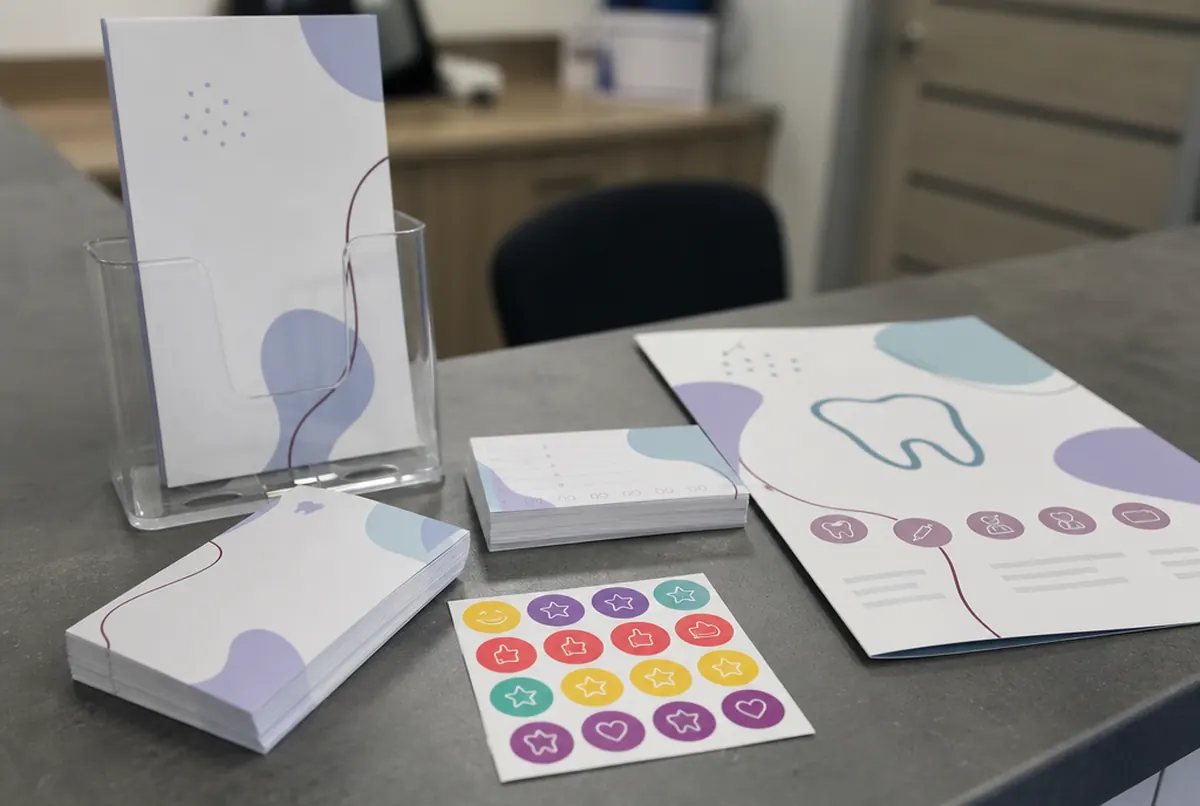
Print in a practice is mainly a working tool for reception. Order it together: one design, the same colours, and with a larger run each piece comes out cheaper.
- Appointment cards→A business card with a field for the date and time of the next appointment. 1,000 cost approx. €25 net, and they go faster than you'd expect.
- Treatment leaflet→A folded DL fits in the leaflet holder and a pocket. Patients take it home with their treatment plan.
- Stickers for children after a visit→Small stickers on a sheet, e.g. 'brave patient'. A small cost, and the child leaves happy and is less scared next time.
- Check-up reminder cards→Some practices post patients a card about their six-monthly check-up. We print on card stock with space for the address.
- 01Brief
Description, sizes, site photos and deadline — a few sentences are enough.
- 02Design and quote
Our designers prepare artwork or a visualisation and you get a price.
- 03Approval
You approve the design; for brand colours we provide a proof.
- 04Production
35+ machines in our own plant in Poland: 3.2 m UV print, CNC, laser, 3D, sewing.
- 05Installation or delivery
Own crews and vehicles across Europe, partner network, couriers worldwide.
To start with — an indicative package
A typical opening set for a small practice with one or two chairs. Calculated from our price list, installation not included.
| Dibond sign 100 × 60 cm (0.6 m² × approx. €55) | approx. €33 net |
| Single-sided LED light box 200 × 50 cm (1 m²) | from approx. €320 net |
| Frosted window film, 2 m² (2 × approx. €21) | approx. €42 net |
| 6 acrylic signs 30 × 10 cm on stand-offs (0.18 m² × approx. €60 + 24 stand-offs × approx. €2.35) | approx. €70 net |
| Appointment cards 90 × 50 mm, 1,000 pcs | approx. €25 net |
| Folded DL leaflet, 1,000 pcs | approx. €90 net |
Indicative net prices; an exact quote follows a short description and photos of the site. Installation: crew from approx. €42 net per hour plus travel at approx. €1 net per km.
From our experience — what to watch out for
- Keep the name, treatments offered and contact details on the sign. Slogans like 'painless treatment' are already advertising, and with that comes the risk of trouble with your regulator.
- Order frosted film after measuring the actual windows, not from the architect's drawing. Frames can differ by a few centimetres.
- Put dentists' names on a changeable strip or sticker rather than printing them directly on the acrylic. You'll avoid remaking signs every time the rota changes.
- Choose odour-free, certified materials for the waiting room. Non-woven wallpaper can go up after hours, and the practice runs normally in the morning.
- Send your logo as a vector file. We can work from a pixel file too, but vectorisation costs an extra approx. €26 net and a day's delay.