 Signs & Large Format Print
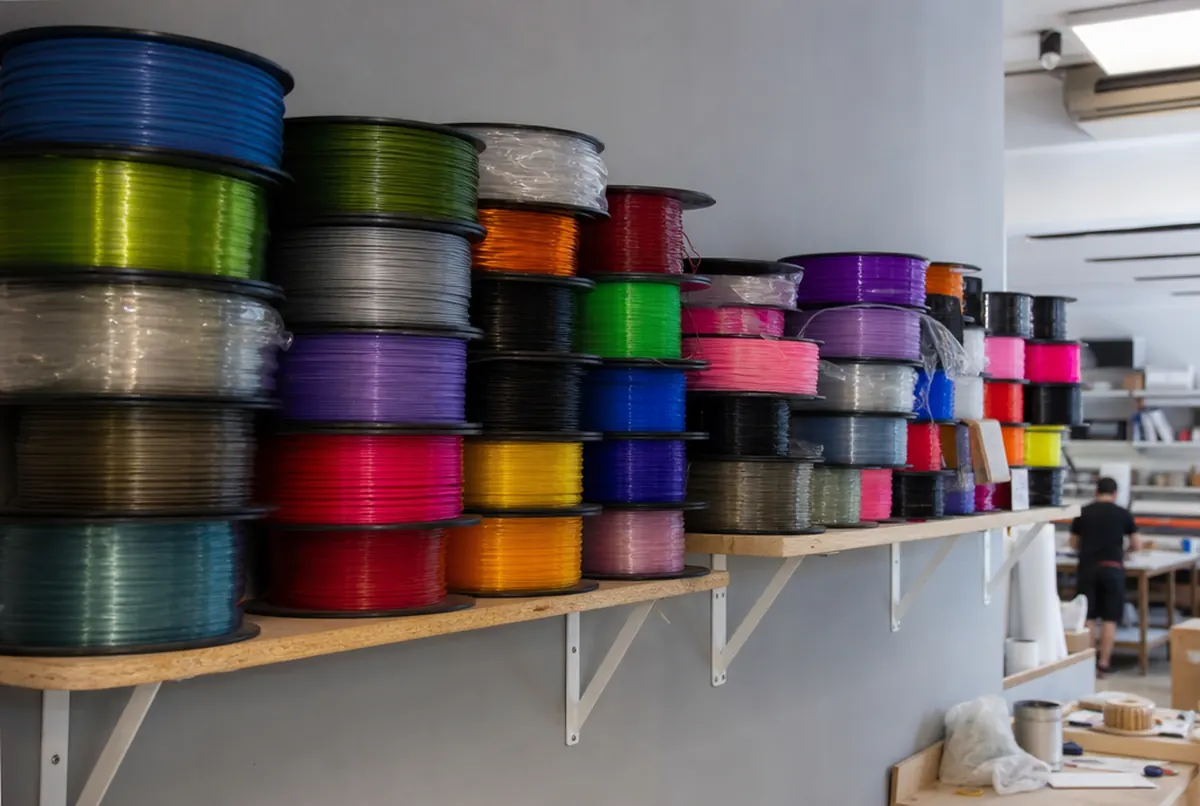
The five materials we print with most often
| Material | Price | Strengths | Weaknesses | Typical uses |
|---|---|---|---|---|
| PLA | approx. €0.05 / g | accurate, easy to print, good surface, wide choice of colours | softens at approx. 55–60 °C, brittle on impact, not for direct sun | mock-ups, looks-like prototypes, figures, decorations, interior models |
| PETG | approx. €0.10 / g | stronger and less brittle, copes with higher temperatures, moisture-resistant | less crisp detail, harder to sand | brackets, housings, functional parts, containers |
| ABS | approx. €0.10 / g | heat-resistant, sands and bonds well | shrinks while printing, large parts can warp | technical parts, housings, parts for post-processing |
| ASA | approx. €0.10 / g | UV- and weather-resistant, fades far less than others | more expensive, demanding to print | outdoor parts, covers, letters, signage |
| TPU | approx. €0.15 / g | flexible like rubber, abrasion-resistant | slow to print, fine detail is difficult | seals, bumpers, feet, covers, straps |
The temperatures given are indicative – they depend on the specific filament and on whether the part is under load. An unloaded part will usually tolerate more than a bracket with something hanging from it.
In most jobs the choice narrows down to two materials: PLA or PETG. The other three are chosen for specific tasks – ASA when the part stands outdoors, ABS for parts that will be machined or finished further, and TPU wherever something has to bend, damp vibration or seal.
Filament colour does not change the price, but not every colour is available in every material. PLA has the widest range. ASA and TPU come in fewer colours, so if colour matters, mention it straight away.
How to choose – the questions we ask clients
Rather than starting with a material name, we start with where and how the part will be used. Five questions are enough:
- Indoors or outdoors? Outdoors, PLA is out. Sun and heat will soon deform it. We choose ASA, or PETG for short-term use.
- Will it get hot? A car in summer, near a lamp, in a dishwasher, on a south-facing windowsill – PLA will not cope. PETG, ABS or ASA.
- Will it be under load or exposed to knocks? PLA is stiff but snaps suddenly. PETG flexes before it breaks, which is an advantage in brackets and clips.
- Does it need to be flexible? Only TPU. No rigid material can replace a seal or a bumper.
- Should it look like a finished product? Then more often PLA or ABS, because they sand and paint well. Outdoors – ASA and paint.
If the answers point to two materials, we usually pick the cheaper one that meets the requirements. There is no point printing a figure for a display cabinet in ASA just because it is the 'better' material.
Does a more expensive material push the print price up much
Less than you might think. In 3D printing the main cost is machine time – approx. €14 net per hour on a standard printer with us. Material is often only a modest share of the bill.
Example: a part weighing 100 g, printed in 5 hours.
- Print time: 5 h × €14 = €70
- PLA material: 100 g × €0.05 = €5 – €75 including printing
- PETG material: 100 g × €0.10 = €10 – €80 in total
- ASA material: 100 g × €0.10 = €10 – €80 in total
Each option also carries approx. €14 for job set-up. The difference between PLA and ASA in this example is approx. €5. Choosing the wrong material costs far more, because the print has to be done again.
TPU is the exception: the material is more expensive and flexible filament prints more slowly, so print time goes up too. The full pricing rules are explained in our guide how much does 3D printing cost.
The most common mistakes when choosing a material
A few situations we see again and again:
- A car phone holder in PLA. Works perfectly until the first hot day, then it bends. For a car – PETG or ASA.
- A PETG part meant to last outdoors for years. PETG handles weather better than PLA, but for long exposure to sun we choose ASA and paint it as well.
- 'The strongest material' for a mock-up. An architectural model or display piece does not need strength – it needs crisp detail, and PLA gives that best.
- A rigid material where cushioning is needed. Feet, bumpers and edge guards in PLA crack. That is a job for TPU.
- Colour instead of finish. The client picks a material in the brand colour, and then the layers show and the part looks home-made. When appearance matters, it is better to print in a neutral colour, sand, prime and paint.
If you are not sure, just tell us what the print is for – we will choose the material and explain the choice in the quote.
What about other materials?
There are also nylon, carbon-fibre filled materials, wood and metal composites, and high-temperature filaments. Our large-format printers also run technical materials, but not every filament suits every job – if you need something outside the table, get in touch and we will check what is possible and give you a price.
We print with FDM. If a project needs a very smooth surface straight off the printer, or detail finer than a fraction of a millimetre (jewellery, miniatures), we will say plainly that resin printing is the better option.
Ordering from your own file is covered in our guide 3D printing from your own STL file, and the service itself is on the 3D printing from your own model page.