 Signs & Large Format Print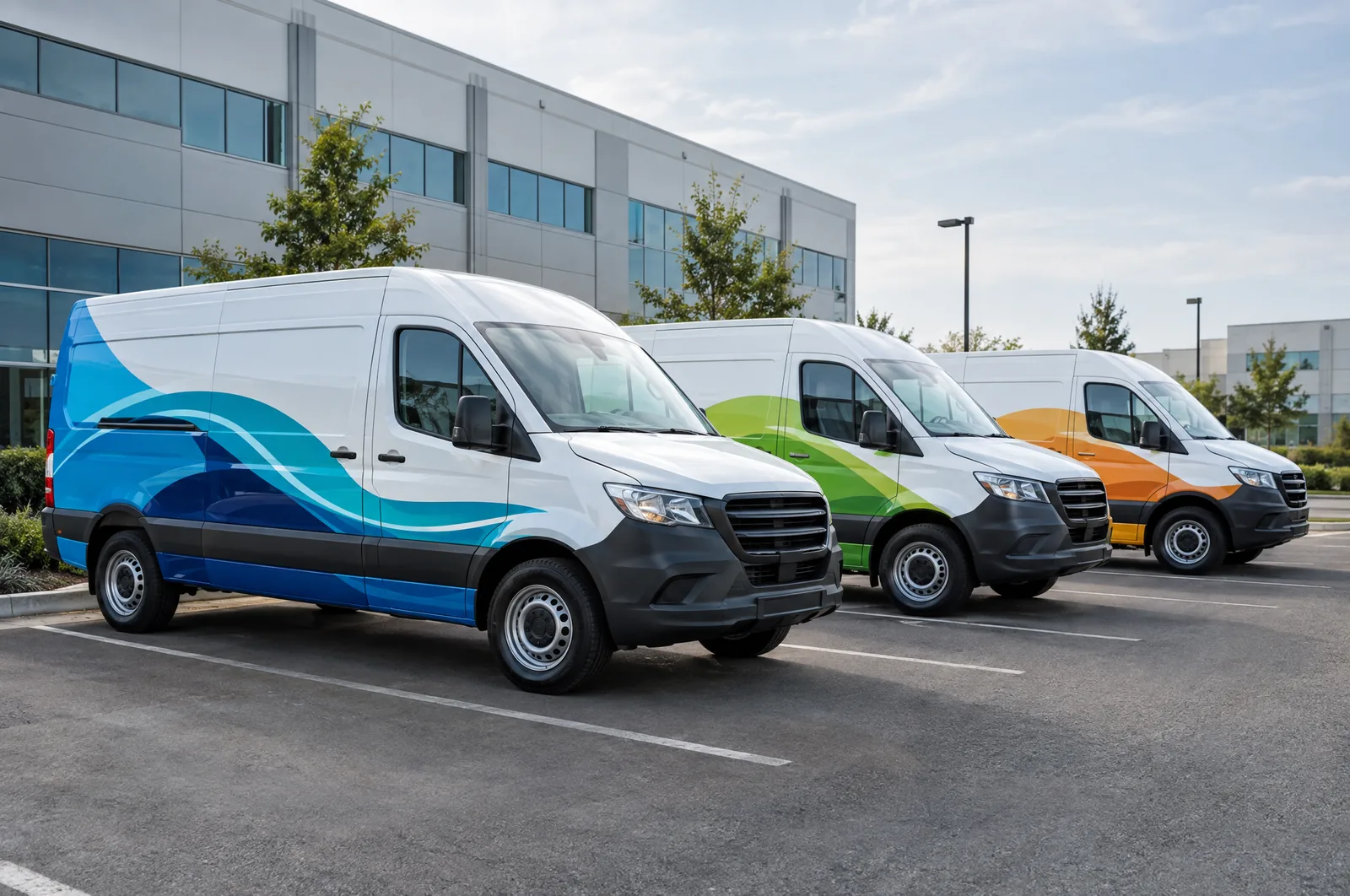
Designing a system for different vehicle models
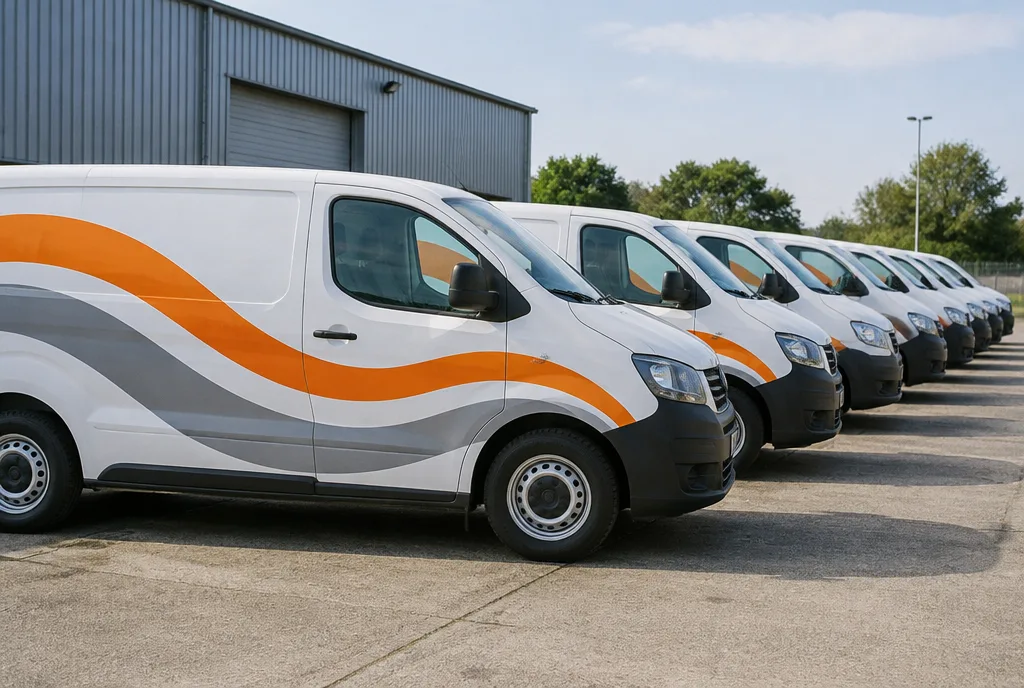
For one vehicle you design a graphic. For a fleet you design a system – a set of rules that can be transferred to a car, a panel van, a refrigerated van and a truck so that from a distance you see the same company.
In practice the system consists of a few fixed elements:
- logo position and size defined relative to features of the vehicle (e.g. centre of the front door, a set percentage of the side height), not in centimetres,
- a stripe or graphic motif always run the same way – with a rule for how to break it at a wheel arch or swage line,
- an information block – phone, website, internal vehicle number – in a fixed position,
- versions – full wrap, partial and minimal (just the logo and details), so that budget does not force exceptions.
The most common problem with mixed fleets is a design made for one model and then stretched to fit the rest. It ends with a logo on a swage line, lettering cut through by a door handle, or a stripe that does not fit on a shorter vehicle at all. That is why the design is worth drawing up straight away for all vehicle types the company has and plans to buy. The rules for a single vehicle are described in our guide on company vehicle wrap cost.
Vehicle templates and measurements
Vehicle graphics are designed on a template – a drawing of the sides, rear and front of a specific model with swage lines, handles, trims and windows marked. For popular vans templates are available, but versions differ in wheelbase, roof height and sliding doors on one or both sides. A mistake in the version means graphics that do not fit.
That is why for a fleet we collect for each vehicle type:
- Make, model, year and body version (length, height, doors).
- Photos from four sides, square on.
- A check measurement on one vehicle – especially for bodies, box bodies, refrigerated units and converted vehicles.
- Information on elements that stay: trims, roof ladders, dealer badges, mandatory stickers.
Once the design is approved, we wrap one master vehicle. Only on it can you see whether the logo runs into a swage line, whether the phone number is readable from a distance and how the graphic looks in motion. Corrections at this stage cost little; corrections after thirty vehicles have been wrapped cost a lot.
A wrapping schedule without taking the fleet off the road
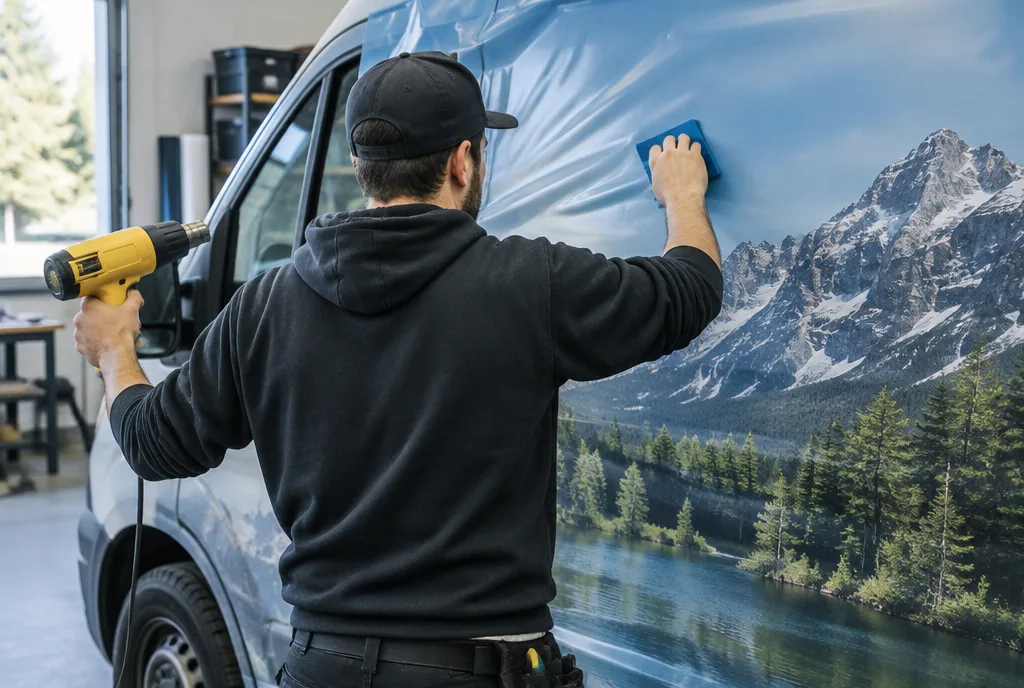
Company vehicles earn money when they are on the road. So the wrapping plan is built around the fleet's working rhythm, not the other way round. A few rules usually work:
- batches – several vehicles at a time, the rest on the road; order by availability, not fleet number,
- vehicles back overnight or at weekends – if the fleet returns to base, wrapping can take place at the client's site, in a covered, heated space,
- production in advance – graphics for the whole batch are printed, laminated and trimmed before the vehicles come in,
- washing before wrapping – the vehicle must be clean and dry; vinyl does not stick to wax, grease and road salt,
- temperature – we do not apply vinyl to cold paintwork; in winter a heated space is needed.
Installation is done by our crews in Poland and abroad, and for larger fleets beyond our travel range – also by partners in the EU. A two-person crew costs approx. €42 net per crew-hour plus travel charged per kilometre both ways. The details of how it is organised are on the advertising installation in Poland and Europe page.
Films and laminates for the age and mileage of the vehicles
| Material | When to use | Indicative price |
|---|---|---|
| Printed cast vinyl + laminate | Full and partial wraps, swage lines, vehicles kept several years | approx. €19–29/m² + laminate approx. €8/m² |
| Printed magnetic sheet | Private cars used for business, short-term hire, seasonal promotions | approx. €21–32/m² |
| Perforated window film (one way vision) | Rear and side windows on vans and minibuses | approx. €10–18/m² |
| Cut vinyl lettering (no background) | Minimal version: logo, phone, vehicle number | individual quote |
The choice of vinyl depends on how long the vehicle will stay with the company and what its bodywork looks like.
- 24 hexpress printing (UV inks need no drying)
- approx. 3 daysstandard lead time
- up to 14 dayslarge and custom projects with installation
Plus courier delivery. Tell us your date — we plan production around it.
What it costs: an example calculation
Prices per m² fall as the total area of the order increases, so wrapping a whole fleet at once works out cheaper per vehicle than ordering one at a time.
One van, partial wrap: two sides of about 3 m² each and a rear of about 1.5 m² is about 7.5 m². In the 5–15 m² tier printed cast vinyl costs approx. €24/m², laminate approx. €8/m², together approx. €32/m². 7.5 m² × €32 = approx. €240 net for printed material.
Twenty such vans: 20 × 7.5 m² = 150 m², i.e. the tier above 100 m², where printed vinyl is approx. €19/m². With laminate approx. €27/m², so 150 m² × €27 = approx. €4,050 net, i.e. approx. €200 net per vehicle.
Design, installation and travel come on top. We calculate area with an allowance for wrap-arounds and trimming, so the actual quote may differ slightly. These are indicative prices – we confirm the exact amount once you contact us and we have seen the vehicle models. A comparison of film types is in cast vs polymeric vs monomeric vinyl.
Leasing: residue-free removal at the end of the contract
Most fleets run on lease or long-term rental, so the question of removing the vinyl always comes up. A few things worth knowing up front:
- vehicle-grade cast vinyl is designed to be removable from factory paint – with heat and careful removal it usually leaves no marks,
- resprayed or repaired paintwork is a risk: the vinyl may take some of the paint with it, because it does not bond to the substrate like factory paint,
- paint under the vinyl fades more slowly than the exposed rest; after many years a faint shadow of the graphic may be visible – that is the paint, not the adhesive,
- the lease agreement often specifies the condition in which the vehicle must be returned. It is worth checking before wrapping, not at return.
Removing graphics from a vehicle returning from lease and wrapping its replacement are best planned together – one visit instead of two. How long vinyl lasts in practice is described in our guide how long do outdoor stickers last.
New vehicles and reorders: maintaining the standard
A fleet changes: vehicles are added, others drop out after accidents, a new model arrives with no template yet. To avoid having five versions of the branding after three years, a few things are worth doing:
- Record the system in a simple document – dimensions, positions, colours, files for each model. It is the fleet equivalent of a store signage manual.
- Keep the production files with one contractor, together with the material specification – then the colour on a new vehicle matches the rest of the fleet.
- For a new model, first design on the template and approve it before the vehicle comes in for wrapping.
- Keep spare graphics for quick repairs after a knock – often replacing one side panel is enough.
Transport and service companies running fleets day to day will find more examples on the page for transport companies.