 Signs & Large Format Print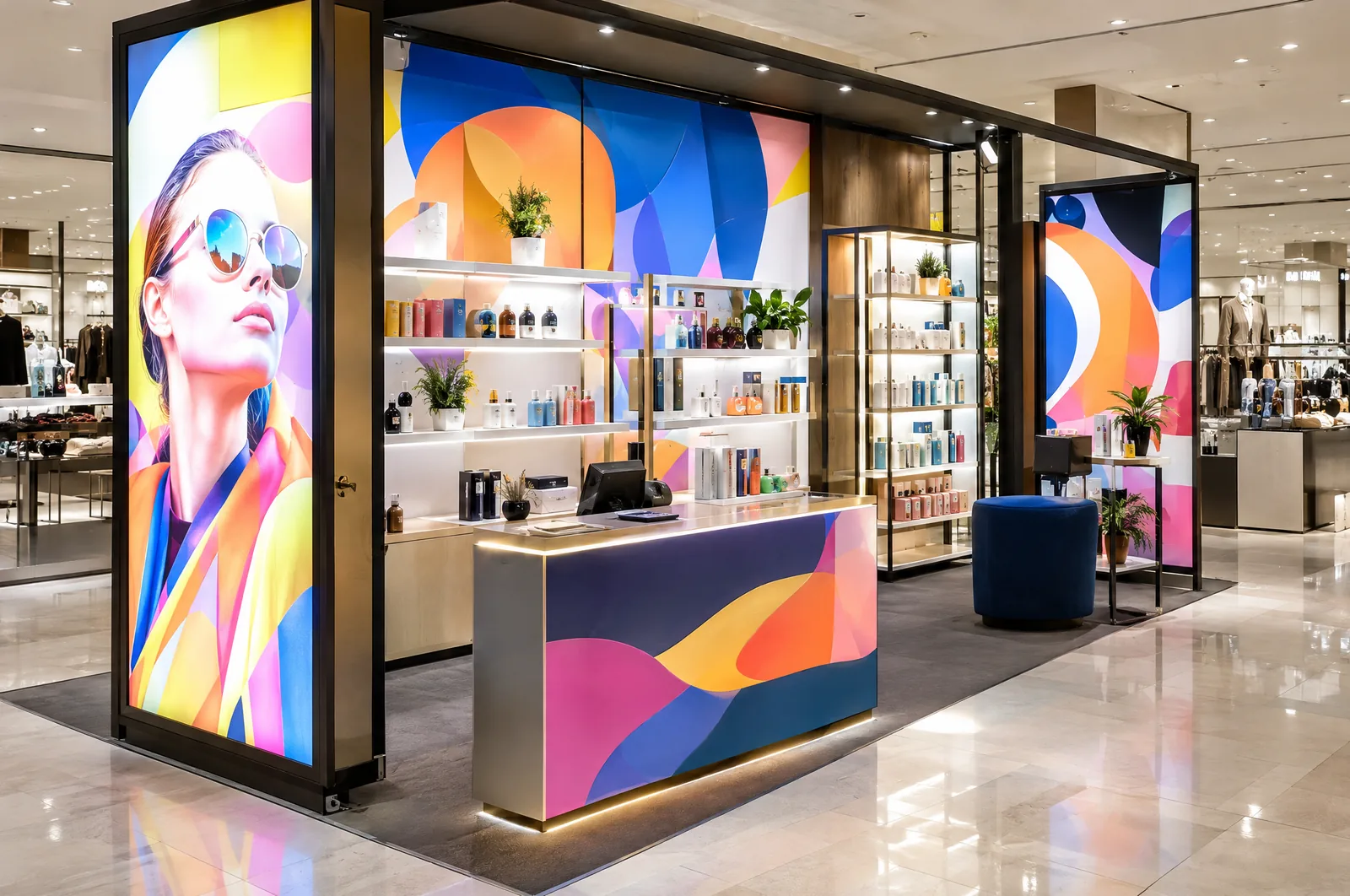
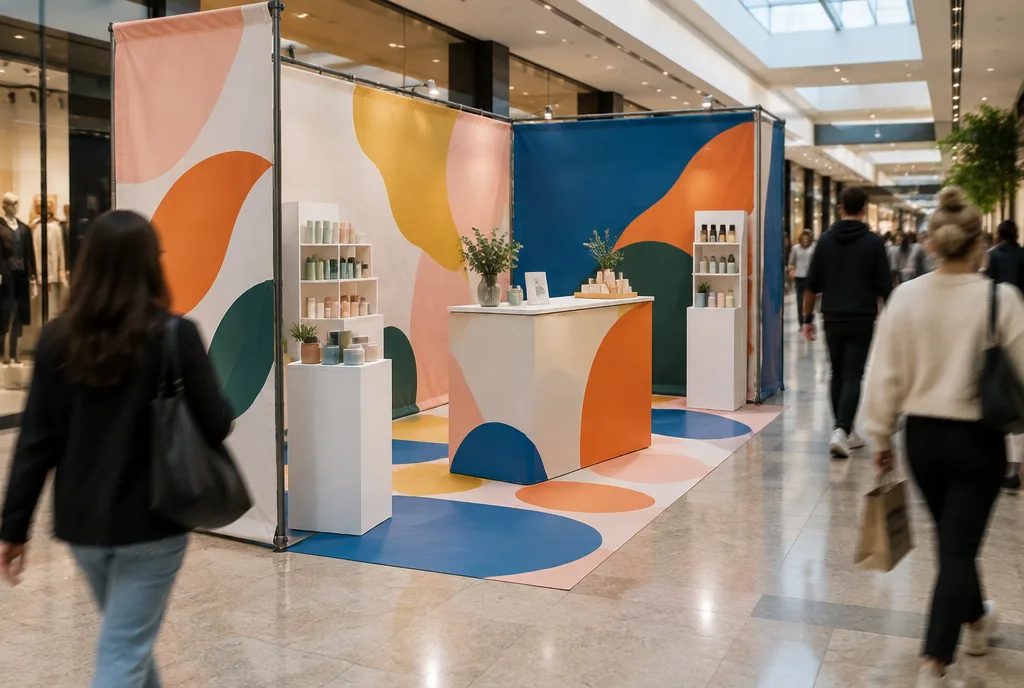
Three typical pop-up formats
What needs to be produced depends above all on the location.
- An island in a shopping centre – a few to a dozen or so square metres in the mall, visible from every side. You need double-sided walls or totems, a counter, a product display and often lighting. The centre management has its own requirements – more on them below.
- A container or pavilion at an event – a festival, a trade show, a beach, a Christmas market. Weather resistance matters: banners, vinyl for the container exterior, flags and a gazebo.
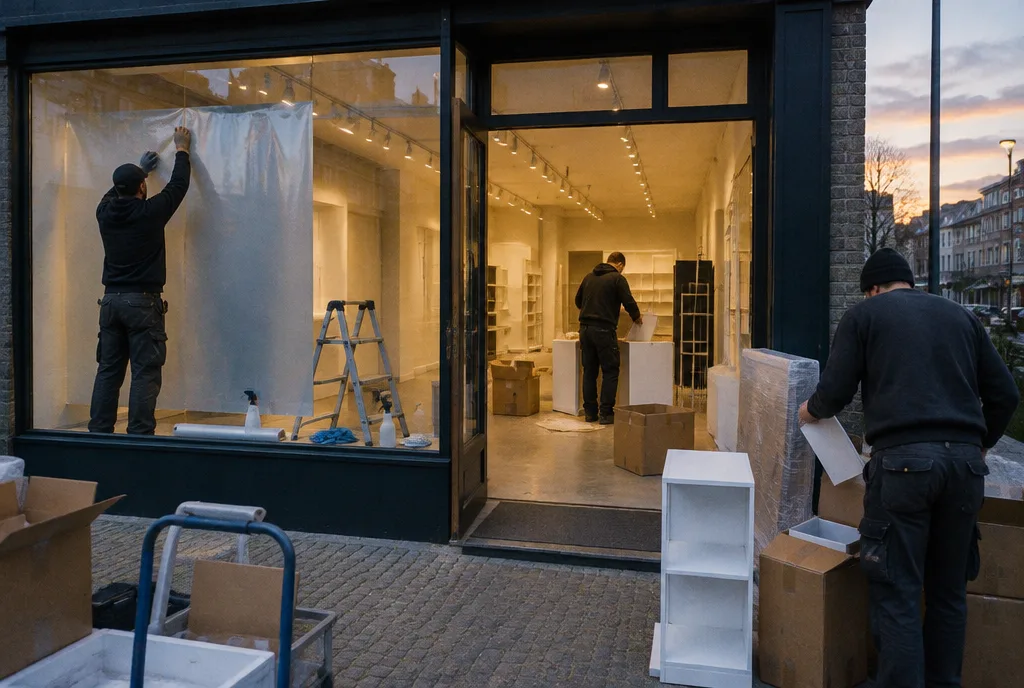
- A unit for a month – an empty shop rented short term. Here the shop window matters most (vinyl, graphics on the glass) and transforming the interior quickly without a refit.
In every case the rule is the same: everything must be quick to install, easy to dismantle and ideally reusable. Classic made-to-measure shop furniture rarely pays off here.
List of elements: what we usually order for a pop-up
| Element | What it is for | Price approx. |
|---|---|---|
| SEG frame module 100 × 230 cm with graphic | Walls, backdrop, partitions – combined in any layout | from €160 |
| Graphic replacement in an SEG module | A new campaign without a new structure | from €65 |
| Illuminated LED fabric frame (SEG face) | Light wall, product highlight | from €300/m² |
| Ultra-slim LED light box A1 | Illuminated graphics at the counter or on a wall | from €165 |
| Folding promotional counter with graphic | Till, tastings, customer service | from €210 |
| Floor graphic with R10 laminate | Directing footfall, marking out the brand zone | €19–30/m² |
| 10 mm honeycomb board with UV print | Lightweight displays, cubes, plinths | €30–45/m² |
| One Way Vision film for the window | Unit shop window – graphics outside, view from inside | €10–18/m² |
On top of that there is usually lighting, seating, clothes rails or product shelves – some of these we make from boards and frames, some the client already has. A proven combination of walls, counter and display is shown on the shop-in-shop and display fit-outs page.
One system, many campaigns
The most expensive pop-up is the one that ends up in a skip after a month. That is why we advise building it on SEG fabric frames. The aluminium profile structure stays, and the graphic is fabric with a sewn-in silicone edge that is pressed into the frame groove. Changing the campaign means just a new print.
Fabric has practical advantages too: it does not reflect light like a banner, does not crease in transport, and folded up it fits in a small box. Illuminated frames give a glowing-wall effect that catches the eye from afar in a shopping centre. How SEG frames work and how to choose them is described in our guide SEG fabric frames explained, and the illuminated versions on the illuminated LED fabric frames page.
- 01Brief
Description, sizes, site photos and deadline — a few sentences are enough.
- 02Design and quote
Our designers prepare artwork or a visualisation and you get a price.
- 03Approval
You approve the design; for brand colours we provide a proof.
- 04Production
35+ machines in our own plant in Poland: 3.2 m UV print, CNC, laser, 3D, sewing.
- 05Installation or delivery
Own crews and vehicles across Europe, partner network, couriers worldwide.
Shopping centre management requirements
Before you order anything, ask the management for the rules for short-term tenants or the guidelines for islands. You will usually find:
- Maximum build height and a requirement for sightlines across the island – often you must not block neighbouring shop windows.
- Fire safety requirements – materials with a specific reaction-to-fire class, sometimes with a certificate. On request we check the availability of certified material; the required class must be confirmed with the management.
- Installation hours – in shopping centres installation happens after closing, at night. We charge night installation from approx. €65 net per hour.
- Power – where the sockets are, what load, who connects. Lighting is connected by the client's electrician or our qualified crew.
- Design approval – many centres want to see a visualisation before giving consent.
More on working in shopping centres on our page for shopping centre tenants.
Schedule from design to opening
An example plan for a pop-up in a shopping centre, counting back from opening day:
- 3–4 weeks before – floor plan of the space from the management, brief, initial quote.
- 2–3 weeks before – design and visualisation, management approval.
- 10–14 days before – print file approval and start of production. Standard is about 3 working days, more complex builds up to about 14 days.
- 2–3 days before – transport and night installation, lighting check.
- Opening day – the crew on call in case anything needs adjusting.
It can be done faster. We do express printing in 24 hours, but structures, approvals and night installation have their own timelines. The earlier you give us the date, the better the chance we make it without express surcharges.
Dismantling and reuse
Decide straight away what happens when the pop-up closes. There are three options: dismantling and sending the elements back to your company, storage with us until the next promotion (graphics storage costs approx. €26 net per pallet per month) or moving everything to the next location. For a pop-up tour across several cities – abroad as well – we plan transport and installation as a single service.