 Signs & Large Format Print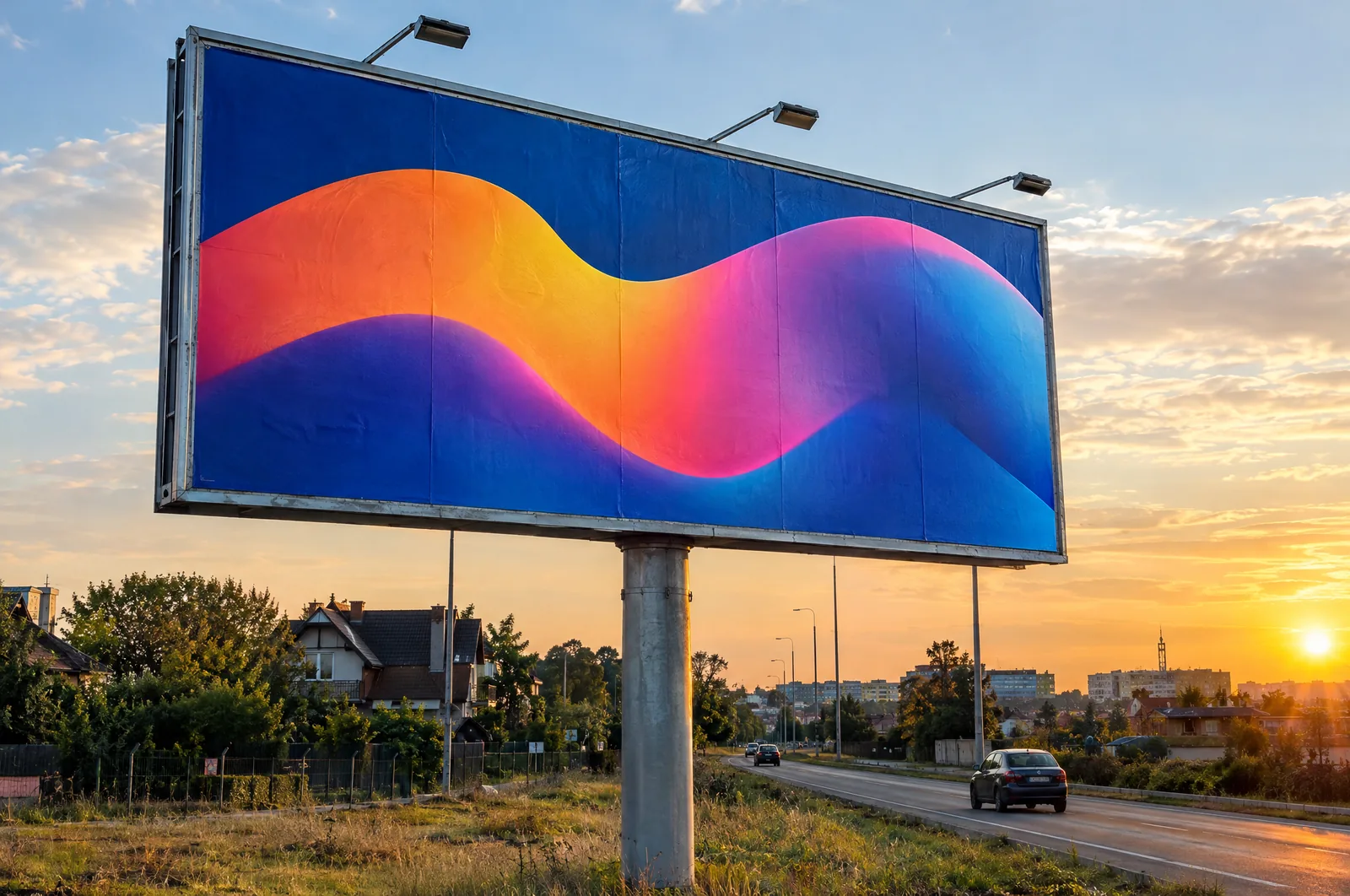
Where the above and below the line split comes from
The terms come from the way advertising agencies billed in the mid-20th century. In the popular version of the story, agencies received commission from the media for buying airtime and advertising space – those items were recorded above the line in the budget. Other activities (in-store materials, printed matter, promotions), billed separately as fees, went below the line. Over time the accounting split became a way of thinking about advertising.
Today the boundary is less sharp, because the internet has blurred many differences. Social media advertising can be both mass-reach and precisely targeted. Even so, the ATL/BTL split is still useful for planning: it helps you see whether a campaign only shouts at everyone or also closes the sale where the customer makes the decision.
ATL, BTL, TTL compared
| ATL (above the line) | BTL (below the line) | TTL (through the line) | |
|---|---|---|---|
| Goal | reach and brand awareness | a specific response: purchase, sign-up, visit | one campaign from reach to sale |
| Audience | broad, imprecise group | specific people or places | both groups with one message |
| Examples | TV, radio, press, cinema, billboards, citylights | POS, displays, events, sampling, direct mail, flyers, shop window graphics | TV spot + poster + in-store wobbler + online activity |
| Measuring results | harder, via research and reach | easier: coupons, codes, sales at the point of sale | combining metrics from both sides |
| Entry cost | usually high | from small amounts | depends on scale |
The split does not mean ATL is expensive advertising for big brands and BTL cheap advertising for small ones. A local billboard at the entrance to a town is ATL and does not cost a fortune, while a nationwide POS campaign across a retail chain is BTL with a big budget.
ATL: television, radio, press, outdoor
ATL is everything that reaches the audience through mass media. A TV spot, a radio ad, a press advertisement, cinema advertising – and outdoor advertising, which in many countries is counted together with the media.
From our perspective the closest is outdoor: billboards, citylights, large format mesh banners on facades. These are media seen by everyone passing by, with no choice of target group. A billboard poster in a standard format of about 12 m² on blueback paper costs approx. €4.90 net per m² in our price list, i.e. approx. €60 net for the printing alone – on top of which comes the space rental from the media owner. We cover this segment in more detail in outdoor advertising (OOH) explained.
The strength of ATL is building brand memory. The weakness – it is hard to calculate exactly how many sales one billboard brought in.
- 01Brief
Description, sizes, site photos and deadline — a few sentences are enough.
- 02Design and quote
Our designers prepare artwork or a visualisation and you get a price.
- 03Approval
You approve the design; for brand colours we provide a proof.
- 04Production
35+ machines in our own plant in Poland: 3.2 m UV print, CNC, laser, 3D, sewing.
- 05Installation or delivery
Own crews and vehicles across Europe, partner network, couriers worldwide.
BTL: POS, events, direct mail, sampling
BTL is activity that reaches people closer to the moment of decision, often in direct contact:
- POS materials in store – wobblers, shelf stoppers, stands, displays, shelf strips. More in what is POS display material.
- Promotions and sampling – tastings, handing out samples, promotional stands in shopping centres.
- Events and trade shows – backdrops, stands, gazebos, merchandise.
- Direct mail and print – flyers, leaflets, catalogues sent or handed to specific people. A six-page folded DL leaflet in a run of 1,000 costs approx. €90 net with us (flyers and leaflets).
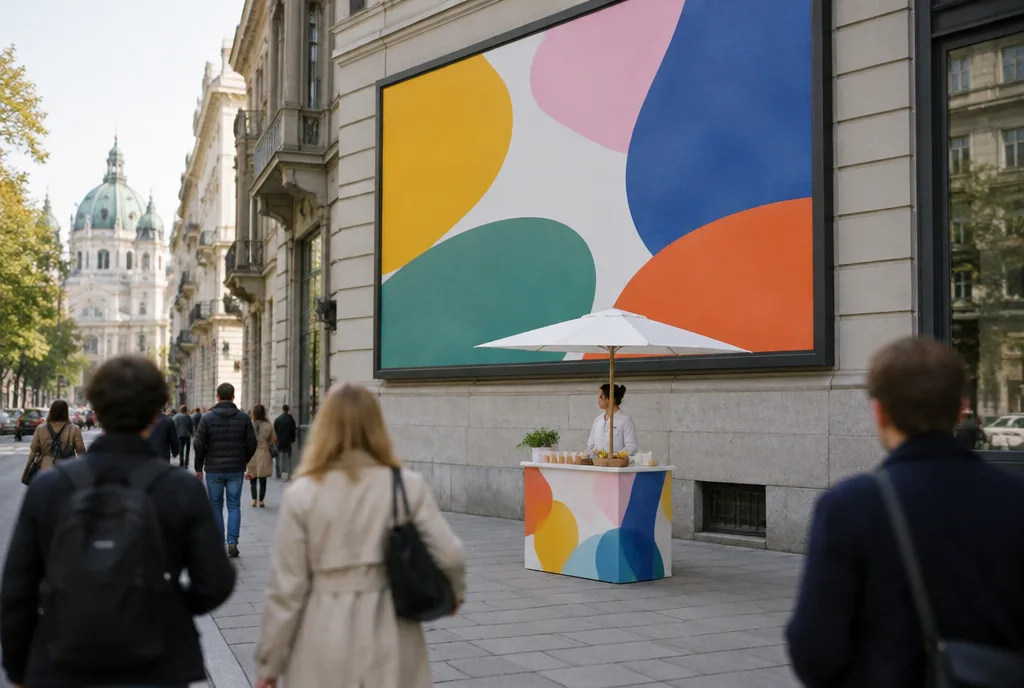
- Point-of-sale marketing – shop window graphics, floor graphics, brand zone fit-outs.
BTL is easier to measure: a discount code on a flyer, sales in stores with a display compared with stores without one, the number of people at a stand. That is why small businesses often start with BTL.
TTL and integrated campaigns: where print fits
TTL (through the line) is simply a campaign in which ATL and BTL work together. You see the same visual on a roadside billboard, in an online ad, on an in-store poster and on a wobbler next to the product. Each new contact reminds you of the previous one and nudges you towards buying.
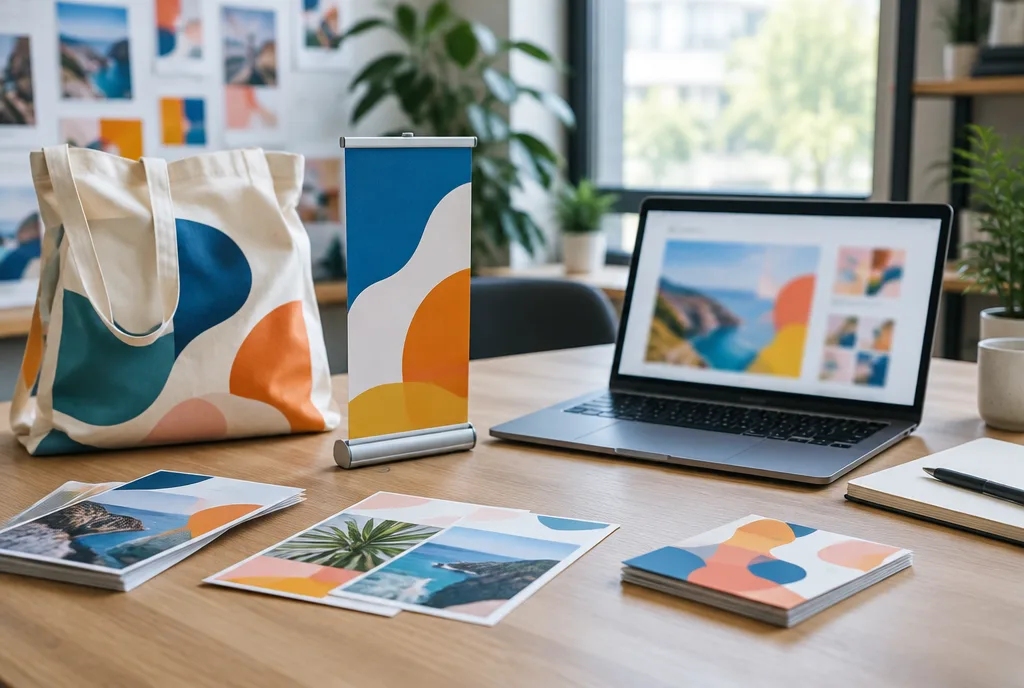
For an advertising producer this means one thing in practice: the same key visual has to be adapted to dozens of formats. A 12 m² billboard, a citylight, an A1 poster, a DL flyer, a 10 cm wobbler and window graphics – all from one design, in consistent colours. This is where problems most often appear: a logo illegible on a small item, the brand colour differing on a banner and on board, no version of the design in the right proportions.
Retail chain campaigns add logistics – assembling campaign sets for retail chains and delivering them to each location in time for launch day. An interesting bridge between ATL and BTL is AR and image-recognition materials: scanning a poster or pack with a phone launches digital content.
How to split the budget between ATL and BTL in small and large companies
There is no single ratio, but there are a few rules we see in practice:
- Small local business – mostly BTL and local outdoor: a shop sign, window graphics, a few banners or a billboard on the main road, flyers in the area. Television and national press rarely make sense.
- Brand entering retail chains – BTL in store first (without shelf visibility a product disappears), then gradually adding ATL.
- Large national brand – ATL builds reach, but without BTL at the point of sale some of the money is wasted. Customers remember the ad, but at the shelf they choose what they see.
- Seasonal campaign – short, intensive ATL plus point-of-sale materials prepared for the same date.
Whatever the scale: start by asking where the customer makes the purchase decision, and make sure your brand is there too. More on planning spend in a small business in small business advertising budget. The prices above are indicative – we confirm the final ones once you contact us and we have seen the design.