
 Illustrative visualisation
TECHNOLOGY · AR · BANKING
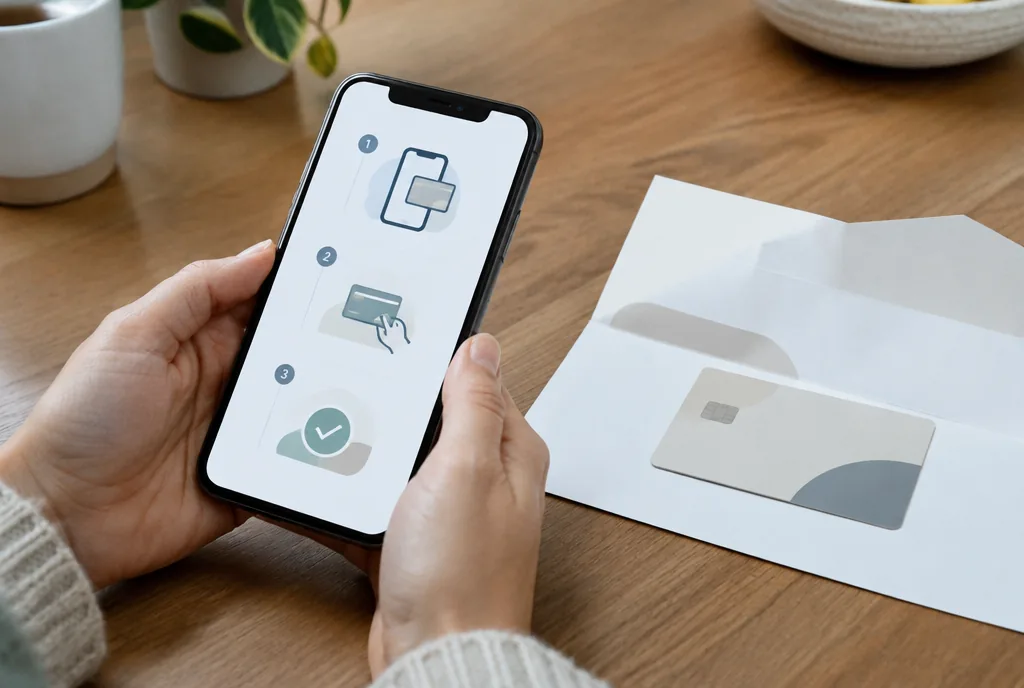
PKO Bank Polski · delivered by: RunvidoPhone over the letter, instructions on screen: digital card activation for PKO Bank Polski
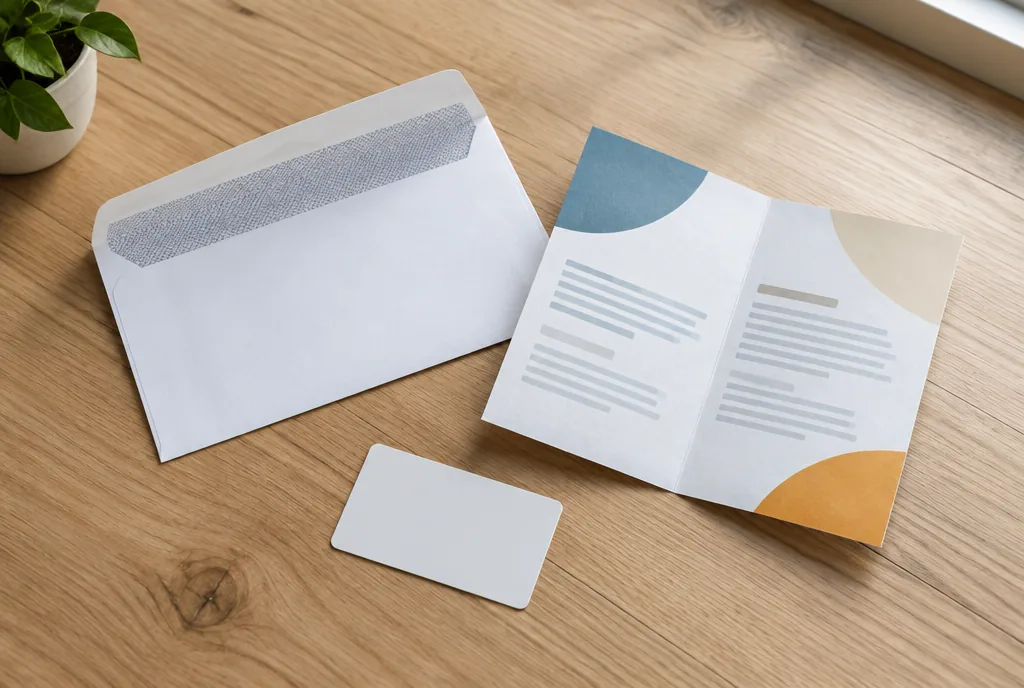
A bank customer receives a new card together with a printed information leaflet. In the project for PKO Bank Polski, Runvido supplied the technology that made it possible to point a phone at this material and see digital instructions for activating and first using the card. The cards and letters were printed by another manufacturer; our part was the AR layer, the software and the integration.- Instructions launched from a printed medium
- Image recognition instead of an added code
- Digital content changed without reprinting
- Over two years of technology cooperation
01 Context and challenge
A new payment card reaches the customer by post, together with a letter and printed packaging. It is the moment when the customer has the card in hand but does not yet know exactly what to do: how to activate it and how to start using it. Printed instructions have two limitations here. They hold little content, and every change to the procedure, the screen design or the order of steps means a new design and a new print run, which enters circulation with a delay anyway.
The bank was looking for a way to turn the paper that reaches the customer anyway into a gateway to digital instructions: quicker to read, more visual and changeable on the system side rather than at the printer. In a financial environment there is a third condition: the solution has to pass the bank's security requirements and internal procedures.
02 Our role and solution
What Runvido supplied:
- technology for recognising the specified printed medium with a phone camera;
- the AR layer and digital instructions for activating and first using the card, displayed once the medium is recognised;
- the software on the side of the Runvido app, to which the material in the mailing directed the customer;
- integration with the bank's process and preparation of the content for later updates without changing the print.
What we did not do: we did not print the payment cards, nor the letters and information materials. Their production and mailing were handled by another manufacturer working with the bank. Wielka Reklama was not involved in this part of the project.
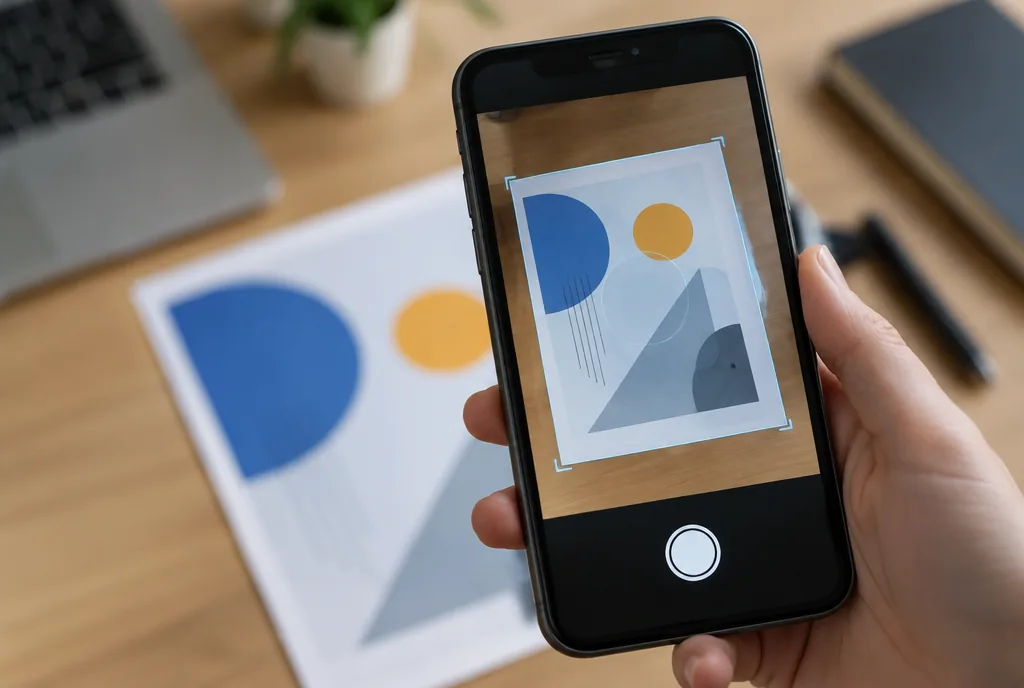
The mechanism is based on image recognition. The customer does not scan an added code but points the phone at the printed material, and the app recognises its graphics and opens the content assigned to them. As a result, the letter design did not have to accommodate an additional marker, and the medium itself stayed in the bank's style. Our AR and image-recognition materials work on this principle.
03 How we worked
The interface between two worlds required the most attention: the graphic design prepared for print by another supplier, and the digital layer on our side. Graphics that are to be recognised by a phone need a sufficiently distinctive layout, yet must not change between print versions in a way that disrupts recognition. That is why we defined the recognition reference on the files that actually went into production, not on early mock-ups.
The instruction content was created separately from the medium. It is what takes the customer through the steps of activating and first using the card. Because it is stored on the system side rather than fixed in print, the bank could correct and update it without halting mailings.
Security requirements were a separate stage. The solution was reviewed against the security and cybersecurity requirements set by the bank. For a technology supplier this means documenting how the app works, how data is handled and the scope of permissions before anything reaches customers.
The cooperation with the bank lasted more than two years, and the card activation project was one of its strands. The other was an interactive presentation of the innovation department, described separately in the case study PKO BP: innovation team on video launched from a print.
04 Results
The customer received material in the mailing that led to clear, visual card activation instructions launched with a phone. The bank gained a channel in which the instruction content can be changed without designing and printing a new run of letters.
We do not give effectiveness indicators such as the number of launches or the activation rate.
05 What set us apart
This project was not about "adding AR", but about fitting a digital layer into an existing, multi-stage process at a large institution: with another print manufacturer, a mailing schedule and security requirements. Runvido supplied technology that works on graphics the bank was printing anyway, with content that can be changed on the system side. We are taking this approach to other sectors where a product reaches the customer with paper instructions: insurance, telecoms, devices or subscription services. When more complex logic or a content management panel is needed, we combine image recognition with configurators and web apps.
FAQ · PKO Bank Polski
Frequently asked questions
Does the phone read a QR code printed on the letter?
Not in this project. The app recognised the graphics of the specified printed material, so the medium did not need an additional marker. In other implementations we choose the mechanism to suit the project: recognising an image, a cover, a mark or another element.
Can you add an AR layer to materials printed by another supplier?
Yes, that was the case in this project. We need the final production files to prepare the recognition references, and an agreement on who approves changes to the graphics.
Can the instruction content be changed after mailing?
Yes. The digital content is stored on the system side, so a correction does not require a new print run, as long as the printed medium stays the same.
Product enquiry
Ask about: PKO Bank Polski
A few quick questions so we know straight away what your enquiry is about. Prices are approximate; we confirm the final price after we talk.Your name and an e-mail address or phone number are enough. You can add the rest now or we can sort it out by phone.WIELKA REKLAMA · CASE STUDY