
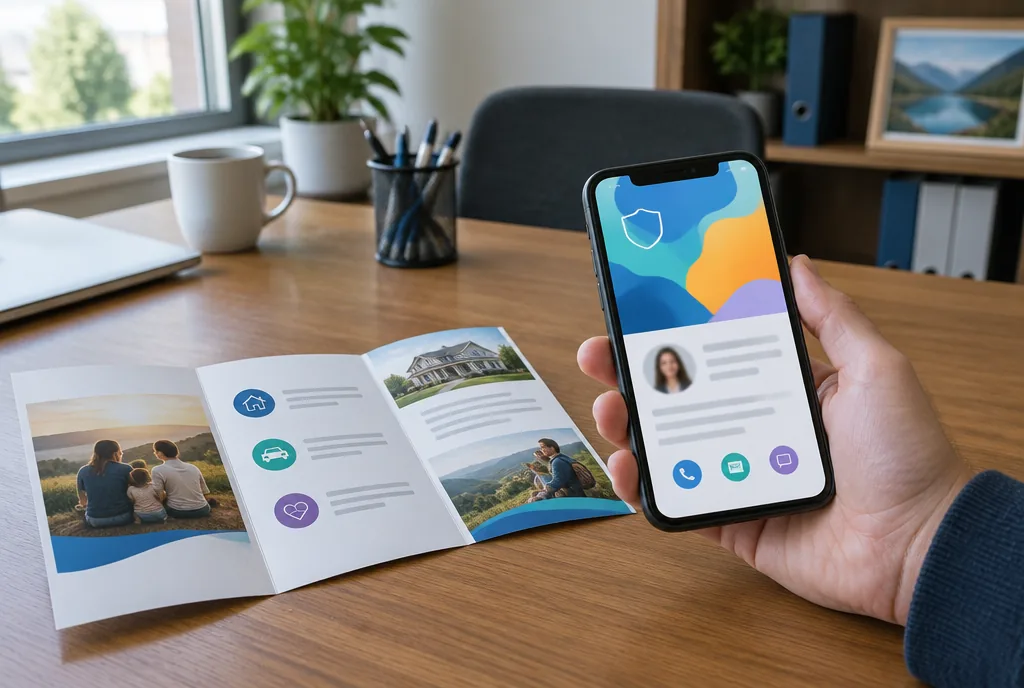
 Illustrative visualisation
TECHNOLOGY · INSURANCE · AR IN PRINT
InterRisk · delivered by: RunvidoInterRisk: one leaflet for the whole network, the right agent for each region
For InterRisk, Runvido prepared an interactive layer for leaflets and advertising materials. When users point a phone at them, they see a presentation of the insurance cover and offer details, plus contact details for an agent or adviser in their region. The same printed design can therefore go to different locations without a separate version and a rubber stamp for each branch.- Offer presentation launched from a leaflet
- Agent contact matched to the region
- One print design for a dispersed network
- Content updates without a new print run
01 Context and challenge
An insurer such as InterRisk reaches customers largely through local agents and advisers. A leaflet lying in a branch, handed over at a meeting or given out during a promotional campaign therefore has two jobs: to explain the product and to show who exactly is worth talking to.
With traditional print these two jobs clash. The offer description is shared across the whole network, but the agent contact is different every time. The company then faces several awkward options: separate leaflet versions for individual regions, a blank field filled in by hand, rubber stamps, or stickers applied at branches. Each of them means extra work, the risk of mistakes, and print runs that have to be thrown away when the offer or the person in a given area changes.
Paper also has limited capacity. The scope of cover, the variants and the product's options are hard to fit onto a few pages in a way customers will actually understand.
02 Our role and solution
### What we did
At Runvido we prepared an interactive layer that links InterRisk's printed leaflets and advertising materials to digital content. The user points a phone at the print, and the app recognises the material and launches the content assigned to it.
The content had two parts:
- an interactive presentation of the offer: the scope of cover, details and options of the product, presented in a form for which there is no room in a leaflet,
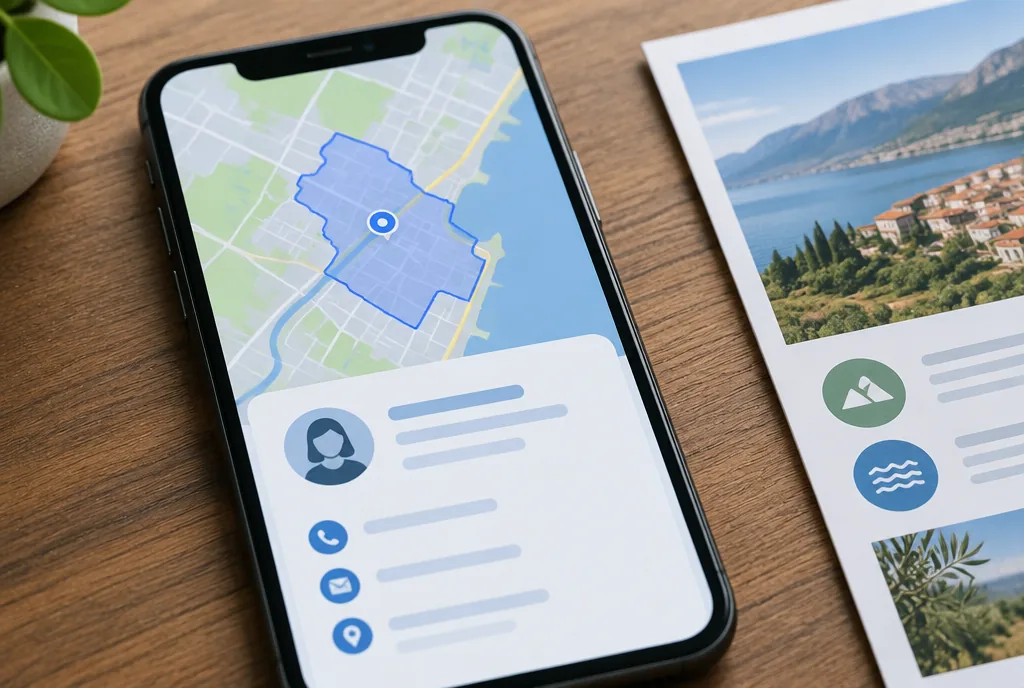
- contact details for a local agent or adviser, matched to the region where the user is.
It is all based on AR and image-recognition materials, where the digital content, not the print, handles the part that changes over time and between locations.
### What we did not do
The solution did not include a premium calculator or the option to buy a policy in the app. It presented the offer and showed a contact, while the conversation about specific cover and its terms remained with the agent.
03 How we worked
The starting point was dividing the information into two groups. What is common to the whole network and stable, i.e. the look of the material and the core message, stays on paper. What varies, i.e. the offer details and the contact person's details, goes into the digital layer.
This means one graphic design can be printed in a single run and sent to different locations. The leaflet does not need to "know" in which region it will reach a customer. The right contact only appears on the phone screen, at the moment the content is launched.
The same split makes later changes easier. When the offer or the person responsible for a region changes, the digital content is updated. The printed materials stay in circulation, without every run having to be reprinted.
04 Results
We describe the result in operational terms, because we have no measurements of sales or the number of launches:
- one printed design serves a dispersed network, without separate regional versions,
- there is no need to fill in agent details by hand or use rubber stamps at branches,
- customers get a detailed presentation of the offer and contact details for a person in their region in one place,
- updating the offer or contact details does not require a new print run of leaflets.
05 What set us apart
In this project augmented reality was not a showpiece effect but a logistics tool. Instead of adding more print versions for more regions, we moved the variable part of the communication into the digital layer. We used the same "one print, variable content" mechanism in the Compensa project, where printed posters and leaflets open replaceable video content.
On the print side, Wielka Reklama solves a similar problem, one standard for many independent locations, for the Unilink agent network, but there by personalising the prints themselves. At InterRisk the personalisation happens on screen, while the paper stays the same for everyone.

FAQ · InterRisk
Frequently asked questions
Can a customer calculate a premium or buy a policy through the leaflet?
No. In this project the leaflet opened a presentation of the offer and the agent's contact details. Calculating the premium and concluding the contract remained with the agent.
Do separate leaflets have to be printed for each region?
No. The printed design is shared, and the agent contact is matched to the user's region in the digital layer.
What happens when the offer or the agent in a given area changes?
The digital content assigned to the leaflet is changed. Printed copies keep working and lead to the current information.
Product enquiry
Ask about: InterRisk
A few quick questions so we know straight away what your enquiry is about. Prices are approximate; we confirm the final price after we talk.Your name and an e-mail address or phone number are enough. You can add the rest now or we can sort it out by phone.WIELKA REKLAMA · CASE STUDY