
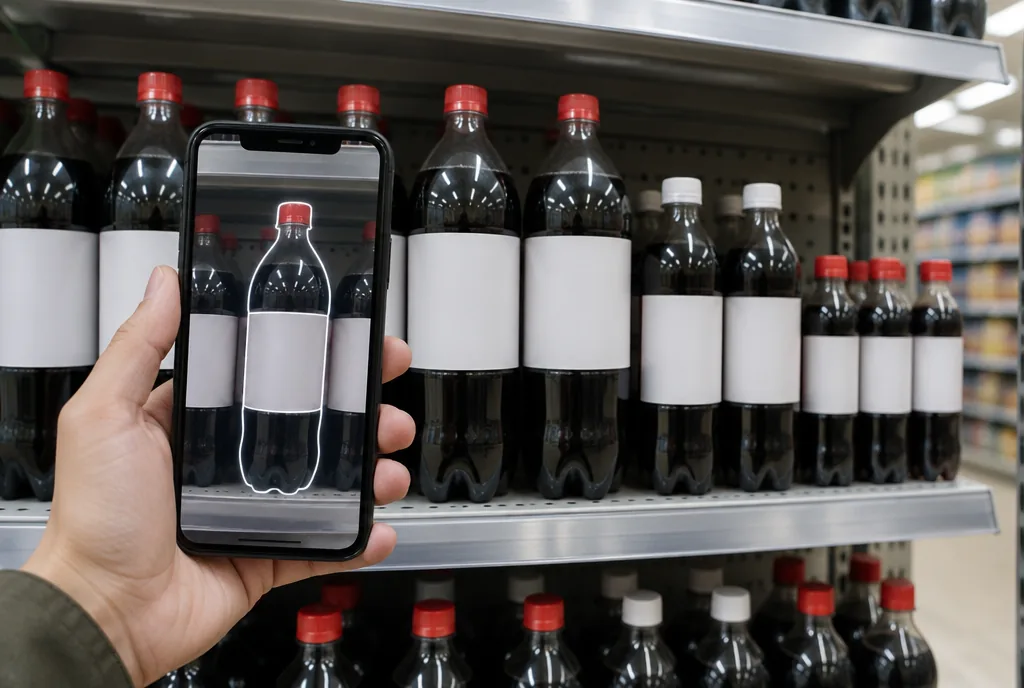
 Illustrative visualisation
TECHNOLOGY · 2D/3D RECOGNITION · FMCG
Coca-Cola · delivered by: Runvido + UltronARCoca-Cola: recognising the bottle variant instead of scanning a code
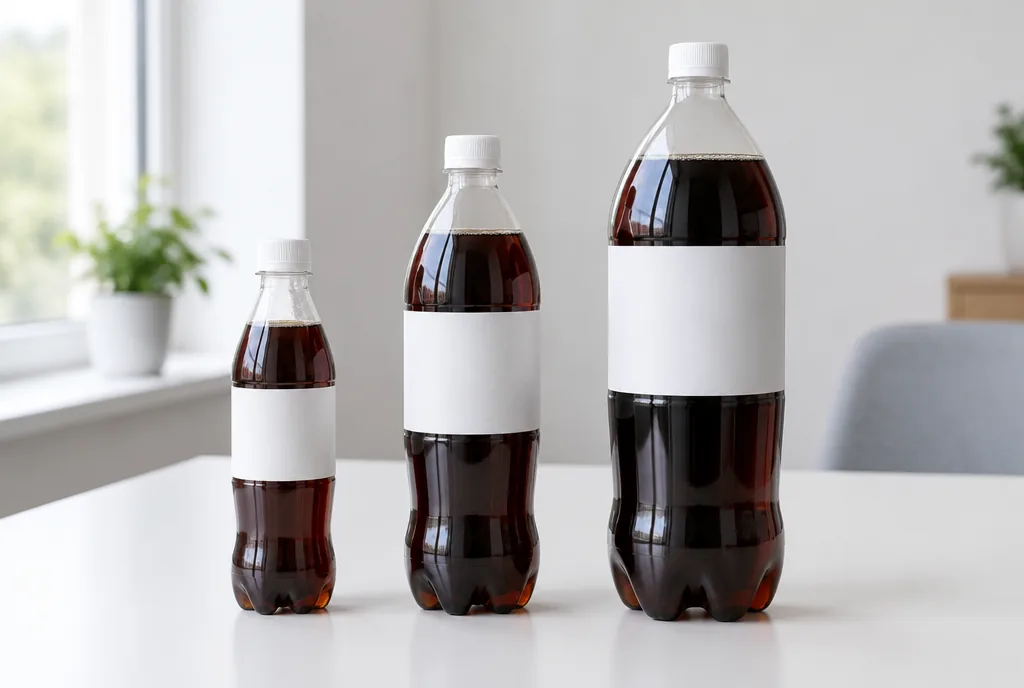
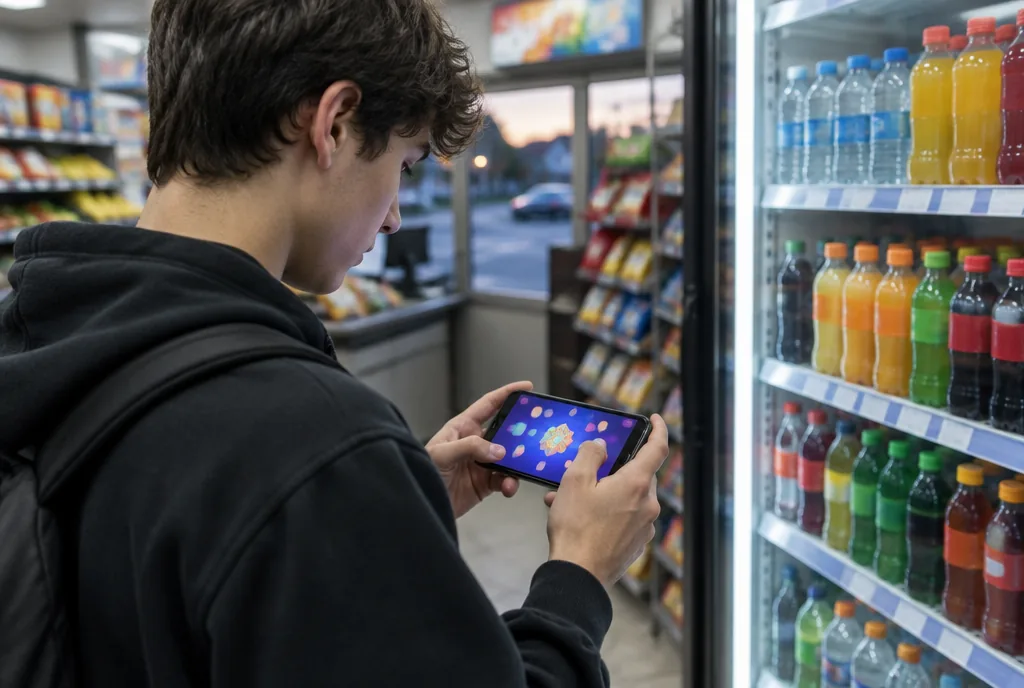
In the project for Coca-Cola we worked on in-store product recognition based on the image from a phone camera. UltronAR algorithms for 2D and 3D object recognition were designed to distinguish between bottle variants, for example 0.5 l, 1 l and 2 l, while the Runvido app linked the recognised product to a specific interaction. The second strand was the concept for a game encouraging people to visit points of sale.- 2D and 3D object recognition
- Distinguishing between pack sizes
- Interaction without a code on the pack
- Gamification concept for points of sale
01 Context and challenge
Most interactions between a pack and a phone rely on a code: it has to be designed, given space on the pack, and customers have to be persuaded to scan it. With drinks this model has clear limitations. The label is small, the pack is curved, and the same brand comes in several sizes that look very similar from a distance.
The starting point for the project was therefore the opposite question: can an app recognise the product itself, the way a person standing in front of the shelf sees it? And not just the brand, but the specific variant: the account of the project gave 0.5 l, 1 l and 2 l bottles as examples. Only then can the interaction be matched to what the customer is actually holding or has in front of them in the shop.
The challenge was above all technical. Bottles of different sizes have a similar shape, colour scheme and label. The phone sees them from different angles, in different light, often partly hidden by other products. Recognising "this is that drink" is one thing; recognising "this is exactly that variant" is a harder task.
02 Our role and solution
What we did. The project was delivered by two technology brands:
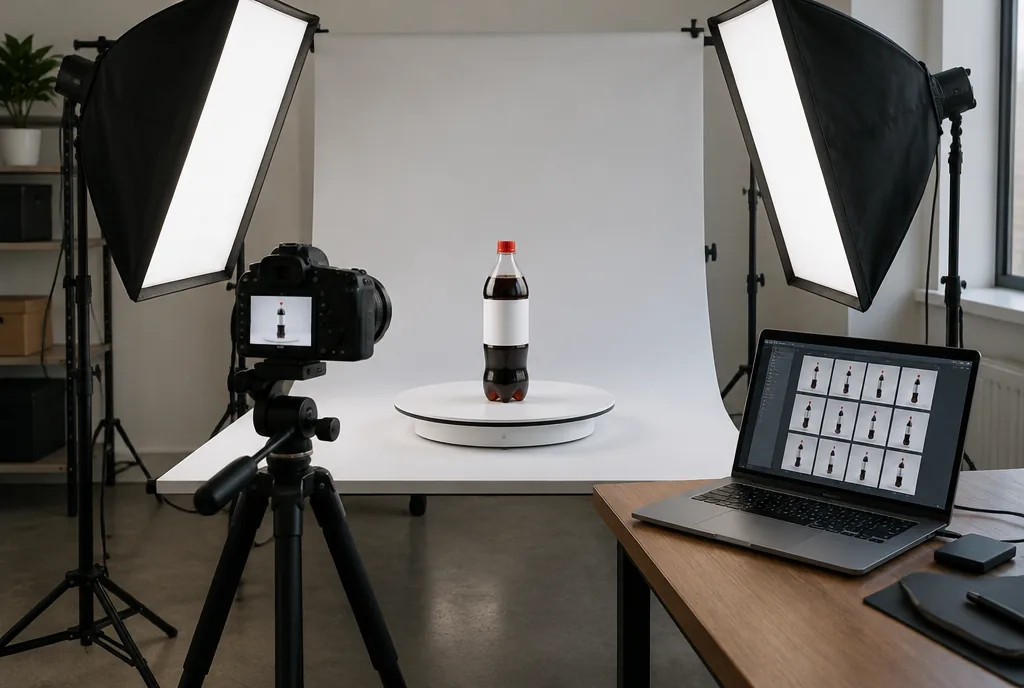
- UltronAR was responsible for the recognition layer: algorithms for 2D and 3D object recognition and models prepared from photos of the objects, designed to distinguish individual bottle variants.
- Runvido was responsible for the interaction layer: linking the recognised product to content or an action in the app.
Combining the two layers produces a mechanism in which the starting point is not a code but the image of the product. The customer points the camera at the bottle, the app identifies the variant and launches the interaction assigned to it. This is the same family of solutions we describe in our AR and image-recognition materials offer, except that instead of a flat print, a three-dimensional object is recognised.
The second strand was developing the concept for a game that would encourage people to visit points of sale (convenience stores such as Żabka were mentioned as an example in the conversation) and to take part in marketing activities. We describe it as a conceptual direction: recognising the product in store could be part of the gameplay, for example as a task to complete on site.
What we did not do. This is a technology case, not a print case: Wielka Reklama did not produce packaging, labels or POS materials in this project. We were not responsible for the brand strategy or the campaign. The mention of stores such as Żabka refers to the type of locations the game was meant to cover; it does not imply any cooperation or agreement with any retail chain.
03 How we worked
Object recognition starts with the material the model learns from. In this project it was photos of the objects (bottles in the individual variants), on the basis of which models were prepared to tell one variant from another.
The key decisions concerned what the model should rely on and what it should ignore. The label, proportions, silhouette and context change with angle and distance, which is why the recognition combines features of the flat graphic (2D) with the shape of the object (3D). We also develop our know-how in preparing spatial models through 3D scanning.
In parallel, the app layer was designed: what happens after recognition, which content corresponds to which variant, and how that moment can become part of a game. We build the app-side logic and digital content in a similar way to other web apps and configurators.
04 Results
We do not give sales results, download numbers or user numbers, as no such measurements have been confirmed. The result we can describe is the development of the mechanism: recognising a specific product variant from a camera image and linking it to an in-app interaction, together with the concept for a game that uses this mechanism at points of sale.
05 What set us apart
In many AR projects, such as Koleje Śląskie AR, the phone recognises a flat image: a station name, a print, a cover. Here the reference point was a three-dimensional product that differs from neighbouring variants in its details. This approach requires no changes to the packaging and no additional code: the interaction is assigned to the object on the shelf itself.
FAQ · Coca-Cola
Frequently asked questions
Can an app recognise a product without a QR code on the pack?
Yes, that was the premise of this project. 2D/3D object recognition works on the appearance of the product, so the interaction can be assigned to the pack itself. Effectiveness depends on the category, the variants and the conditions in which the customer takes the picture.
Is it possible to distinguish variants of the same product, such as different sizes?
That was the task of the models in this project. Similar variants require carefully prepared training material, which is why we assess each product category individually.
Can this mechanism be combined with a game at points of sale?
Recognising the product can be a task in a game or a condition for unlocking content. The rules and locations of the game are agreed with the brand and, if necessary, with the owner of the points of sale.
Product enquiry
Ask about: Coca-Cola
A few quick questions so we know straight away what your enquiry is about. Prices are approximate; we confirm the final price after we talk.Your name and an e-mail address or phone number are enough. You can add the rest now or we can sort it out by phone.WIELKA REKLAMA · CASE STUDY