
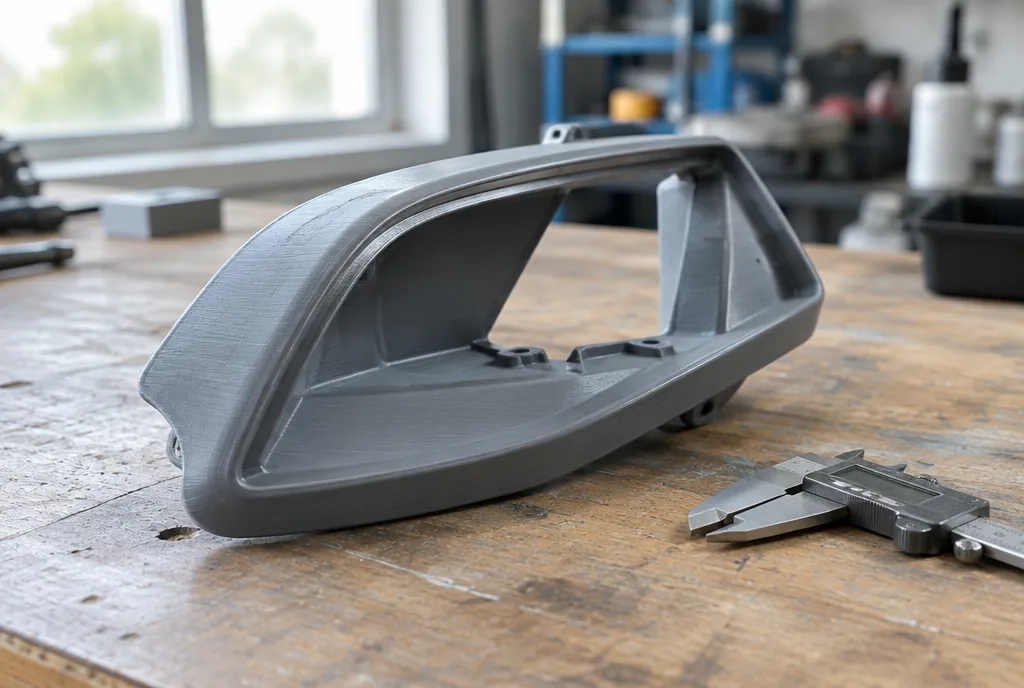
 Illustrative visualisation
INDUSTRY · 3D PRINTING · COVER PROTOTYPES
Wielton3D prototypes of covers and lamp components for Wielton: a shape to test before a mould is made
For Wielton, the Wieluń-based trailer manufacturer, we 3D-printed prototypes and cover components, including parts related to trailer lamps and covers. The client's team could hold a physical model in their hands and test it on the structure before deciding on the next steps.- Prototypes of trailer covers and lamp components
- Auxiliary parts rather than a production series
- A physical model for test-fitting on the structure
- Another facet of a long-standing cooperation with Wielton
01 Context and challenge
A lamp cover or a housing component on a trailer looks convincing in CAD software. The real questions only arise on the structure: will the part fit between the profiles, does it clash with the mounting, can it be fitted easily? Ordering production tooling just to check this is expensive and takes a long time.
Wielton, the Wieluń-based trailer manufacturer, needed physical models at this stage. Not a series, but individual prototypes and parts that could be held up, assessed and improved.
02 Our role and solution
What we did
Commissioned by Wielton, we 3D-printed prototypes and cover components, including solutions related to trailer lamps and covers. They were produced as prototypes and auxiliary parts: for assessing the shape, test-fitting on the structure and discussions within the client's team.
What we did not do
We did not produce series parts fitted to finished trailers and were not responsible for their certification. Nor did we design the covers or lamps themselves; the design and engineering decisions belonged to the client.
03 How we worked
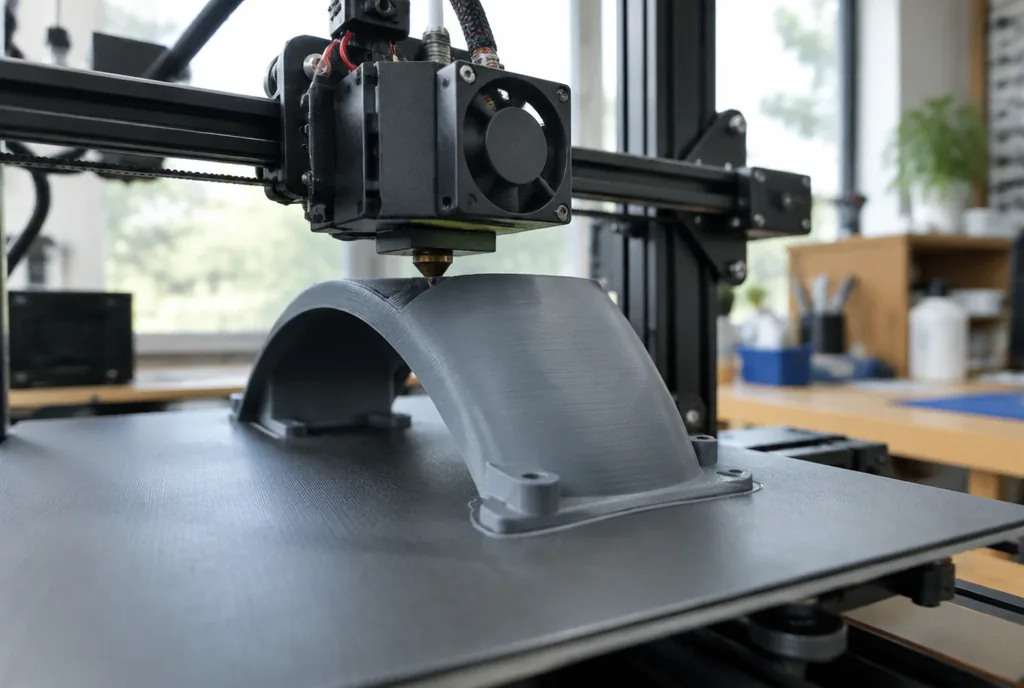
A prototype has to answer a specific question, so we start by establishing what the client wants to check: the shape itself, the fit with the structure or the mounting method. This determines how the model is prepared for printing and what accuracy is needed.
When the model needs adjusting, we print another version. This is the natural rhythm of prototyping: several iterations are cheaper and quicker than a single mistake in production tooling. If the starting point is an existing part rather than a file, 3D scanning can help.
The short route between our workshop and the client's plant, both in Wieluń, made it easy to hand over successive versions quickly.
04 Results
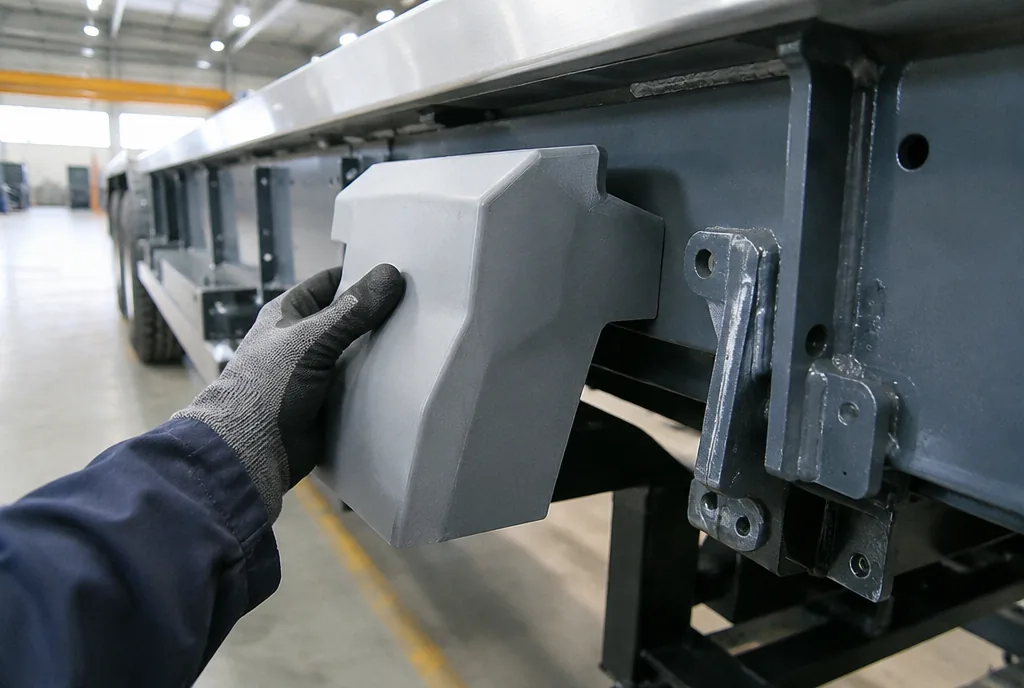
Wielton's team received physical models of covers and lamp components that they could test directly on the trailer structure. Decisions on shape and fit could be made on the basis of a real object, not just a visualisation. Any clashes with profiles or mountings could be spotted on the print before they reached the costly stages of production preparation.
05 What set us apart
An advertising company with a 3D printer is an unusual partner for a trailer manufacturer. In our case, 3D printing is one of several techniques in the same plant, alongside CNC routing of vehicle body components and printing signage for production halls, which we also do for Wielton. The client knows us, and we know how it works. With prototypes this is particularly useful: it is easier to discuss what a model needs to test when both sides understand the realities of a production hall, not just a file on screen.
FAQ · Wielton
Frequently asked questions
Do you 3D-print parts for series production?
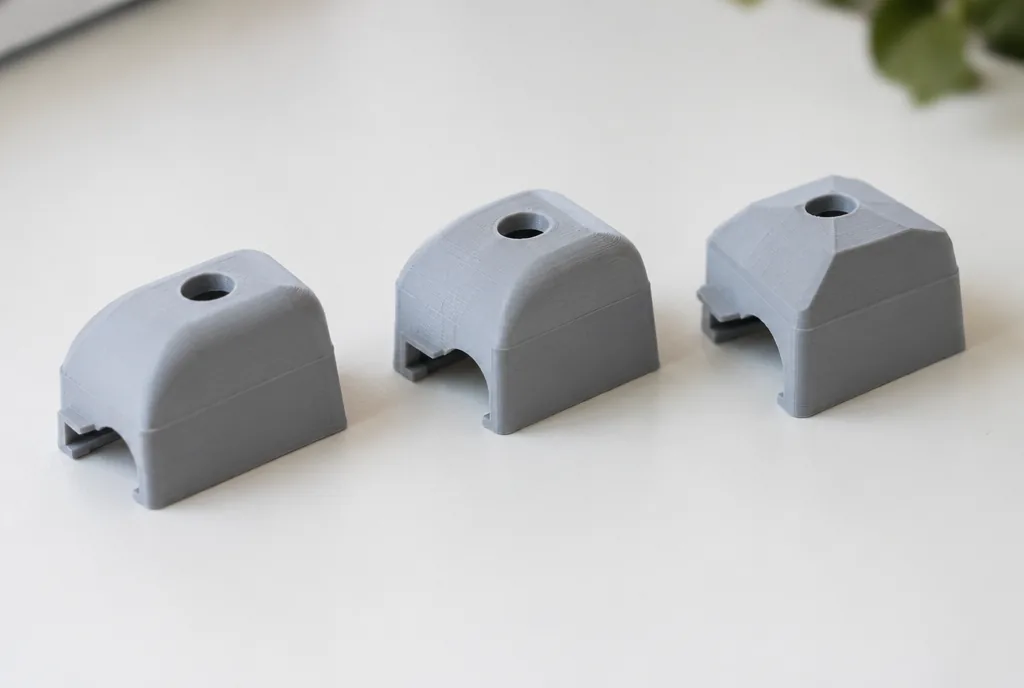
In the project for Wielton we printed prototypes and auxiliary parts, not series parts for finished vehicles. We discuss other applications individually.
Can I supply my own 3D model?
Yes. We print from the client's model, and before printing we agree what the prototype is meant to test.
WIELKA REKLAMA · CASE STUDY